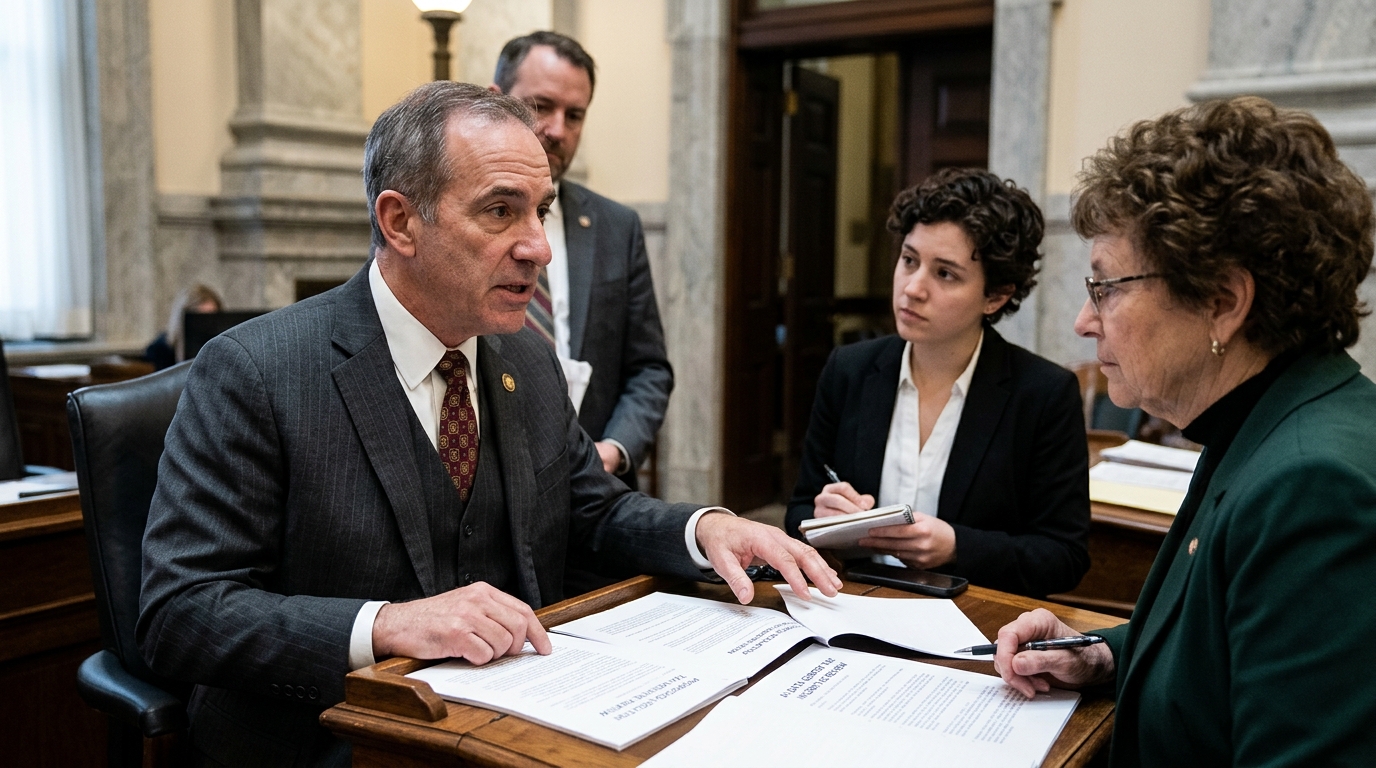
For more than a decade, Ohio has been one of the most welcoming destinations for technology giants. With generous tax breaks and affordable land, Central Ohio transformed into a global data center hub, attracting billions in investments from Amazon, Google, and Microsoft. However, the rise of Generative AI has fundamentally shifted the equation. The state's decision to suspend its sales tax exemption program for data center equipment marks a historic pivot in U.S. policy toward Big Tech.
The Energy Hunger of Artificial Intelligence
The problem is not merely financial; it is deeply structural. Data centers supporting AI models require up to ten times more energy than traditional cloud computing systems. This sharp spike in demand is exerting unprecedented pressure on the PJM Interconnection grid, which manages power across 13 U.S. states, including Ohio. Regulators and utility companies are now openly voicing fears that the necessary grid upgrades—costing billions—will be passed on to ordinary consumers through their utility bills.
The suspension of tax breaks by the Ohio Department of Development reflects a new reality: states are no longer willing to subsidize AI growth at the expense of their citizens' energy security. As reported by The Washington Post, this move follows intense pressure from consumer advocacy groups and environmental organizations, who argue that tech companies must pay the full cost of the infrastructure they utilize.
The Growth Dilemma and Social Justice
For years, the argument in favor of tax breaks was job creation and local economic stimulation. However, data centers are notorious for employing relatively few permanent staff compared to their massive footprint and resource consumption once construction is complete. In Ohio, the conversation has shifted from "how much investment can we attract" to "who will pay for the new substations and transmission lines."
- Big Tech firms argue their investments bring technological leadership and indirect economic benefits.
- Energy regulators warn of potential blackouts if the grid is not reinforced immediately.
- Citizens are pushing back against the idea of indirectly subsidizing the world's wealthiest companies through their monthly bills.
Ohio's case is not an isolated incident. In Virginia—the world's data center capital—and Georgia, lawmakers are reconsidering similar incentives. What sets Ohio apart is the speed and decisiveness of the suspension, sending a clear message to Silicon Valley: the era of "free" infrastructure is over.
Toward a New Model of Cooperation?
The solution proposed by many analysts is the imposition of special infrastructure fees on companies requiring massive energy loads. Instead of receiving tax breaks, these firms might be asked to directly fund renewable energy projects or grid modernizations. This could lead to a more sustainable growth model for AI, where technological progress does not conflict with the basic need of households for affordable power.
"We cannot allow the cost of the digital revolution to become an unbearable burden for the average taxpayer," stated an official from the Ohio regulatory commission.
In conclusion, Ohio's move represents a critical milestone. It highlights the need for a more balanced approach where innovation goes hand-in-hand with social responsibility. Tech giants, with their vast cash reserves, are now being called upon to prove they can be partners in development rather than just consumers of public resources.