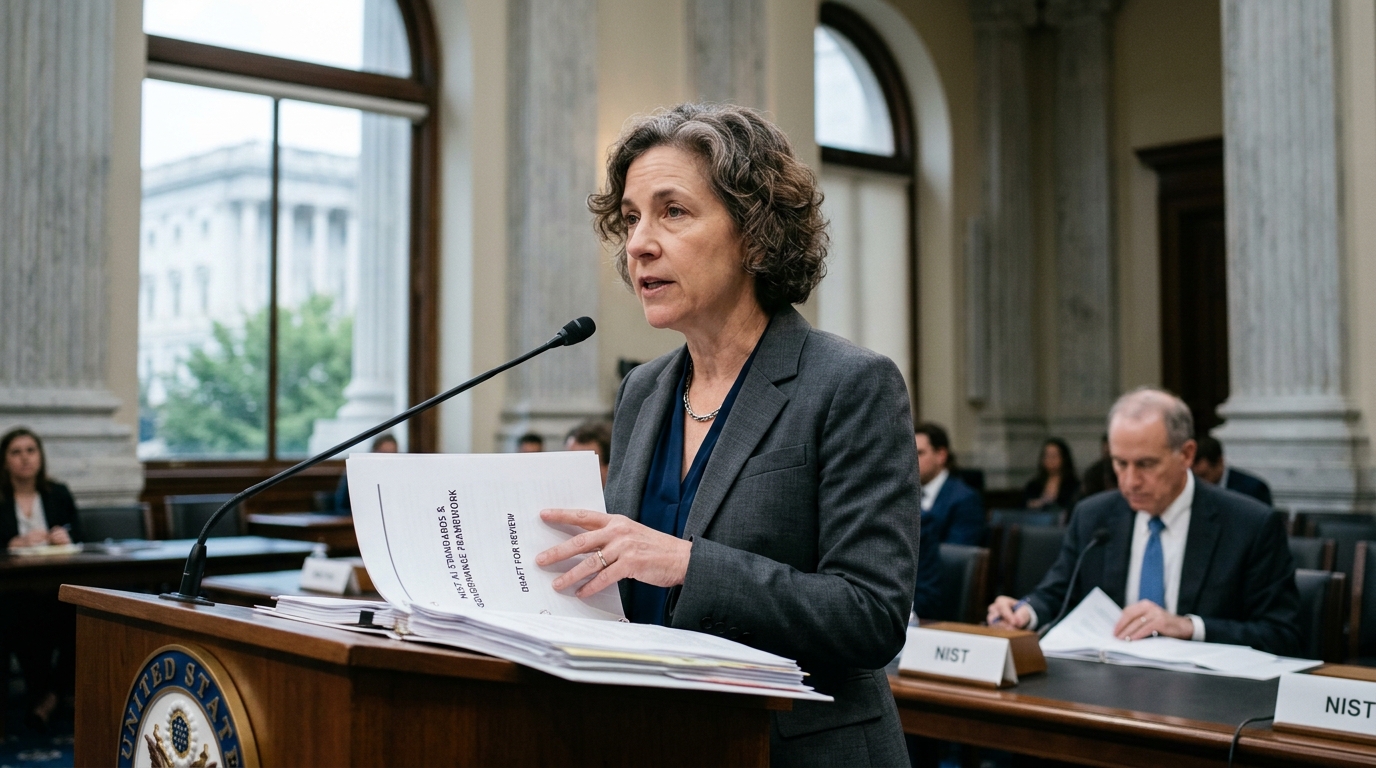
In a watershed moment for global technology governance, the U.S. National Institute of Standards and Technology (NIST) has announced a fundamental restructuring of its flagship AI consortium. Emerging with a new name, a broadened scope, and an urgent call for new members, the move signals Washington’s intent to solidify its role as the primary architect of the rules governing machine intelligence in the 21st century. This evolution is far from a mere bureaucratic reshuffle; it is a strategic countermeasure to the explosive growth of generative AI and the mounting pressure for regulatory frameworks that balance safety with economic dynamism.
From Safety to Trustworthiness: Expanding the Mandate
The original iteration of the consortium, established in the wake of President Biden’s Executive Order 14110 on Safe, Secure, and Trustworthy AI, focused heavily on risk mitigation. However, NIST’s new direction suggests a more holistic philosophy. The updated framework is not just about preventing doomsday scenarios; it is about building an ecosystem of "trustworthy" AI. This encompasses the development of measurable standards for data transparency, synthetic content detection (watermarking), and the mitigation of algorithmic bias.
This expansion is driven by market realities. As enterprises integrate AI into their core operations, the absence of clear benchmarks creates paralyzing uncertainty. NIST seeks to bridge the gap between theoretical ethics and practical deployment, offering tools that allow companies to verify the accountability of their systems. Membership is now open to a wider array of stakeholders—ranging from tech titans and academic researchers to civil society organizations—highlighting the necessity of a multi-stakeholder approach in a field that moves faster than traditional lawmaking.
Geopolitical Competition and the Battle of Standards
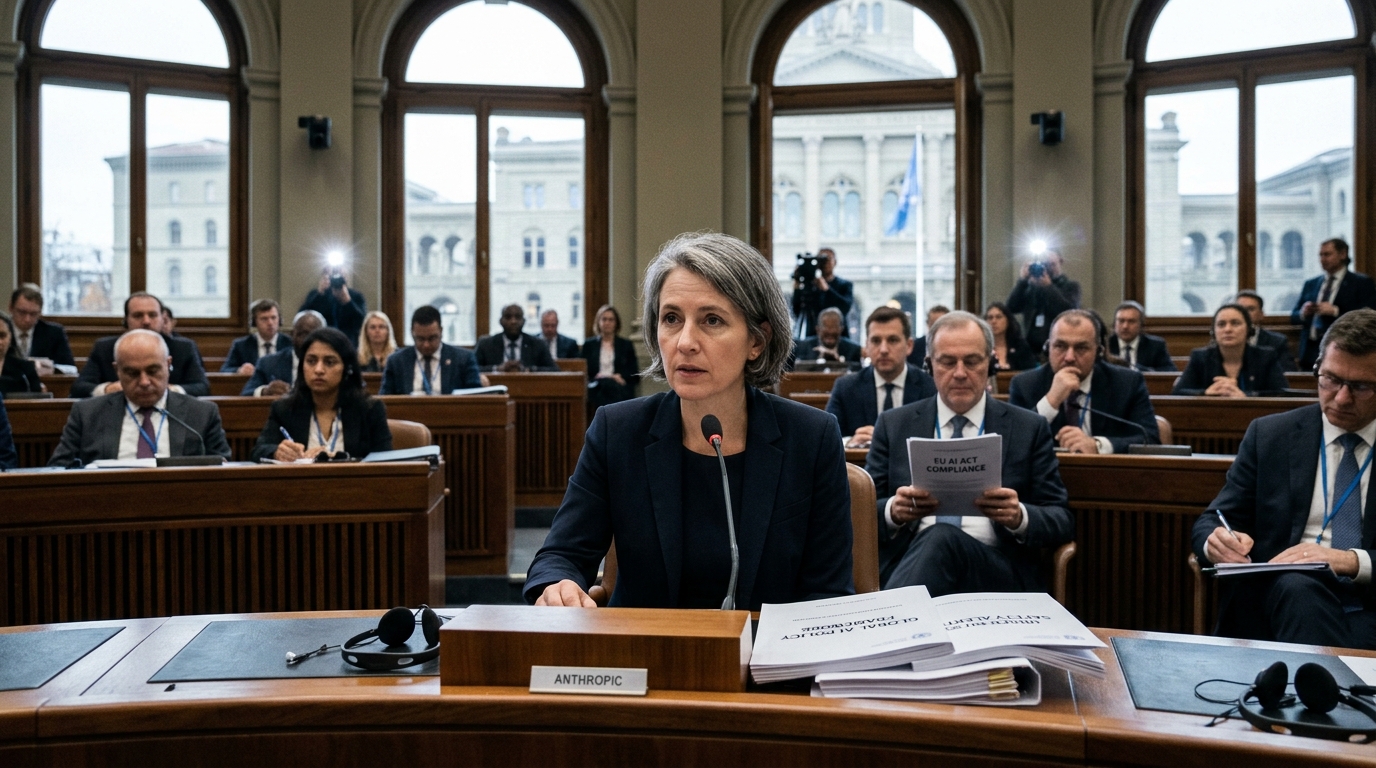
Beneath the technical specifications lies a fierce geopolitical contest. While the European Union has moved forward with its landmark AI Act, opting for a prescriptive, risk-based regulatory approach, the United States is doubling down on a model centered on voluntary standards and public-private partnership. The revamped NIST consortium is the primary vehicle for projecting this American model globally.
- Developing unified protocols for "red-teaming" large-scale foundation models.
- Establishing internationally recognized methods for identifying AI-generated media.
- Defining evaluation criteria for the energy efficiency of AI-driven data centers.
If NIST succeeds in making its standards the de facto global benchmarks, the U.S. can maintain control over the technological agenda without resorting to rigid legislation that might stifle domestic innovation or cede ground to competitors like China. It is, in essence, a battle for the "operating system" of global AI governance.
The Challenge of Inclusivity and Big Tech Influence
One of the sharpest criticisms leveled against the consortium’s previous form was the perceived dominance of Big Tech. With the new call for members, NIST promises a more balanced representation. Yet, the question remains: can small-to-medium enterprises (SMEs) and non-profits truly find a voice at a table occupied by the likes of Microsoft, Google, and Meta?
AI is too consequential to be left solely in the hands of those who build it for profit. Public participation in standard-setting is our last line of defense.
The success of this new initiative will hinge on its ability to produce outcomes that are both technically rigorous and socially legitimate. NIST is tasked with acting as a referee in a game where the rules change weekly. The new structure is expected to function as a "living laboratory" for policy, where feedback from real-world AI deployment is rapidly integrated into evolving standards.
Conclusion: A New Social Contract for Technology?
The rebirth of the NIST consortium is more than a technical necessity; it is an attempt to redefine the relationship between the state, society, and technology. In a world where AI will influence everything from judicial rulings to medical diagnoses, the standards set today will form the bedrock of tomorrow’s democracy. NIST’s invitation is an opportunity for all actors to participate in shaping this future, ensuring that artificial intelligence remains a tool at the service of humanity rather than an unmanageable source of systemic risk.