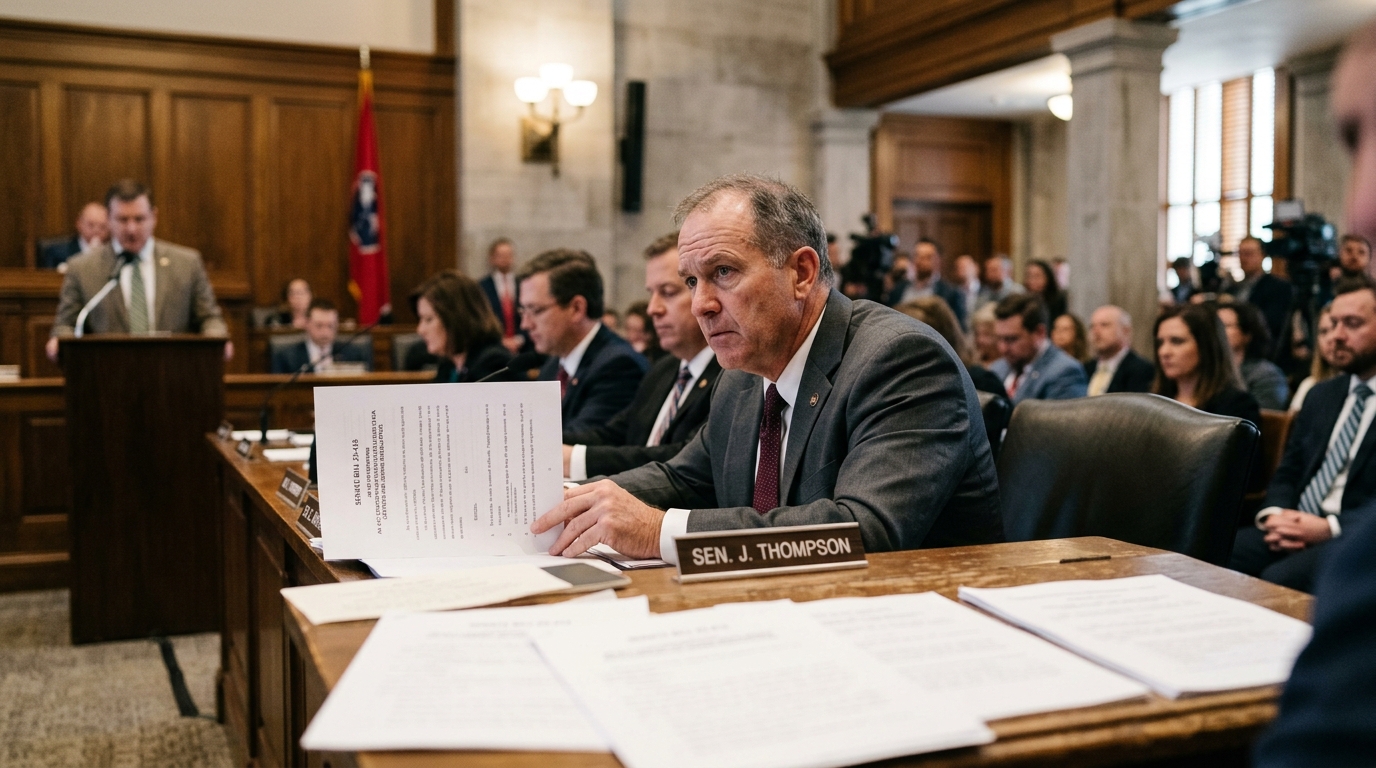
The AI era does not exist solely in the ethereal realms of the 'cloud'; it has a very physical, heavy, and often noisy presence on the ground. In Nashville, Tennessee, the rapid expansion of data centers has triggered a legislative response, with Councilmember Rollin Horton filing a groundbreaking bill aimed at regulating these energy-hungry facilities. This move reflects a growing global trend: the need for local communities to safeguard their resources against AI’s insatiable thirst for power and water.
The Invisible Infrastructure and Its Hidden Costs
To the average user, ChatGPT or Midjourney are just apps on a screen. However, behind every prompt lie thousands of GPUs running at peak capacity, generating immense amounts of heat. To keep these machines operational, massive cooling systems are required, consuming millions of gallons of water and vast quantities of electricity. The Horton bill in Nashville seeks to impose strict limits on this consumption, requiring companies to submit detailed environmental impact studies before receiving permits.
The issue is not just environmental; it is social. Residents living near these centers often complain about a constant, low-frequency hum from cooling fans, which affects quality of life and mental health. The proposed legislation includes strict specifications for soundproofing and the placement of facilities away from residential zones, forcing tech giants to invest more heavily in their social responsibility and mitigation strategies.
The Strategic Importance of Regulation
Nashville’s case is far from isolated. From Northern Virginia—home to the world’s largest concentration of data centers—to Ireland and the Netherlands, authorities are beginning to realize that the 'digital economy' has a massive physical footprint. The Horton bill introduces the concept of 'responsible zoning.' It does not ban data centers—which bring in significant tax revenue—but it demands they do not strain the water and power grids at the expense of citizens.
- Requirement for closed-loop cooling systems that recycle water.
- Mandatory use of renewable energy sources to offset a portion of demand.
- Strict decibel limits during nighttime hours to prevent noise pollution.
- Infrastructure fees to bolster local utility networks.
These measures are a response to the tactics of many tech firms that seek out regions with low energy costs and lax oversight. Nashville is sending a clear signal: innovation is welcome, but not at the cost of the city’s long-term sustainability.
Economic Gains vs. Social Costs
Proponents of data centers often highlight the economic benefits, such as construction jobs and property tax revenue. However, critics point out that once construction is finished, these facilities employ very few permanent staff. Furthermore, the massive demand for electricity can lead to higher utility rates for residential consumers, as utility companies are forced to upgrade infrastructure to meet the industrial load.
"We cannot allow digital progress to run our taps dry or make electricity bills unaffordable for our families," Horton stated during the bill's introduction.
The debate in the Nashville Metro Council is expected to be fierce, as industry representatives warn that overly strict regulations could drive investment to neighboring counties. Nevertheless, the shift toward regulation seems irreversible, as the climate crisis makes resource management a matter of survival rather than mere preference.
Conclusion: A New Social Contract
The Nashville bill is just the tip of the iceberg. As AI becomes integrated into every facet of our lives, the need for a new deal between tech companies and local communities becomes imperative. Regulating data centers is not an anti-tech move; it is a pro-human move. The success or failure of this bill will serve as a blueprint for hundreds of other cities facing the same challenge: how to host the future without sacrificing their present.