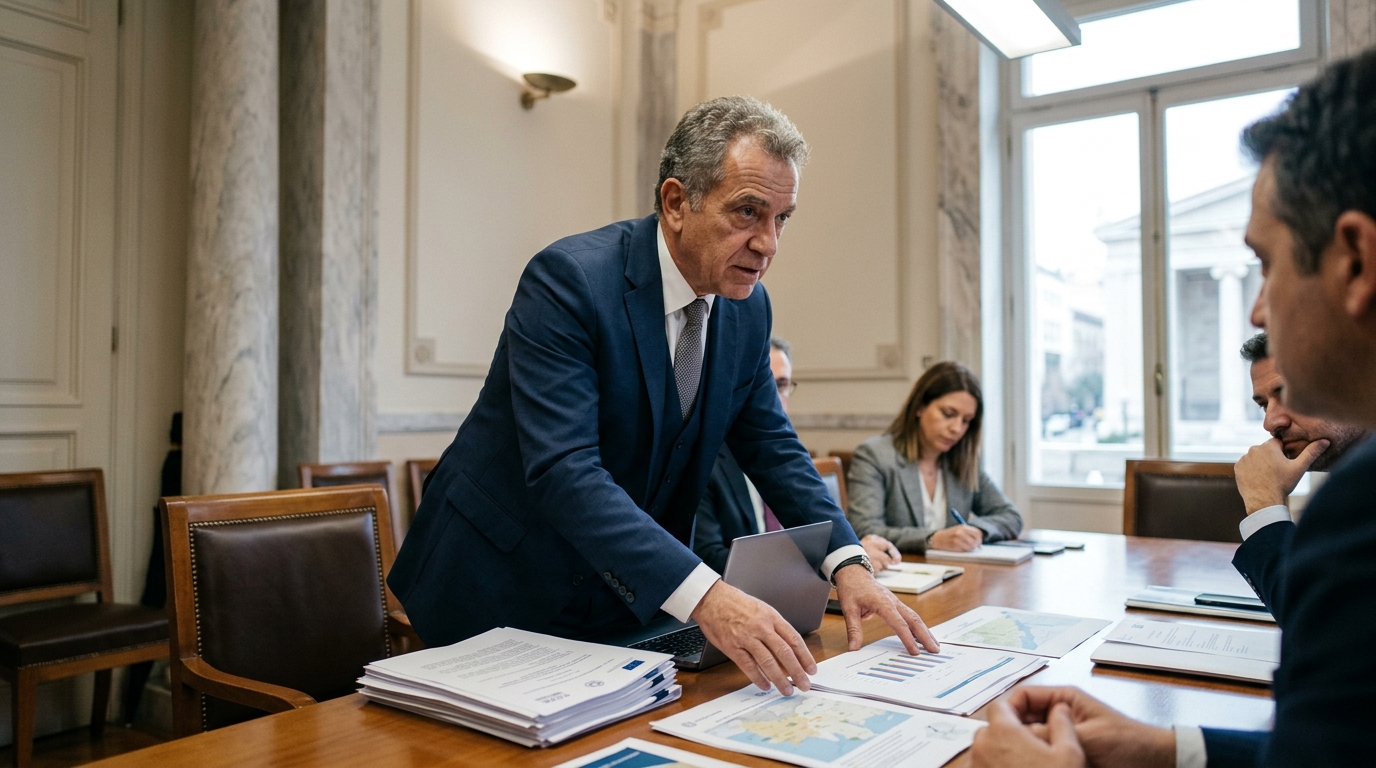
The recent pronouncements by Greece’s Minister of National Economy and Finance, Kostis Hatzidakis, regarding the anticipated influx of tens of billions of euros from the European Union for the 2028-2034 period, signal a strategic pivot for the Hellenic economy. As Brussels begins the arduous process of drafting the next Multiannual Financial Framework (MFF), Athens is positioning itself not just as a recipient of aid, but as a proactive architect of the Eurozone’s financial future. This upcoming cycle is viewed as the definitive "bridge" to long-term fiscal stability and industrial modernization.
Beyond the Recovery Fund: A New Paradigm
With the current Recovery and Resilience Facility (RRF) set to expire in 2026, the European landscape faces a structural vacuum. Minister Hatzidakis has been vocal about the necessity of evolving the RRF’s "reforms-for-cash" model into a permanent fixture of EU governance. For Greece, which has demonstrated a surprisingly high absorption rate and a commitment to difficult structural overhauls, the 2028-2034 MFF represents the next stage of evolution. The focus is shifting from emergency liquidity to strategic, long-term capital allocation.
The projected "tens of billions" are not merely a continuation of traditional Cohesion Policy or Common Agricultural Policy (CAP) funds. While these remain vital, the Greek government is eyeing the creation of a "Sovereignty Fund" or a dedicated European Defense Fund. In an era of geopolitical fragmentation, Hatzidakis argues that Greece’s external borders are Europe’s borders, and the financial burden of protecting them should be shared collectively, freeing up domestic resources for social policy and innovation.
The Strategic Pillars: Defense, Energy, and AI
The Greek strategy for the 2028-2034 period is built upon three distinct pillars designed to maximize the fiscal multiplier of EU funds. First, the integration of the Greek defense industry into the broader European supply chain. By utilizing EU funds for joint procurement and R&D, Greece aims to transform its high military spending into a driver of industrial growth. Second, the energy transition; Greece seeks to become a net exporter of green energy to Central Europe, requiring massive investments in interconnectors and storage.
- Integration of AI into the judiciary and tax administration to eliminate bureaucracy.
- Large-scale infrastructure projects linking the Greek islands to the mainland power grid.
- Development of regional innovation hubs to reverse the "brain drain" of the previous decade.
This approach aligns with the recommendations of the Mario Draghi report on European competitiveness. Hatzidakis recognizes that for Greece to remain competitive, it must move up the value chain. The next MFF is the vehicle to fund the "Deep Tech" and "Blue Economy" sectors where Greece holds a competitive advantage but lacks the necessary scale of capital.
Fiscal Discipline and the 'Frugal' Challenge
Negotiating the next MFF will not be a simple feat. The so-called "Frugal Four" and other Northern European nations are pushing for a leaner EU budget, focused on new priorities rather than traditional redistribution. Hatzidakis’s task is to demonstrate that Greek growth is no longer a liability for the Eurozone but a source of stability. The narrative is clear: funding for Greece in 2028-2034 is an investment in the EU’s Southeastern flank.
"We are not looking for handouts; we are looking for strategic partnerships. The funds of the next decade must be the fuel for a production-based economy that can stand on its own feet without the crutches of the past," Hatzidakis noted during a recent briefing.
As the 2026 deadline for the RRF nears, the pressure on the Greek administration to present a flawless track record is immense. The success of the 2028-2034 cycle depends on the credibility built today. If Greece manages to successfully transition from a consumption-led model to one driven by exports and high-tech services, the "tens of billions" promised by Hatzidakis will indeed be the foundation of a new Hellenic era. The stakes could not be higher: this is the final opportunity to close the gap with the European core before the demographic and climate challenges of the mid-century take full effect.