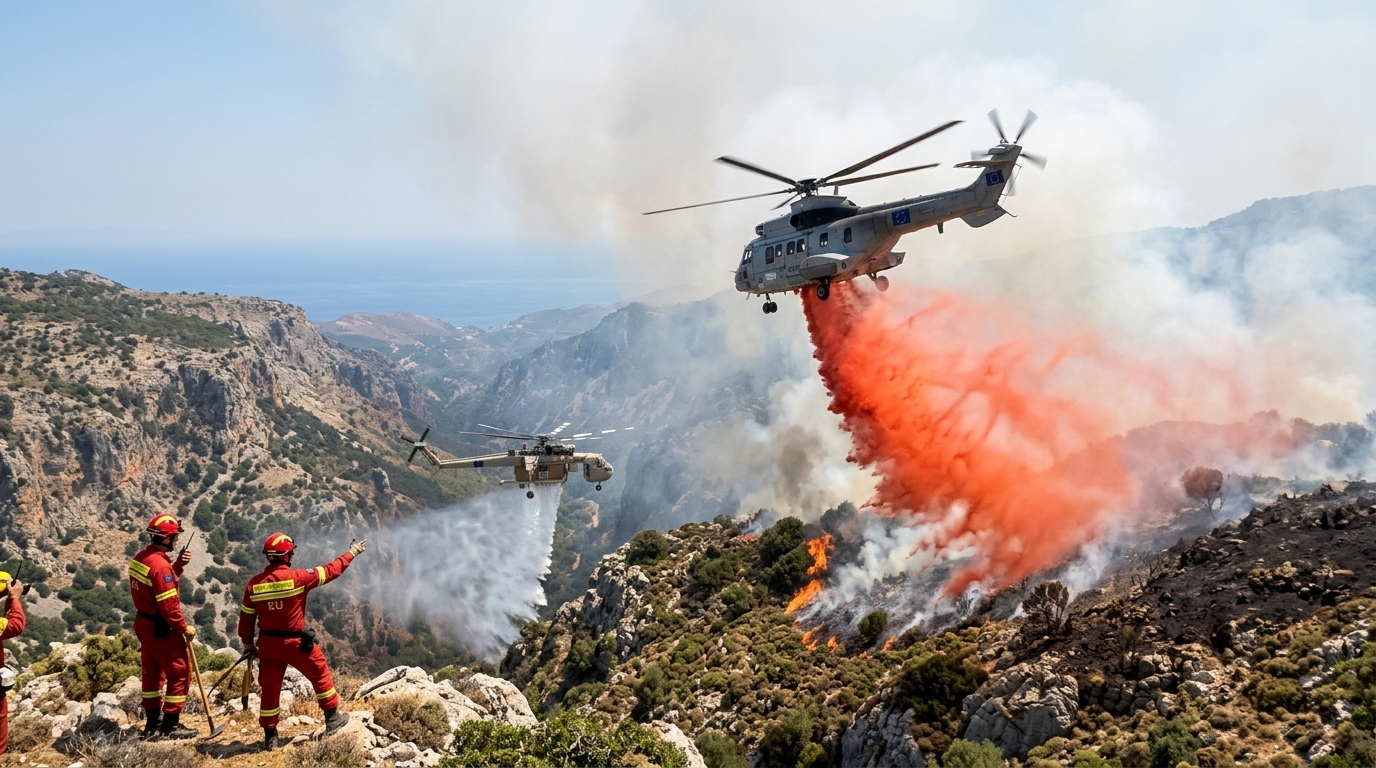
As temperatures begin their annual ascent and the memories of past wildfire seasons remain vivid, the European Commission has unveiled its most ambitious civil protection plan to date. For the summer of 2026, the EU is moving beyond mere rhetoric, deploying a "heavy brigade" of 777 firefighters, 22 firefighting aircraft, and 5 helicopters. This creates a safety net stretching from the Atlantic coasts of Portugal to the dense forests of Greece.
This plan represents the zenith of an effort that began in 2022 with the rescEU program, designed to fill the gaps left by national mechanisms when disasters overwhelmed local capacities. Today, this initiative is evolving into a permanent, supranational rapid-response mechanism, acknowledging that the climate crisis respects no borders and demands a federalized approach to citizen safety.
The Strategic Deployment of Forces
While the number "777" might sound symbolic, the allocation of these firefighters is purely operational. These men and women, hailing from various Member States, will be pre-positioned at strategic high-risk locations. The logic is simple yet vital: speed is everything. Instead of waiting for a formal request for assistance via the Civil Protection Mechanism after a fire has already broken out, these forces will be on the ground, ready to intervene within the first, most critical minutes.
The fleet of 22 aircraft includes the new Canadair models that the EU began ordering in bulk in previous years, alongside leased assets to ensure continent-wide coverage. Greece, France, Italy, Spain, and Portugal will serve as the primary hubs for these assets, acting as firefighting "aircraft carriers" for the wider Mediterranean region.
Technology as a Power Multiplier
Beyond the raw numbers of personnel and vessels, the true innovation for 2026 lies in the integration of Artificial Intelligence and satellite data from the Copernicus program. The coordination of the 777 firefighters will not rely solely on radio communications but on an advanced digital operations center in Brussels, fed with real-time data.
Fire prediction algorithms, analyzing drought levels, wind speeds, and historical data, will determine the movement of aerial assets before smoke is even visible. This proactive "pre-positioning" is what sets this year's plan apart from previous iterations. The EU is now investing in prevention through readiness, drastically reducing response times.
Political and Social Implications
The Commission's move also carries a strong political component. At a time when European cohesion is tested by economic and geopolitical pressures, Civil Protection is emerging as the Union's most tangible and popular pillar. A citizen in Rhodes or Provence does not see the EU as a bureaucratic entity but as the yellow plane saving their home.
However, challenges remain. Reliance on centralized European planning must not lead to a slackening of national investments in firefighting. The Commission's massive plan is an umbrella, not a roof. Member States must continue forest management and the creation of firebreaks, as no fleet, however large, can defeat a fire fueled by decades of forest neglect.
Conclusion: A Summer of Testing
The summer of 2026 will be the ultimate crash test for the doctrine of "European Solidarity in Action." With 777 firefighters on the front line, Europe is sending a message of resilience. The success of the plan will be judged not just by the number of fires extinguished, but by the acres that remain green and the lives protected. The Mediterranean is burning, but this year, the response is more organized than ever.