In an era where truth is becoming increasingly fluid, the recent move by Nassau County Executive Bruce Blakeman to release an AI-generated video of New York Governor Kathy Hochul is not just a political provocation—it is a critical legal experiment. The video, which utilizes deepfake technology to present Hochul making statements she never actually uttered, has brought the immediate conflict between political satire and stringent voter protection laws into sharp focus.
New York, a pioneer in anti-deepfake legislation, now faces the first major test of rules designed to safeguard the electoral process. The issue isn't merely whether the content was intended to be humorous or satirical, but whether it violated explicit statutes requiring clear labeling for any digitally altered content deemed "materially deceptive."
Anatomy of a Digital Confrontation
The controversial video surfaced during a period of intense political polarization. Blakeman, known for his adversarial relationship with the Hochul administration, used AI to create a version of the Governor that appeared to mock her own policies or admit failures regarding public safety and migration. While Blakeman’s supporters argue the video’s nature was obviously satirical, Hochul’s legal team and independent election observers point out that the lack of a prominent disclaimer throughout the video constitutes a breach of state election law.
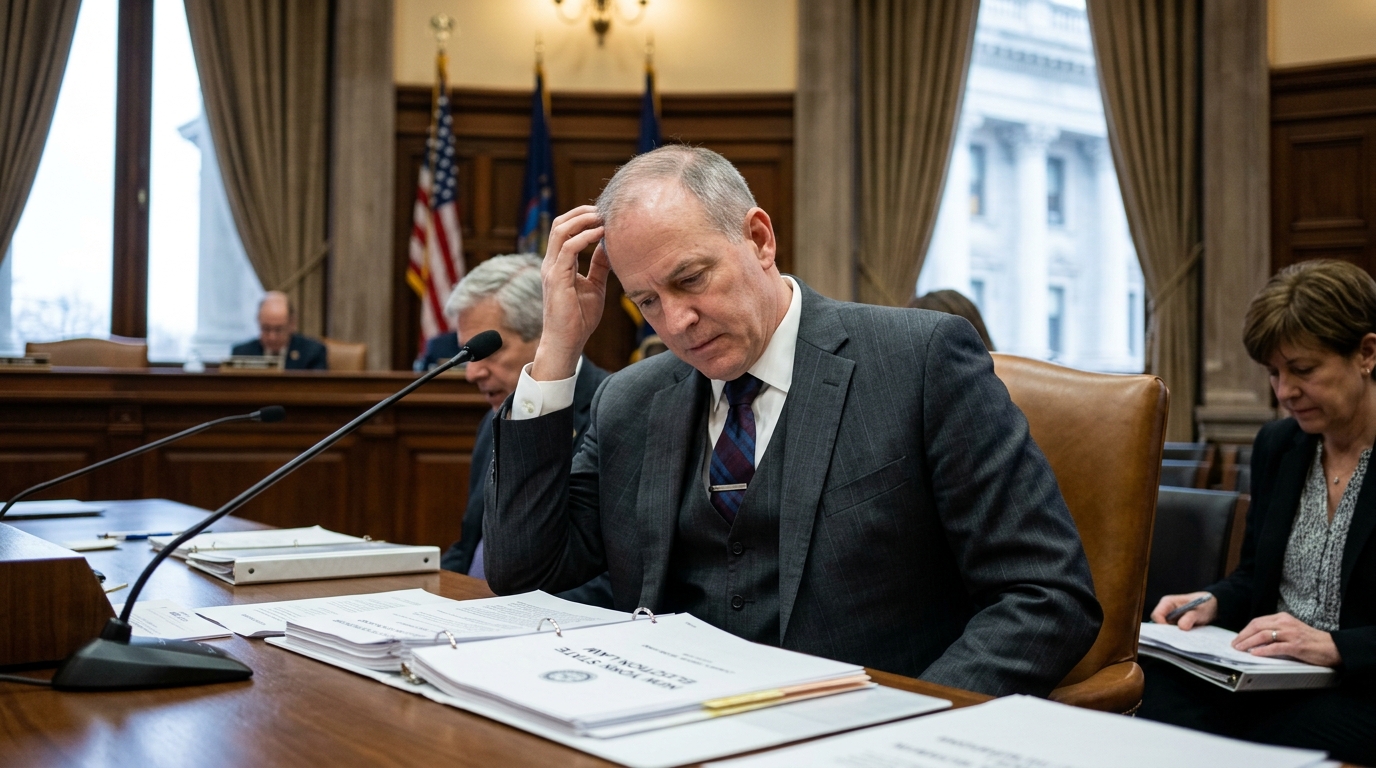
According to the New York State Election Law, any political communication using "digital replicas" must carry a conspicuous notice. The omission of such a label is not viewed as a mere technicality but as a deliberate attempt to manipulate public perception. The question now before legal authorities is whether an average voter could, even for a moment, mistake the content for reality, thereby influencing their judgment.
The Legal Arsenal Against AI Deception
New York recently enacted laws specifically targeting "AI-driven deception." These statutes stipulate that using AI to create content depicting a person saying or doing something that never occurred is unlawful unless accompanied by proper disclosure. The Blakeman case serves as the ideal case study for how these laws will be applied in practice.
- The "Materially Deceptive" Standard: The law does not ban AI usage but prohibits the concealment of its use. If a video creates a "false impression of authenticity," it falls under the purview of the law.
- Satire vs. Misinformation: While the First Amendment protects satire, courts are beginning to recognize that AI technology can make satire so realistic that it ceases to function as humor and instead becomes a weapon of disinformation.
- Liability and Sanctions: Penalties can include significant fines and civil lawsuits from the victims of digital impersonation.
Democracy in the Age of Deepfakes
This case resonates far beyond the borders of New York. As we approach upcoming major election cycles, the weaponization of AI in politics is accelerating. The problem is not just the creation of fake news, but the erosion of the concept of evidence itself. When citizens can no longer trust their eyes and ears, democratic discourse risks collapse.
"If we allow AI to be used as a tool for character assassination without consequences, then truth becomes optional in the political arena," state political ethics analysts.
Blakeman’s defense—claiming his action was a form of "digital free speech"—highlights the gap between technological advancement and legislative readiness. While technology allows for the creation of perfect illusions in seconds, the legal system takes months or years to adjudicate. This temporal lag is precisely what political strategists are exploiting.
Conclusions and Future Outlook
The resolution of the Blakeman case will set a precedent for the future of political advertising in the United States. If authorities impose strict sanctions, they will signal that digital integrity is non-negotiable. However, if satire is allowed to serve as a loophole for bypassing transparency laws, we may see a flood of deepfakes that turn political information into a minefield of doubt. Voters are now being forced to act as their own fact-checkers—a burden that may be too heavy for the general public without the support of a robust legal framework.