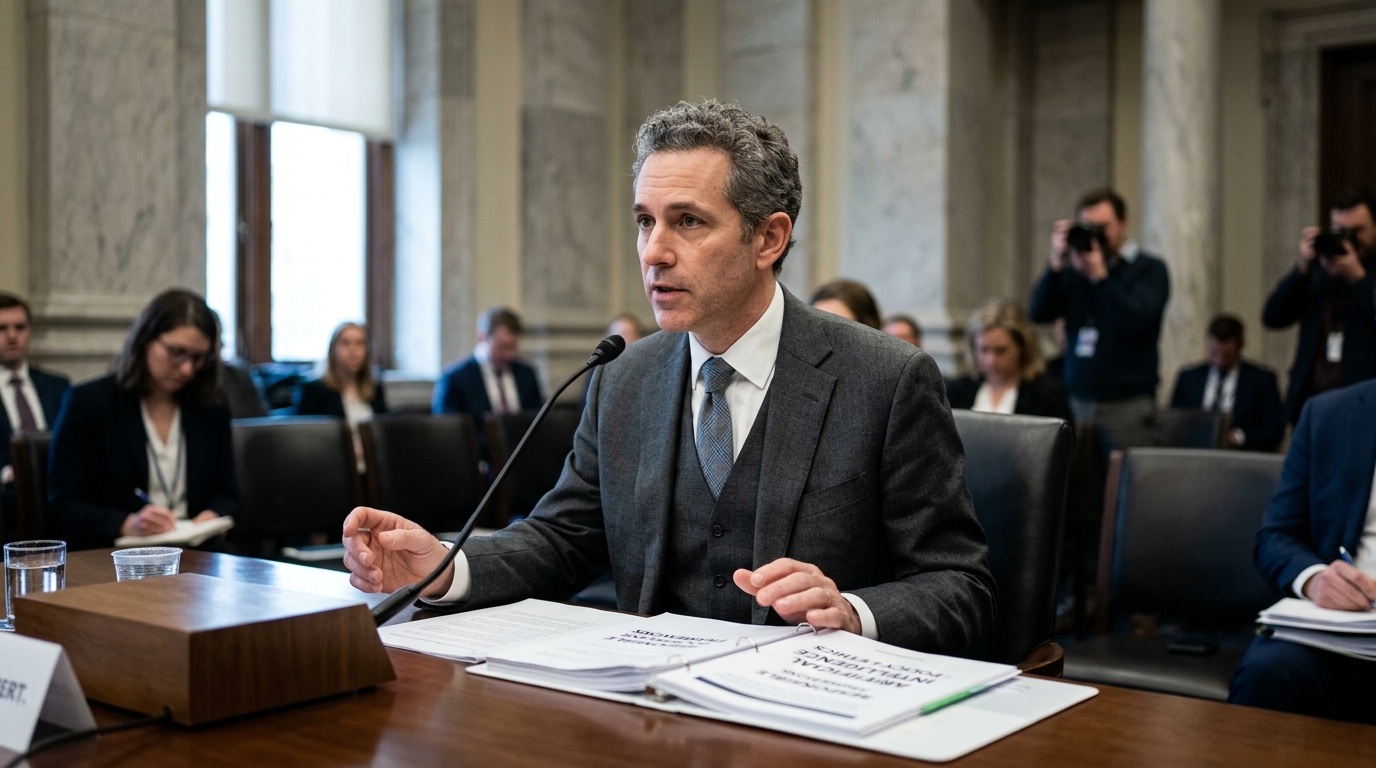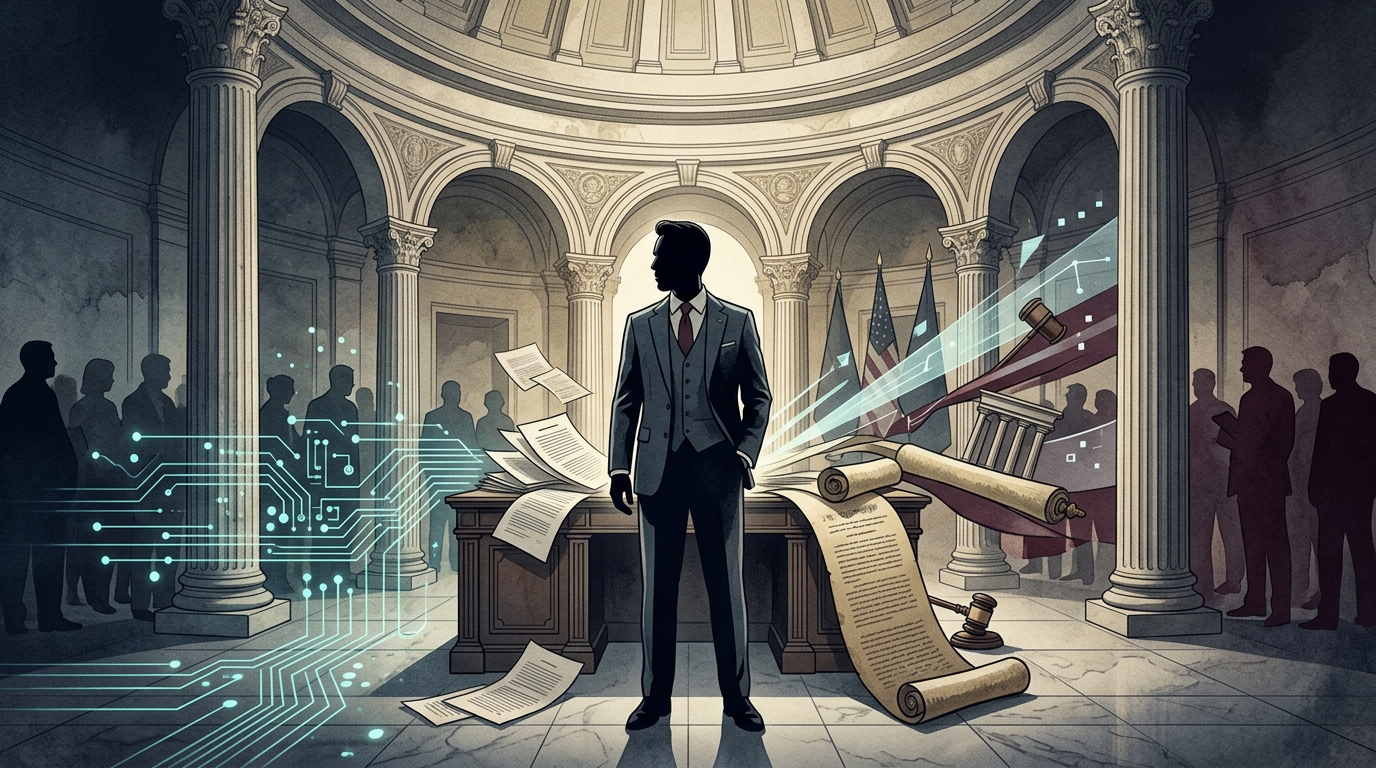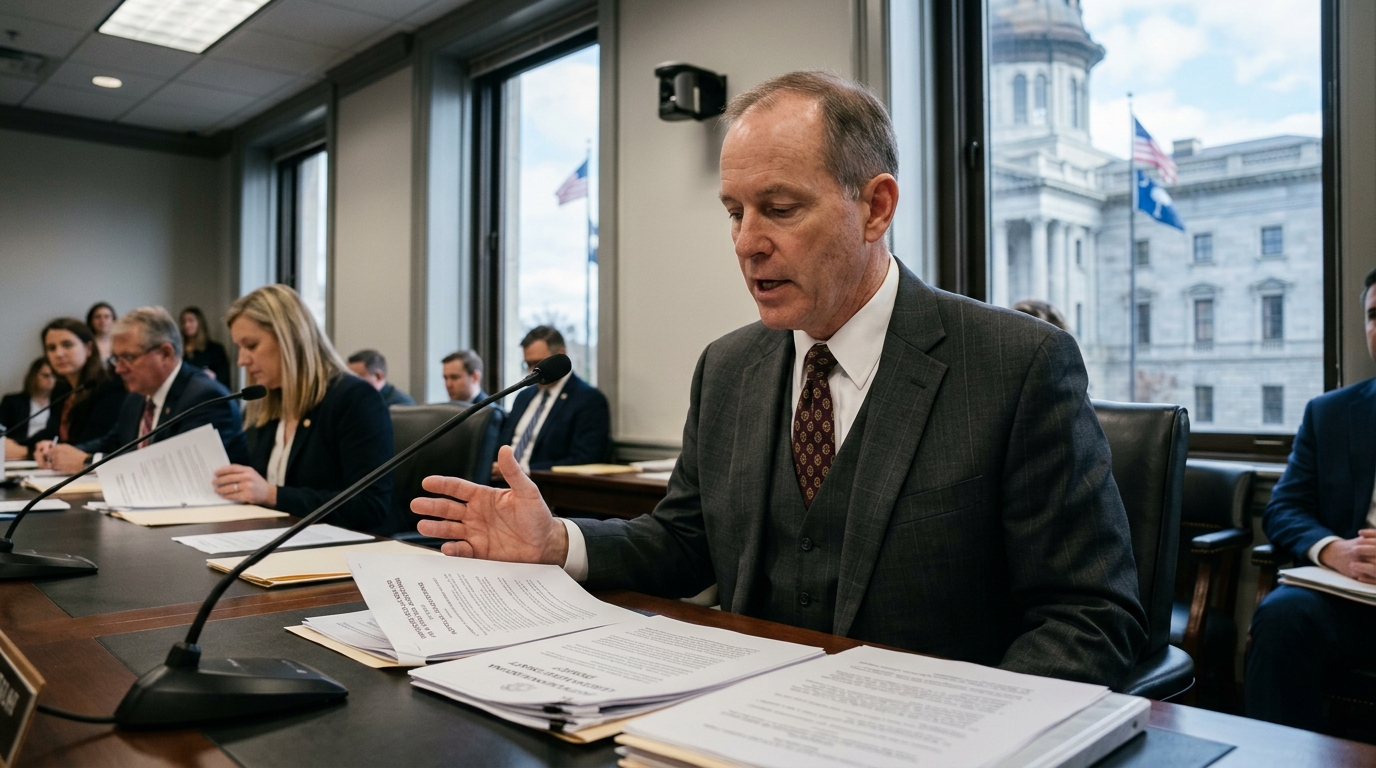
In an era where digital reality is becoming increasingly indistinguishable from manufactured deception, South Carolina Attorney General Alan Wilson is emerging as a pivotal voice on the American political stage. His recent call for stringent rules regarding the use of Artificial Intelligence (AI) in political advertising is not merely a local initiative; it is a clarion call resonating across the nation. As we approach the 2026 election cycles, the threat of deepfakes and deceptive algorithms is transitioning from a theoretical scenario into an immediate danger to the fundamental trust citizens place in their institutions.
The Anatomy of a Digital Threat
Wilson’s concern centers on the capability of Generative AI to create hyper-realistic videos, audio clips, and images that depict political opponents saying or doing things that never occurred. “Democracy relies on the informed consent of the governed,” Wilson stated in a recent address. “When the very source of information is poisoned by algorithmic falsehoods, the foundation of our republic erodes.” South Carolina, following the lead of several other states, is seeking to establish mandates that would require clear disclosure of any AI-generated content, ensuring voters know when they are viewing a synthetically altered product.
The problem is not just the existence of the lie, but the velocity at which it spreads. In the past, a smear campaign advertisement took days to produce and broadcast. Today, a malicious actor can generate thousands of variations of a deepfake in minutes, targeting specific voter demographics via social media with surgical precision. This “democratized” ability to deceive renders traditional fact-checking tools practically obsolete, as the volume of synthetic misinformation can easily overwhelm human verification efforts.
Legal Challenges and the First Amendment
Wilson’s push to regulate AI political ads runs headlong into one of the most sacred pillars of American law: the First Amendment. Critics of such regulations argue that the definition of “deceptive content” can be subjective and potentially weaponized as a tool for censorship by those in power. However, Wilson and proponents of regulation counter that fraud is not protected speech. Just as a corporation is not permitted to lie about the ingredients in a medication, a political campaign should not be allowed to manufacture digital falsehoods that distort reality.
- Mandatory disclosure labels for any political ad utilizing AI-generated elements.
- Criminal and civil penalties for creators of deepfakes intended to defraud voters.
- Collaboration with tech giants like Meta and Google to implement automated detection of synthetic media.
- Public awareness campaigns to educate the electorate on identifying digital manipulations.
Wilson’s approach is notably bipartisan. In an era of extreme political polarization, protecting electoral integrity from AI appears to be one of the few issues where Democratic and Republican Attorneys General find common ground. The shared fear is profound: if voters stop believing anything they see or hear, the very concept of public discourse collapses into a cynical void where truth is whatever the most powerful algorithm says it is.
The International Context and Corporate Responsibility
While South Carolina moves at the state level, the debate has global implications. The European Union, through its landmark AI Act, has already established frameworks for transparency and risk management. In the United States, the federal government has been slower to act, leaving a regulatory vacuum that states are now rushing to fill. Wilson emphasizes that the burden of responsibility does not lie solely with lawmakers but also with the technology companies that host this content. Algorithms optimized for engagement often inadvertently amplify deepfakes, as synthetic outrage typically generates more clicks than nuanced truth.
“We cannot allow technology to outpace justice. If we do not set rules now, future elections won’t be decided by the strength of ideas, but by the sophistication of lie-generating algorithms,” Wilson warns.
In conclusion, Alan Wilson’s initiative represents a critical test for how modern democracies will confront the AI challenge. The balance between innovation, free speech, and objective truth is delicate, but inaction may prove to be the most dangerous path of all. South Carolina may be just one state, but the battle it is waging concerns the very future of the global digital society and the survival of shared reality.