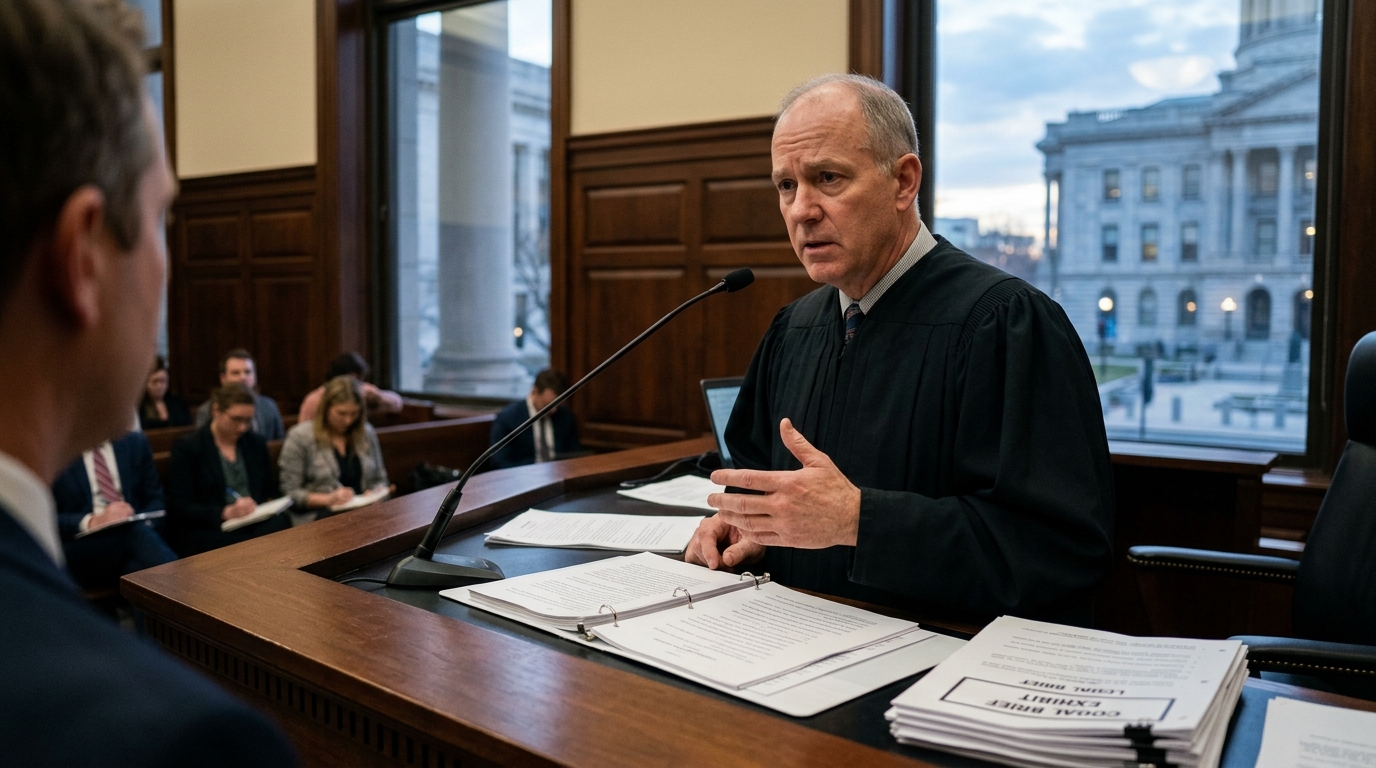
Legal practice, a discipline traditionally anchored in precision, historical documentation, and the indisputable validity of sources, is facing an unprecedented crisis of credibility. The recent warning from Judge James Egan of the Oregon Court of Appeals is not merely an observation; it is a clarion call regarding the degradation of judicial proceedings caused by the unchecked use of Artificial Intelligence (AI) tools.
The Epidemic of Jurisprudential Hallucinations
In an unusual memorandum, Judge Egan described a 'rapidly escalating' trend of attorneys and litigants filing briefs riddled with non-existent court decisions and fabricated legal arguments. This phenomenon, known in the tech industry as 'hallucination,' occurs when Large Language Models (LLMs) like ChatGPT, in an attempt to satisfy a user's prompt, generate text that sounds legally sound but lacks any factual basis.
According to Egan, the situation has moved beyond isolated incidents. Court staff and law clerks are now spending countless hours attempting to track down purported supreme court rulings that were never issued. This waste of public resources and time undermines the efficiency of the judicial system and poses a direct threat to the administration of justice.
From Error to Willful Negligence
The issue is not new, but its scale is. In 2023, the Mata v. Avianca case in New York made global headlines when a lawyer admitted to using ChatGPT to draft a lawsuit that contained six entirely fictional cases. However, what is currently transpiring in Oregon and other parts of the United States suggests that the lesson has not been learned.
Judge Egan emphasized that the use of AI does not absolve a lawyer of their ethical and professional obligation to verify every citation. 'Artificial Intelligence is a tool, not a substitute for legal research,' seems to be the core message. Justice relies on the principle of stare decisis (to stand by things decided), and when the foundations of this principle are contaminated by false data, the entire edifice of the rule of law is shaken.
Institutional Safeguards and Sanctions
Many courts globally have begun implementing rules requiring lawyers to disclose if they used AI in drafting their filings and to certify that a human has verified the accuracy of all citations. In Oregon, Egan's warning comes with the threat of severe sanctions, including fines and disciplinary actions by the State Bar.
- Mandatory disclosure of generative AI tool usage in filings.
- Strict citation audits by law clerks and judicial assistants.
- Imposition of penalties for 'reckless' submission of false information.
The challenge remains: how can the law integrate technological progress without sacrificing its integrity? The answer may lie in education. Legal professionals must understand that LLMs are probabilistic models—they predict the next word—rather than truth-oriented databases. Relying on them for case law research is akin to asking a novelist to write a surgical manual.
Conclusion: Human Judgment as the Last Bastion
As AI evolves, the distinction between reality and fabricated truth will become increasingly blurred. Judge Egan reminds us all that justice is a deeply human activity requiring critical thinking, moral conscience, and, above all, accountability. The 'rapidly escalating' errors in Oregon serve as a warning shot for all modern democratic systems: technology can accelerate processes, but if left unsupervised, it can lead to a legal labyrinth from which there is no easy exit.