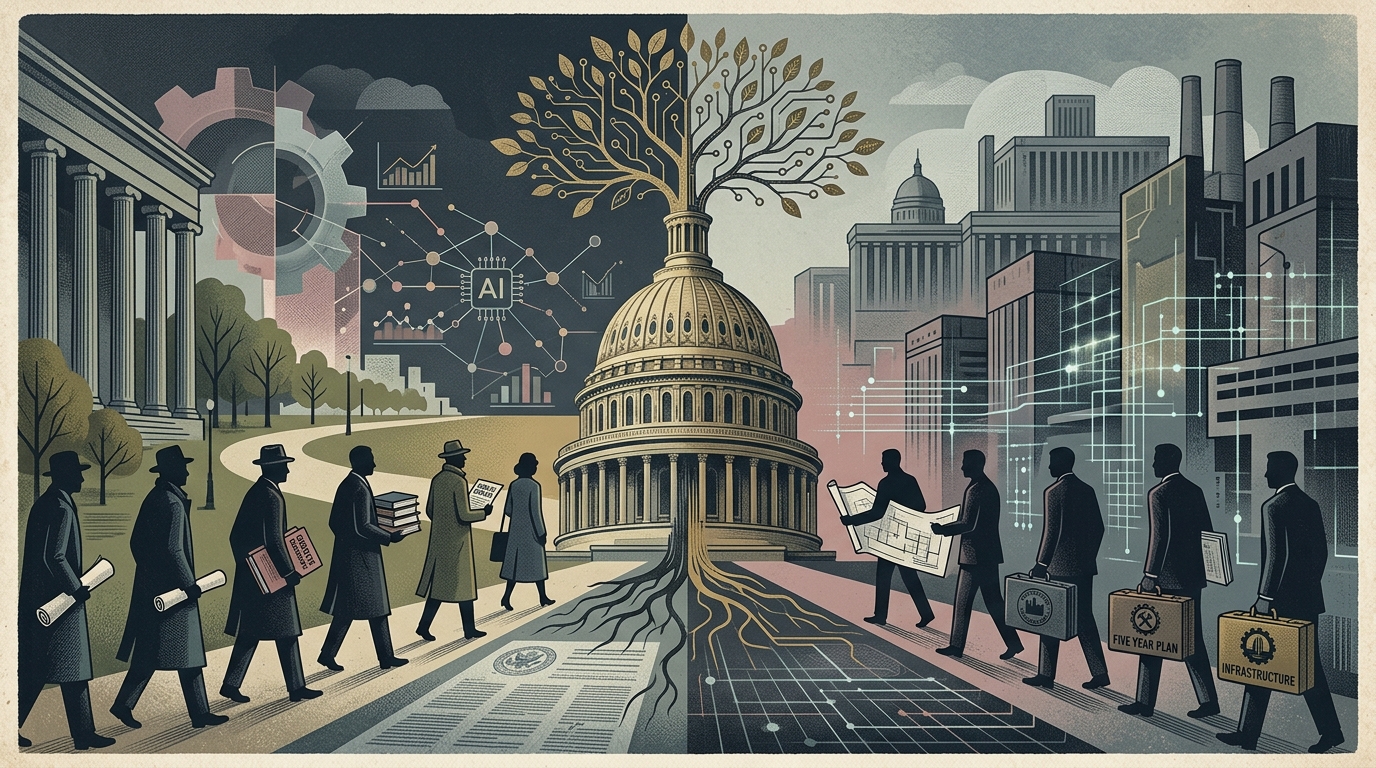
In an era where the global discourse on Artificial Intelligence (AI) often oscillates between utopian expectations and dystopian fears, the Greek Minister of Digital Governance, Dimitris Papastergiou, intervened with a stance that seeks to restore technology to its true dimensions. Speaking on ERTnews, Mr. Papastergiou emphasized a fundamental principle: technology must remain the tool, and the human being the final judge and sovereign.
Demystifying the Algorithm: Do Not Deify Technology
The Minister's warning against the "deification" of Artificial Intelligence is not merely a rhetorical turn, but a profound political and ethical position. At a time when tech giants present their models as almost omnipotent entities, Mr. Papastergiou reminds us that AI lacks judgment, consciousness, and an ethical compass. It is, in its essence, a highly sophisticated data processing mechanism that must serve specific social needs.
"Technology is not an end in itself. It is the means to make citizens' lives easier, administration more transparent, and the economy more efficient. We should not approach it with religious reverence, but with critical thinking," he characteristically noted.
This approach aligns with the broader European strategy, which through the AI Act seeks to establish the world's first regulatory frameworks for the ethical use of artificial intelligence, ensuring that citizens' rights are not sacrificed on the altar of innovation.
The mAigov Example and Digital Greece
Mr. Papastergiou spoke extensively about mAigov, the first AI digital assistant for the Greek public administration, which is already a successful case study at the European level. mAigov is not just a "chatbot," but an effort to bridge the gap between the citizen and the labyrinthine bureaucracy. With over 1 million queries answered, the application proves that AI can have a direct and positive impact on everyday life.
- Simplification of Processes: AI helps in the rapid retrieval of documents and information that previously required hours of searching.
- 24/7 Accessibility: Citizens have access to state information at any time, without the need for physical presence.
- Resource Optimization: Automating simple requests allows public servants to focus on more complex tasks.
Ethics, Transparency, and the Future of Work
One of the most critical points of the interview was the reference to the inherent risks. The Minister did not fail to mention the challenges of deepfakes and misinformation, emphasizing that the state must protect citizens through digital literacy. Technology, while offering solutions, can also become a weapon in the hands of those who wish to manipulate public opinion.
Regarding the labor market, the Ministry's position is that AI will transform professions rather than abolish them entirely. The emphasis is on "reskilling" and "upskilling" the workforce so it can collaborate harmoniously with new digital tools. Artificial intelligence must function as "augmented intelligence," enhancing human capabilities instead of replacing them.
Conclusion: A Relationship of Trust
Dimitris Papastergiou's position on ERTnews sends a clear message: Greece wishes to be a protagonist in technological developments, but on its own terms. The digital transition is not a blind march into the unknown, but a carefully designed path that has the human being at its center. Avoiding the "deification" of AI is the necessary prerequisite for technology to remain what it was always meant to be: a faithful and effective servant of society.