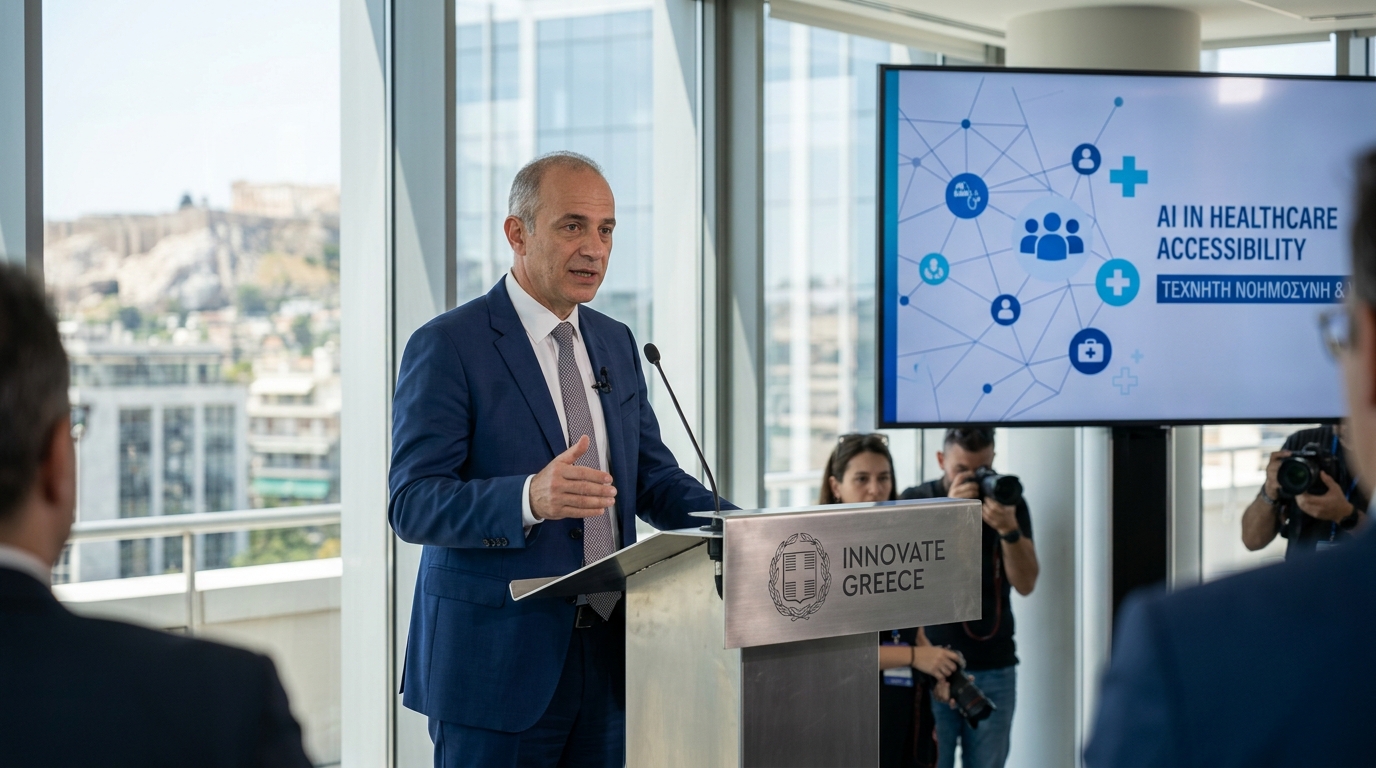
The Greek public health sector stands at a pivotal crossroads, where the traditional structures of the National Health System (NHS/ESY) meet the cutting edge of technological innovation. In recent remarks, Deputy Health Minister Marios Themistokleous outlined a framework for radical reform: Artificial Intelligence (AI) is no longer a futuristic scenario but the primary tool for ensuring equitable access to health services for every citizen, regardless of their geographical location.
The Ministry of Health's strategy focuses on leveraging data and algorithms to resolve chronic systemic issues, such as long waiting lists, the shortage of specialized personnel in rural areas, and the critical need for early diagnosis. According to Mr. Themistokleous, the digital transformation of healthcare in Greece, largely funded by the Recovery and Resilience Facility (RRF), represents the largest investment ever made in this sector.
The Democratization of Care through Technology
One of the most significant points of the Deputy Minister's intervention is the concept of the "democratization" of health. In Greece, a country with complex geography and hundreds of inhabited islands, access to top-tier specialists has historically been a privilege for those living in major urban centers. Integrating AI tools into telemedicine and using algorithms for medical imaging analysis (such as X-rays and MRIs) allows a doctor in a remote health center to have the support of a "digital consultant" with accuracy levels comparable to a specialized radiologist in Athens.
Mr. Themistokleous emphasized that the MyHealth app and the Digital Health Record (DHR) form the backbone of this endeavor. Aggregating data allows AI to identify patterns that would be impossible for the human eye to discern at such a scale. This means the system can now warn of an increased risk of chronic diseases in specific population groups, allowing for intervention before a condition becomes critical.
From Cure to Prevention: The "Fofi Gennimata" Program and AI
The shift toward preventive medicine is the core of the new strategy. The Deputy Minister referred to the successful "Fofi Gennimata" screening program, which already incorporates advanced digital tools. The use of AI in analyzing mammograms accelerates the diagnostic process and reduces error rates, ensuring that no woman is left without care due to bureaucratic or technical delays.
"Artificial Intelligence is not coming to replace the doctor, but to provide the tools needed to be more efficient, faster, and fairer in the distribution of care," stated Mr. Themistokleous.
Furthermore, AI is expected to play a decisive role in managing hospital resources. By predicting patient flows and automating the management of appointments and surgeries, the Ministry aims to drastically reduce waiting times, which remains perhaps the most significant grievance for Greek citizens.
Challenges, Ethics, and the Way Forward
Despite the optimism, implementing AI in healthcare is not without its challenges. Mr. Themistokleous acknowledged that protecting personal data and ensuring the ethical use of algorithms are top priorities. Greece is fully aligning with European legislation (the AI Act), seeking an environment where technology operates with transparency and accountability.
Another issue is the training of medical and nursing staff. The transition to an AI-powered healthcare system requires new skills. The Ministry is planning extensive training programs so that healthcare professionals do not feel threatened by technology but embrace it as a valuable partner. The challenge for Mr. Themistokleous and the government is to prove that digital health is not a luxury for the few, but the foundation for a sustainable and human-centric NHS in the 21st century.