In an era where the climate crisis is no longer a distant threat but a daily reality, the aviation industry stands at the epicenter of a historic transition. SKY express, Greece's fastest-growing airline, is taking a leading role in this effort, systematically investing in technologies and practices aimed at reducing its environmental footprint. The company's strategy is not limited to communication tactics but is rooted in a radical redesign of its operational model.
A Young Fleet as a Pillar of Sustainability
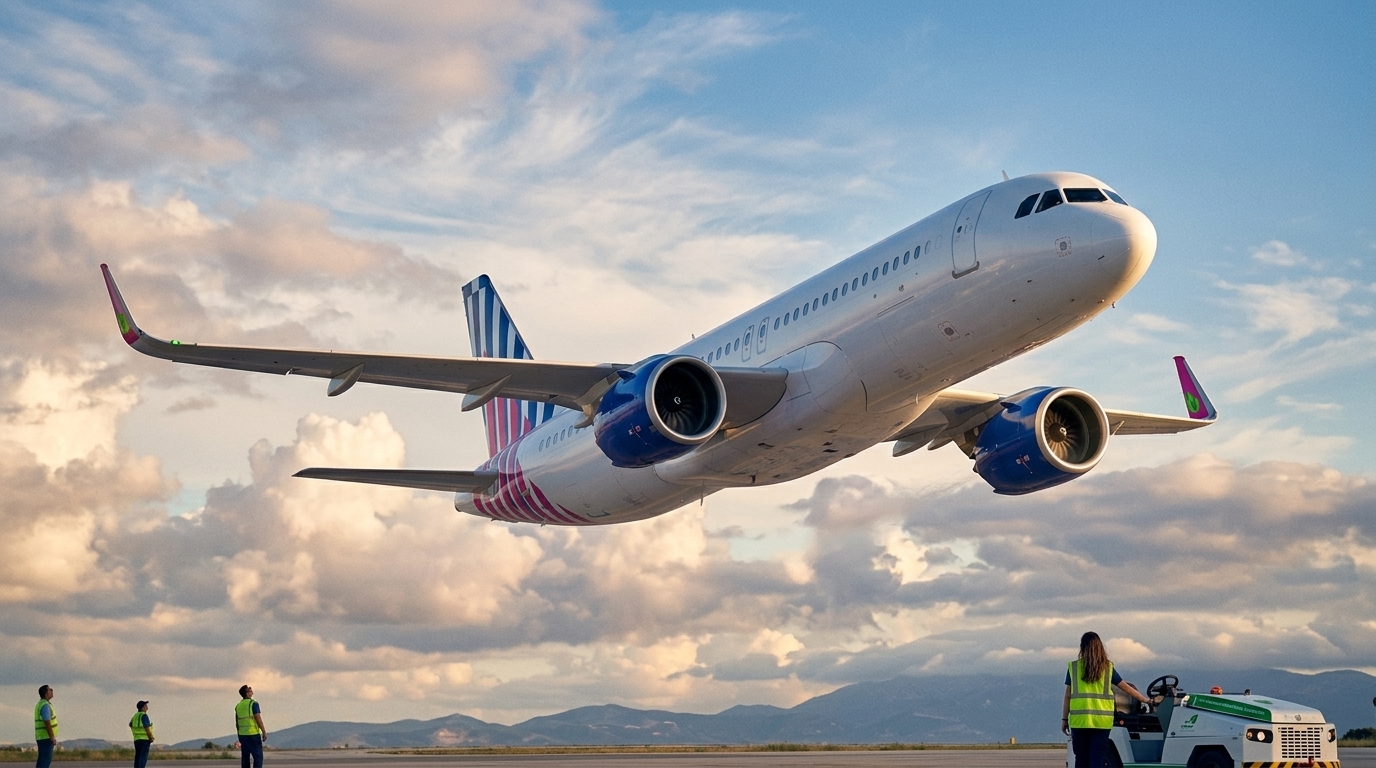
The most significant move in SKY express's strategy is the continuous renewal of its fleet. Currently possessing the youngest fleet in Greece and one of the most modern in Europe, the company leverages the advantages of the Airbus A320neo and ATR 72-600 aircraft. These specific aircraft do not just offer an enhanced flight experience; they achieve significant reductions in CO2 emissions and noise pollution.
The A320neo family aircraft incorporate next-generation engines and wing-tip Sharklets, which reduce fuel consumption by at least 20% compared to previous models. Simultaneously, the noise footprint is reduced by 50%, making the airline more "friendly" to local communities living near airports. For a country like Greece, where tourism is inextricably linked to the quality of life in island destinations, noise reduction is a critical sustainability parameter.
Sustainable Aviation Fuel (SAF): The Fuel of the Future
While electric propulsion in aviation remains largely experimental for long distances, Sustainable Aviation Fuels (SAF) represent the most immediate solution for the industry's decarbonization. SKY express has already begun using SAF, aligning with the European ReFuelEU Aviation directives. These fuels, produced from biological raw materials or waste, can reduce life-cycle emissions by up to 80%.
However, the challenge remains the availability and high production cost of SAF. SKY express is actively participating in consultations and partnerships to create a stable supply chain in Greece, recognizing that the transition requires a collective effort from airlines, fuel producers, and the state. Investing in SAF is not just an environmental choice but also a strategic shield against future European Union carbon taxes.
Digitalization and Operational Efficiency
Sustainability is not only about fuels and engines but also about how the company operates on a daily basis. SKY express has adopted the "Paperless Cockpit" model, replacing traditional printed charts and manuals with Electronic Flight Bags (EFBs). This not only reduces the aircraft's weight—and thus fuel consumption—but also improves flight accuracy through the use of real-time data.
Furthermore, flight path optimization allows aircraft to cover the shortest possible distances, avoiding unnecessary holding patterns in the air. On the ground, the company is investing in electric support vehicles and in-flight recycling practices, aiming to eliminate single-use plastics by the end of the decade. These incremental changes, when aggregated, create a substantial impact on the company's total carbon output.
The Social Dimension of Green Growth
For SKY express, sustainability is inextricably linked to social contribution. Maintaining the connectivity of the Greek islands, even the most remote ones, is a national service. The use of ATR 72-600 aircraft, which are ideal for the specificities of Greek regional airports, allows the company to offer reliable services with the lowest possible environmental cost per passenger.
In conclusion, SKY express's strategy for a "green" future is a dynamic process that is constantly evolving. In a world that demands responsibility, the Greek airline demonstrates that growth and environmental protection can coexist, provided there is vision, investment courage, and a commitment to innovation. The Net Zero bet is difficult, but the path toward it is the only viable option for the sustainability of Greek tourism and the national economy as we head toward 2030 and beyond.