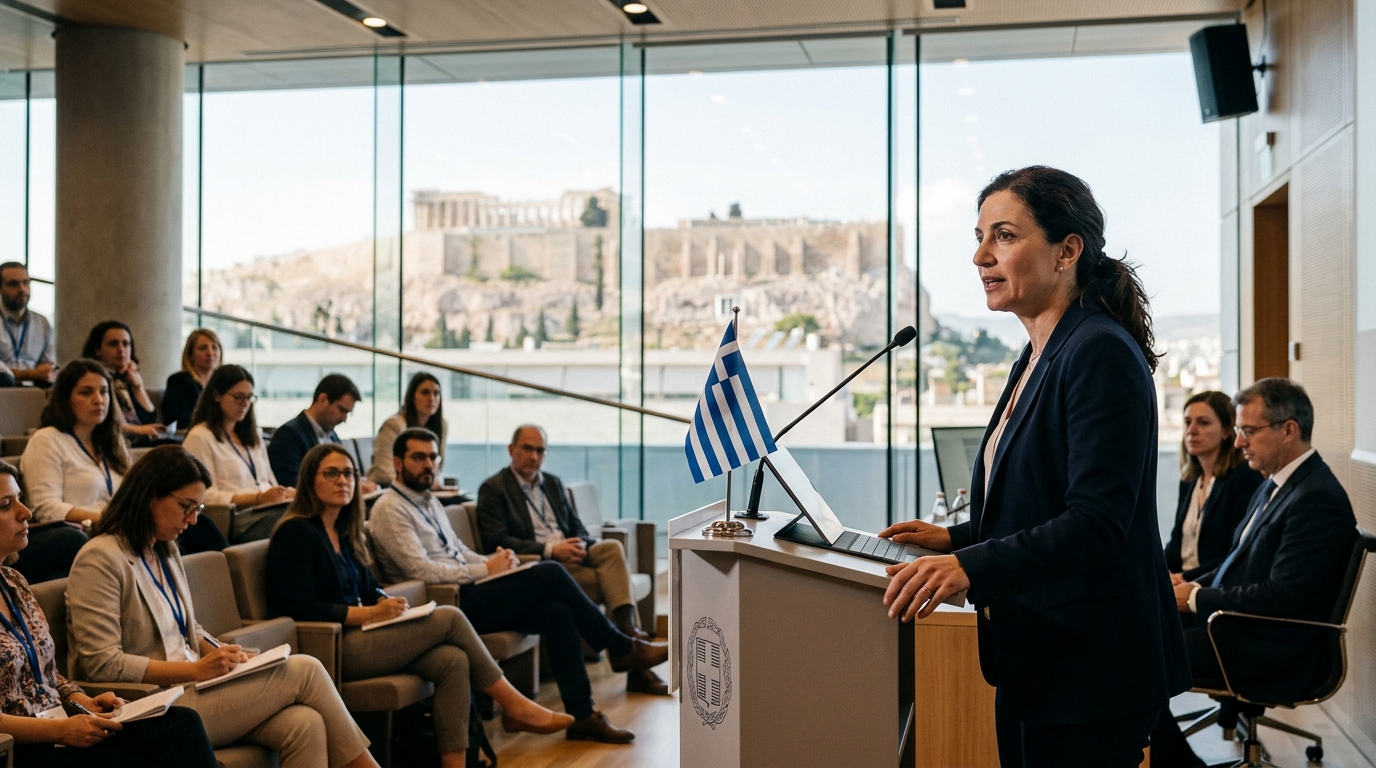
At the Delphi Economic Forum (DEF) 2026, the discussion regarding the future of higher education in Greece took on a dynamic new dimension. Nikos Stathopoulos, Chairman of BC Partners, unveiled the ambitious strategic plan for Alphabet Education, setting the goal of establishing Greece as the leading innovative international education hub in Southern Europe. In an era where the boundaries between physical and digital learning are increasingly blurred, Mr. Stathopoulos's intervention highlighted the urgent need for a radical overhaul of the educational model.
The Alphabet Education Strategy: From Local Market to Global Reach
Alphabet Education, the educational arm of BC Partners which includes market leaders such as Metropolitan College and IEK AKMI, is no longer viewed merely as a provider of education, but as a catalyst for economic growth. According to Mr. Stathopoulos, investing in education is the most secure path to enhancing the country's competitiveness. "Our vision is to create an ecosystem that is not confined by the narrow geographical borders of Greece, but attracts students from around the world by offering programs that combine academic excellence with practical application," he emphasized during his keynote.
This strategy is built on three pillars: extroversion, investment in cutting-edge infrastructure, and a close link with the labor market. Following the recent liberalization of the non-state university market in Greece, Alphabet Education is strategically positioned to lead this new era, offering degrees that are internationally recognized and equip graduates with "transferable skills"—the ability to pivot across industries in a volatile economy.
Artificial Intelligence as a Foundational Element of Learning
A central point of Mr. Stathopoulos's presentation was the role of Artificial Intelligence (AI) in the educational process. By 2026, AI is no longer an experimental tool but the backbone of personalized learning. Alphabet Education is investing heavily in platforms that adapt the pace and content of teaching to each student's individual needs, effectively closing the gap between theory and practice.
"We are no longer training students for the jobs of today, but for the challenges of 2030 and beyond. The ability to learn how to learn, supported by technology, is the most important skill we can offer," noted Mr. Stathopoulos.
The use of AI also allows for real-time data analysis of global labor market trends, enabling the organization to update its curricula at a speed that traditional universities struggle to match. This agility is considered the "key" to attracting foreign investment and fostering brain gain—bringing back scientists and academics who excelled abroad to the Greek educational landscape.
Towards an Educational Destination in Southern Europe
The ambition to turn Greece into an educational hub is not new, but under the management of Alphabet Education, it has gained significant corporate momentum. Mr. Stathopoulos pointed out that Southern Europe possesses advantages such as quality of life, climate, and cultural heritage—elements that, when combined with modern educational structures, can compete with traditional destinations like the UK or the USA.
- International Partnerships: Establishing agreements with top-tier foreign universities for joint degree programs.
- Innovation in Practice: Creating innovation hubs within campuses where students can develop their own start-ups.
- Sustainability: Integrating ESG (Environmental, Social, and Governance) principles across all educational activities.
Mr. Stathopoulos concluded that the success of this venture requires collaboration between the public and private sectors. The state must ensure a stable regulatory framework, while the private sector must continue to invest in quality and innovation. The challenge for Alphabet Education is clear: to prove that Greece can export high-level education, turning past crises into an opportunity for a bright academic future.