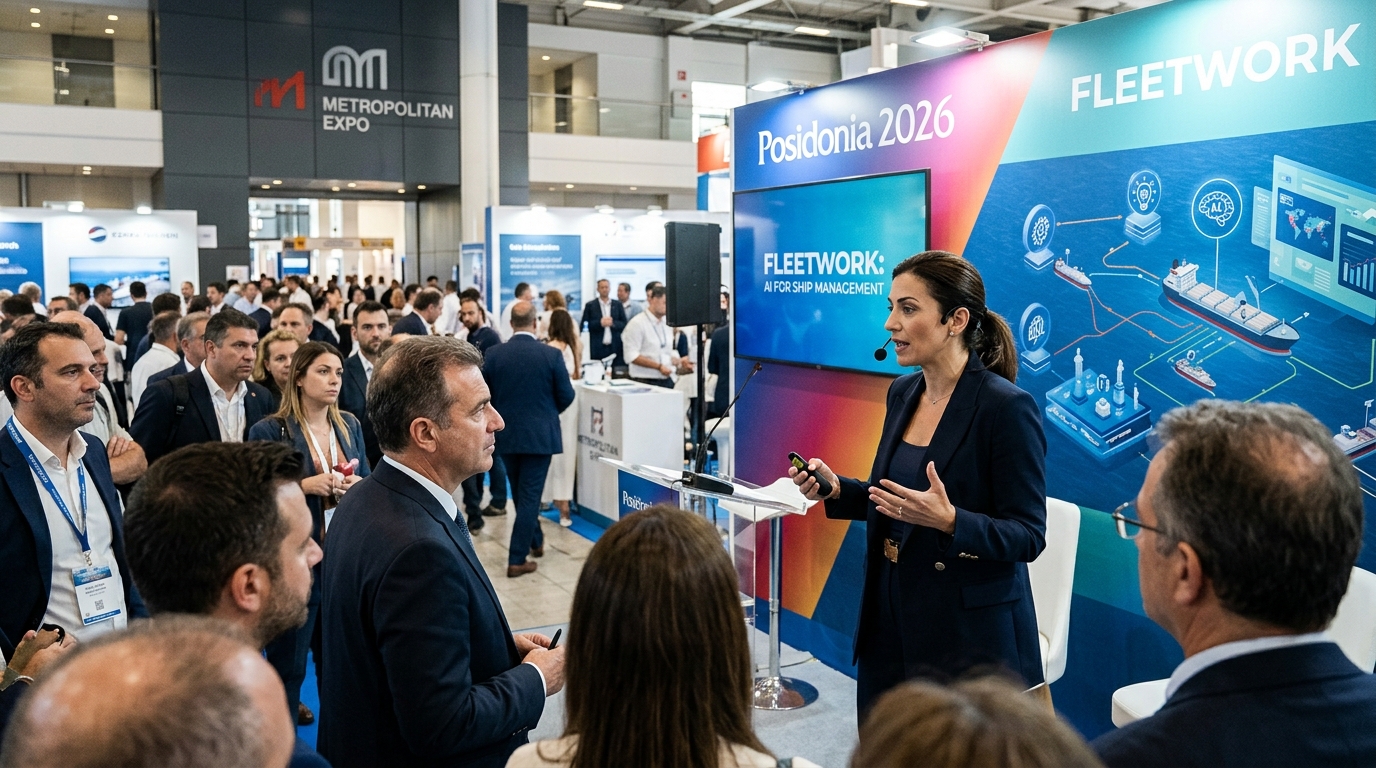
The curtains rose today at Posidonia 2026 at the Metropolitan Expo in Athens, and the atmosphere is electric. While shipping is traditionally seen as an industry resistant to rapid change, this year's event proves exactly the opposite. At the heart of this technological revolution stands Fleetwork, which has unveiled a comprehensive Artificial Intelligence platform promising to radically change how fleets are managed on the high seas.
The Digital Bridge of the Future
Fleetwork’s proposal is not just another data monitoring application. It is a 'cognitive operating system' for ships. The platform utilizes advanced machine learning algorithms to analyze thousands of parameters in real-time: from fuel consumption and engine health to weather forecasts and port congestion. The system doesn't stop at logging; it moves into predictive analytics, suggesting the ideal route to the captain and the shore-side manager to maximize efficiency and minimize emissions.
According to company executives, integrating AI into maritime management can reduce a ship's operating costs by up to 15% annually. In an industry where profit margins are squeezed by fluctuating fuel prices and stringent environmental regulations, such figures are not just attractive; they are vital for survival.
Green Shipping and Compliance
One of the primary themes of Posidonia 2026 is decarbonization. The International Maritime Organization (IMO) has set ambitious targets for reducing the carbon footprint, and Fleetwork seems to have the solution. The company's AI optimizes combustion and vessel speed with such precision that compliance with CII (Carbon Intensity Indicator) metrics becomes an automated process.
- Automatic speed adjustment based on fuel prices and freight rates.
- Predicting malfunctions before they occur, reducing downtime.
- Optimizing crew management and shifts to prevent fatigue.
- Automated reporting to regulatory authorities.
The Greek shipping community, which controls the lion's share of the global merchant fleet, is watching with bated breath. Greek shipowners, known for their sharp instincts, seem to realize that the era of 'managing by gut feeling' is giving way to the era of data-driven decisions.
The Human Element and Challenges
Despite the excitement, skeptics remain. Introducing AI to the bridge raises questions about the human role. Fleetwork clarifies that the goal is not to replace the crew but to empower them. The captain remains the final decision-maker, but now has a 'digital co-pilot' capable of processing information at speeds the human brain could never achieve.
"Shipping is entering a phase where information is the new fuel. Whoever possesses the best data and the ability to interpret it will dominate the oceans," a leading analyst stated during the presentation.
Furthermore, cybersecurity is a critical parameter. As ships become more interconnected, they also become more vulnerable to digital attacks. Fleetwork maintains that its platform features military-grade encryption, ensuring that fleet management remains in safe hands. The debate at the Posidonia panels is expected to continue with unabated interest, as technology and tradition collide and collaborate against the backdrop of the Saronic Gulf.