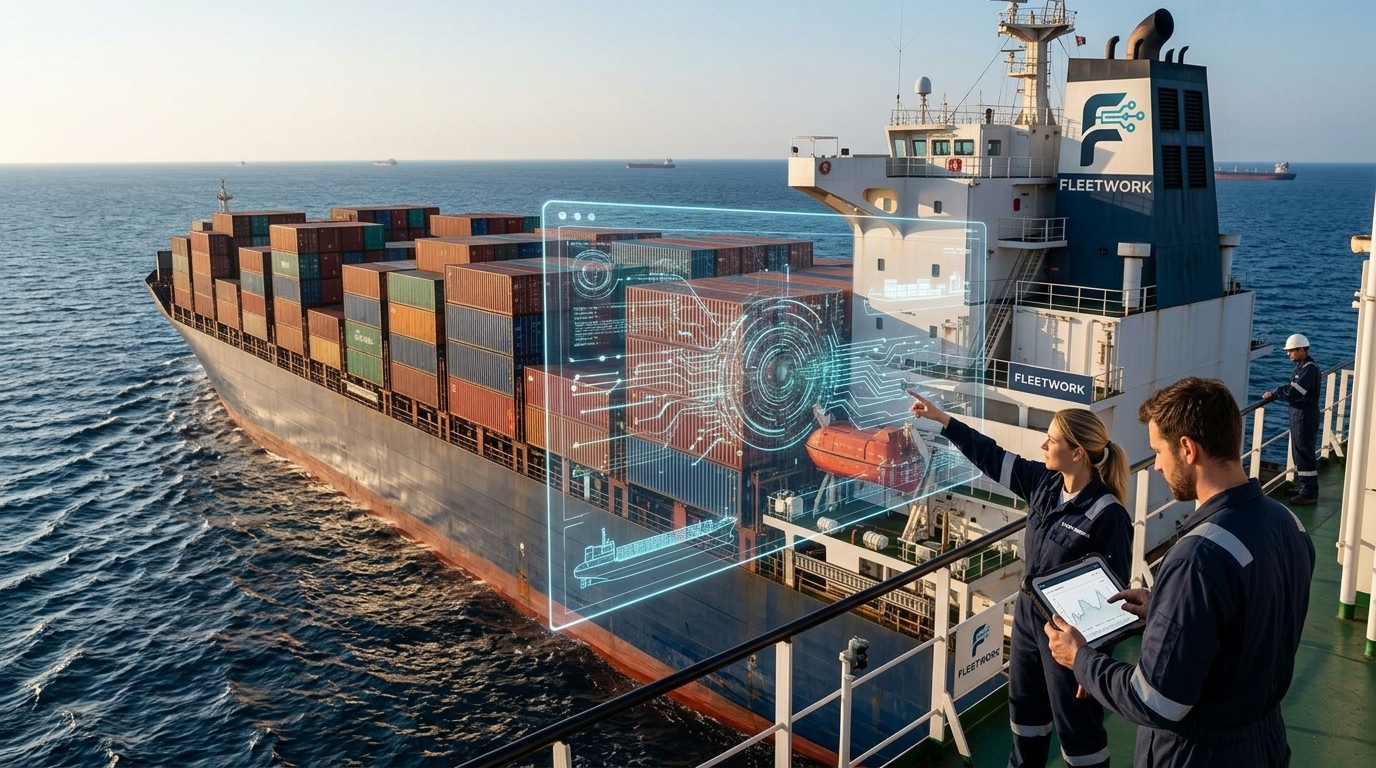
The curtains rose today on Posidonia 2026 at the Athens Metropolitan Expo, and the atmosphere is electric with a sense of historic transition. While traditional shipping remains the backbone of global trade, this year's event marks the moment when steel definitively meets silicon. At the heart of this evolution is Fleetwork, a Greek technology company promising to redefine how fleets are managed globally through Artificial Intelligence (AI).
Fleetwork is not just another software provider; it represents a new school of thought within the Greek maritime community. Its presence at Posidonia 2026 highlights how real-time data analysis and machine learning algorithms can transform an ocean-going vessel from an isolated unit into an intelligent node within a global network. The company is showcasing a platform that integrates every aspect of ship management, from fuel consumption and maintenance to compliance with stringent environmental regulations.
AI as a Catalyst for Efficiency
Fleetwork's flagship product presented at the exhibition focuses on "predictive management." Traditionally, shipping operated on a reactive model: a breakdown occurred, and then it was fixed. With AI, this changes radically. Sensors in the engine room feed data into Fleetwork's system, which can predict a potential malfunction weeks before it happens. This drastically reduces downtime and repair costs, offering shipowners a critical competitive advantage in a market with thin profit margins.
Furthermore, AI-driven route optimization considers not only weather conditions but also fuel prices at different ports, terminal delays, and emission restrictions. Fleetwork claims that using its tools can reduce fuel consumption by up to 15%, a figure that translates into millions of dollars annually for a medium-sized fleet.
Green Transition and Regulatory Compliance
One of the most pressing issues at this year's Posidonia is compliance with the International Maritime Organization's (IMO) 2030 and 2050 targets. Shipping is under immense pressure to decarbonize, and Fleetwork's technology offers an immediate solution. By accurately monitoring the Carbon Intensity Indicator (CII), ship managers can know the environmental footprint of each vessel at any given moment.
"Technology is no longer a luxury, but a prerequisite for survival," a Fleetwork executive stated during the presentation. "In a world where regulations are becoming increasingly strict, the ability to prove your energy efficiency with data is the key to accessing financing and quality charters."
Fleetwork's platform automates the reporting process, which until recently was a laborious and error-prone manual task. This not only reduces the administrative burden on corporate offices but also ensures transparency for regulatory authorities and investors focused on ESG (Environmental, Social, and Governance) criteria.
The Human Dimension and the Future
Despite the emphasis on automation, Fleetwork emphasizes that the goal is not to replace the human element, but to empower it. AI tools act as "co-pilots" for ship officers and technical managers ashore. The digital bridge being built allows for better communication and coordination, reducing stress and the likelihood of human error, which remains the leading cause of maritime accidents.
The emergence of companies like Fleetwork at Posidonia 2026 underscores Greece's transformation into a global Maritime Technology (MarTech) hub. We are no longer just the leading shipowners in the world; we are also becoming the creators of the tools that will lead shipping into the 21st century. The challenge now shifts to the speed of adoption of these technologies by the market at large, as the digital divide at sea begins to widen.