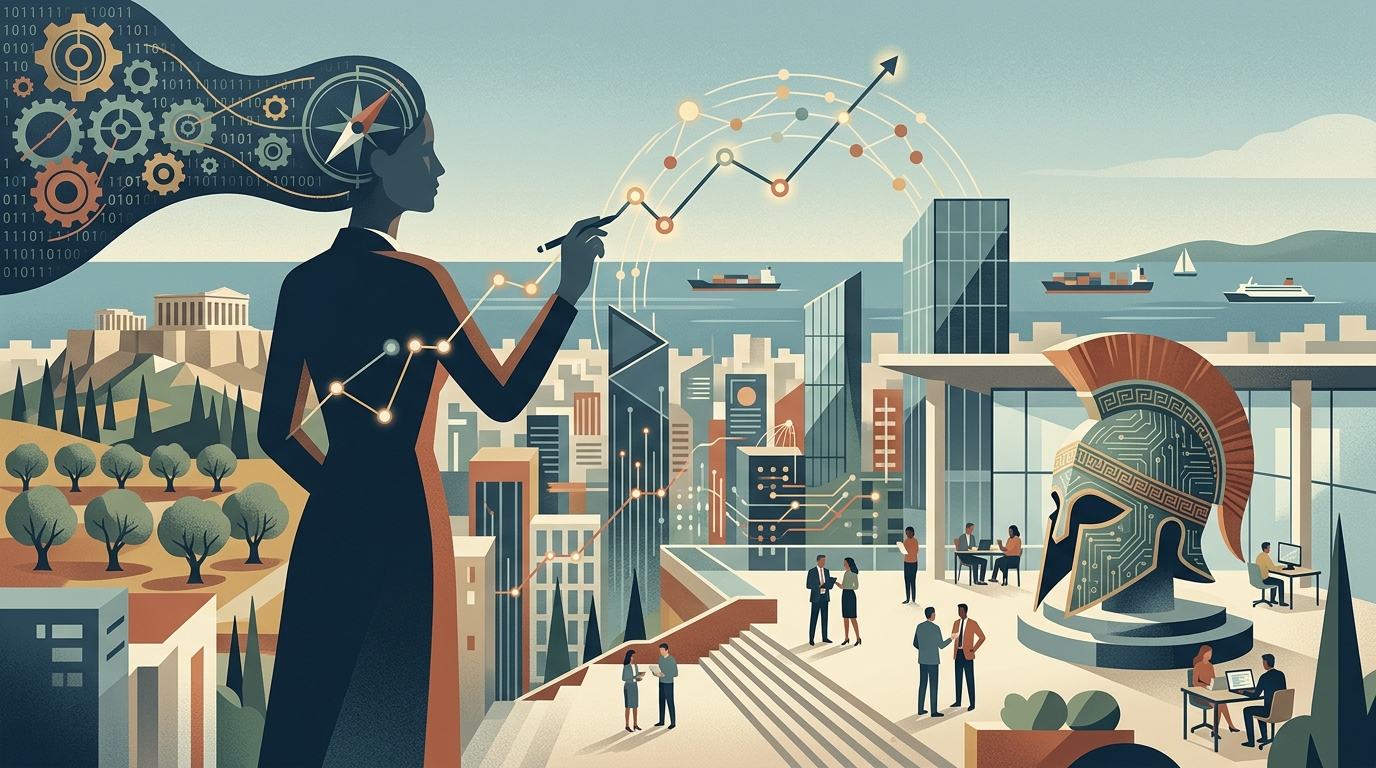
In the current business landscape of 2026, Artificial Intelligence (AI) has ceased to be a futuristic vision and has established itself as the backbone of the global economy. Recent analysis of digital economy trends, highlighted by international forums and reports from emerging markets like Vietnam, underscores an undeniable truth: competitive advantage is no longer determined solely by a company's size, but by its ability to process data and make decisions in real-time.
The application of new technologies is creating a new paradigm of operational excellence. Businesses adopting AI are not merely improving their existing processes; they are fundamentally redefining them. From the supply chain to customer service, machine intelligence offers a precision that the human factor, despite its creativity, fails to match at scale.
From Automation to the Cognitive Enterprise
The first phase of the digital transition focused on automating repetitive tasks. Today, we are in the era of the "Cognitive Enterprise." At this stage, AI does not just execute commands; it anticipates needs. For instance, in the manufacturing sector, predictive maintenance models allow companies to identify faults before they occur, saving billions in lost production time.
In retail, hyper-personalization has transformed the customer relationship. AI analyzes billions of data points—from purchase history to social media behavior—to offer the right product at the right time. This level of relevance creates customer loyalty that traditional marketing methods could never achieve.
Data as the New Strategic Asset
If oil was the driving force of the 20th century, data is the fuel of the 21st. However, data alone is useless without the ability to extract meaning. This is where the true competitive advantage lies. Businesses investing in AI infrastructure can turn vast amounts of unstructured information into strategic foresight.
In the context of European markets, the challenge is twofold. On one hand, there is the need for digital modernization of Small and Medium Enterprises (SMEs), which form the backbone of the economy. On the other hand, the shortage of specialized personnel threatens to widen the digital divide. Adopting AI technologies requires not just capital, but a radical shift in organizational culture, where decision-making is based on evidence rather than intuition.
Ethics and Sustainability in the Digital Era
As businesses rush to integrate AI, critical questions regarding ethics and transparency arise. The competitive advantage gained through AI must be sustainable and socially responsible. Algorithms that make decisions about hiring, creditworthiness, or pricing must be free from bias.
Furthermore, the energy consumption of large AI models presents a new challenge for corporate social responsibility. The leading companies of the future will be those that manage to combine technological power with the green transition, proving that profitability and environmental respect can go hand in hand.
Conclusions for the Future
The case of Vietnam, mentioned in our source, shows that emerging economies are using AI to "leapfrog" stages of development. This is a loud message for established economies: complacency is the greatest risk. Artificial Intelligence is not a mere addition to a company's arsenal, but a complete transformation of how we create value. The digital age does not forgive delay, but it generously rewards innovation and adaptability.