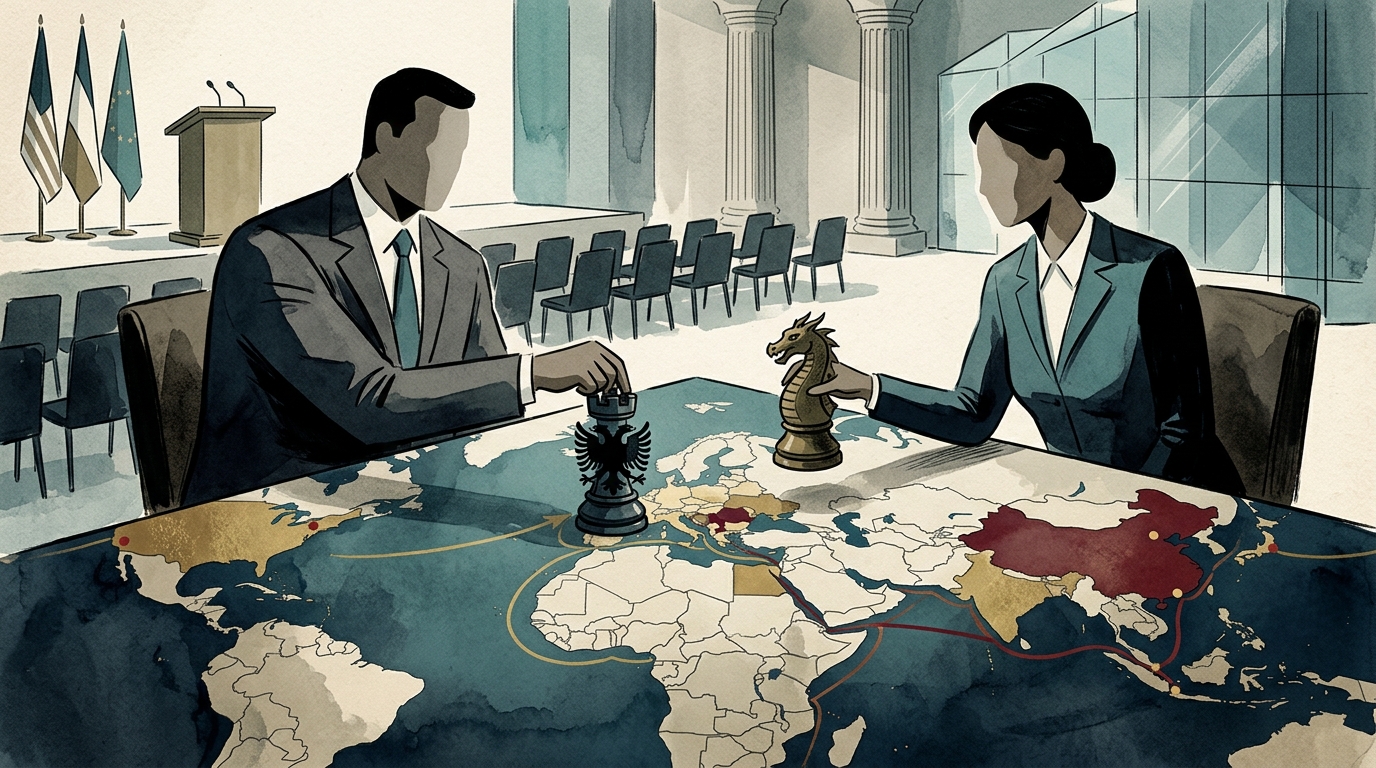
In an era where global balances are rapidly being redefined, the meeting between Serbian President Aleksandar Vučić and his Chinese counterpart Xi Jinping in Beijing is more than just a ceremonial visit. It is the consolidation of a relationship that both leaders describe as an "ironclad friendship," an alliance built on deep economic interests and shared diplomatic concerns. For Serbia, China is not just an investment giant, but a strategic partner offering alternatives to Western pressures.
The Economic Dimension: Roads, Rails, and Free Trade
The backbone of the Belgrade-Beijing relationship is undoubtedly economic. Serbia serves as a central hub for China's Belt and Road Initiative (BRI) in the Balkans. During the meeting, Vučić emphasized the importance of the recently enacted Free Trade Agreement, which allows Serbian businesses preferential access to a market of 1.4 billion consumers.
- The Belgrade-Budapest high-speed railway, funded by Chinese capital, is the flagship project of this cooperation.
- The acquisition of the Smederevo steel mill by China's HBIS and Zijin Mining's investment in Bor have revitalized Serbian heavy industry.
- Chinese investments in Serbia now exceed 5 billion euros, making Beijing the most significant non-EU investor in the country.
However, this economic dependence is not without risks. Analysts point out that borrowing from Chinese banks for infrastructure projects increases Serbia's public debt, while questions are raised regarding the environmental compliance of Chinese-owned factories in the country.
Diplomatic Reciprocity: Kosovo and Taiwan
Beyond the numbers, the friendship between the two nations is tested and reaffirmed in the field of international diplomacy. China remains a steadfast supporter of Serbia's territorial integrity, refusing to recognize Kosovo's independence. As a permanent member of the UN Security Council, Beijing provides Belgrade with a crucial diplomatic shield.
"Serbia will remain loyal to its friendship with China, regardless of the pressures it faces," Vučić stated, underlining that Belgrade strictly supports the "One China" policy regarding Taiwan.
This exchange of political support creates a front against Western "unilateralism," as both leaders often describe it. For Xi Jinping, Serbia is the most reliable partner in Europe, a gateway for Chinese influence into the European Union's "backyard."
The European Perspective and Belgrade's Dilemma
The close relationship with China puts Serbia on a collision course with Brussels' mandates. While Serbia remains an official candidate for EU membership, its refusal to align with the Union's foreign policy—both toward China and Russia—causes frustration among European officials.
The EU is asking Belgrade to reduce its dependence on Beijing, particularly in critical infrastructure and technology sectors (such as Huawei's 5G network). Vučić, however, appears to be pursuing a policy of "multi-vector diplomacy," trying to reap maximum benefits from both sides. For the Serbian leader, China offers "money without sermons" on democracy and the rule of law, making it an attractive partner for a government often criticized for authoritarian tendencies.
Conclusions for the Future
The visit to Beijing confirmed that Serbia does not intend to change course. The "ironclad friendship" is not just a figure of speech, but a strategic choice for survival and growth in a multipolar world. As China continues to expand its economic footprint in the Balkans, Serbia will remain the central bastion of Chinese power in the region, challenging the EU to rethink its own strategy for enlargement and security in Southeast Europe.