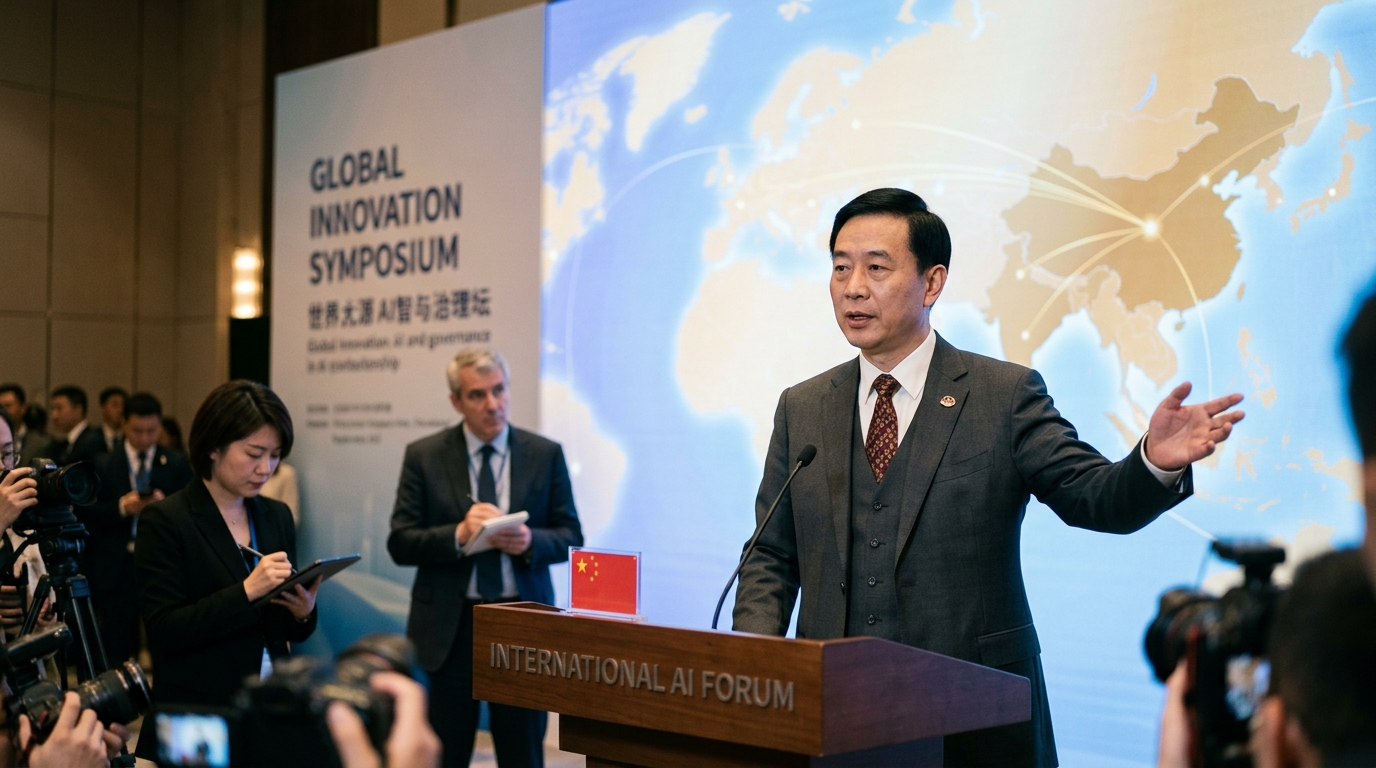
In a move that signals the intensification of the digital "Cold War" between Washington and Beijing, the US House Select Committee on the Chinese Communist Party has launched a comprehensive probe into the use of Chinese artificial intelligence models by leading American firms, including Airbnb and Anysphere. This investigation, emerging in late April 2026, underscores the growing alarm among US authorities that integrating technology from "foreign adversaries" could jeopardize national security and the privacy of American citizens.
The Strategic Imperative of AI
Artificial Intelligence is no longer viewed merely as a productivity tool; it is a dual-use technology with profound military and intelligence implications. The House probe focuses on whether companies like Airbnb, which maintains a significant footprint in mainland China, are utilizing large language models (LLMs) developed by Chinese giants such as Alibaba (the Qwen model) or Zhipu AI. The central question is whether these models contain "backdoors" that allow Beijing to access sensitive user data or manipulate algorithmic decision-making processes.
The case of Anysphere, the developer behind the popular AI-powered code editor Cursor, is equally pivotal. Anysphere is reportedly under scrutiny for potentially using Chinese models to assist in software development. The concern is that if the code powering American enterprises is generated by models controlled by a foreign power, the risk of embedded vulnerabilities, malware, or industrial espionage increases exponentially.
Data Sovereignty and National Security
According to sources close to the committee, lawmakers are demanding granular details on the due diligence processes companies employ when adopting foreign AI models. The concern transcends intellectual property theft, reaching into the realm of ideological influence. Chinese AI models are legally mandated to align with the "socialist values" of the CCP, meaning their integration into US platforms could subtly introduce censorship or automated disinformation.
- Monitoring data flows to Chinese-based servers and cloud providers.
- Evaluating the dependency on Chinese open-source software ecosystems.
- Ensuring model training datasets do not include misappropriated US data.
Airbnb has historically maintained that it complies with local regulations in every jurisdiction it operates. However, the escalating pressure from Washington is forcing a difficult choice. The "decoupling" strategy that began with high-end semiconductors is now migrating up the stack to the level of software intelligence and weights.
The Innovation Paradox
This investigation highlights a profound paradox: technological innovation is inherently global, yet geopolitics remains strictly national. Many Chinese AI models, such as Alibaba’s Qwen 2.5, are currently ranked among the best in the world, often outperforming US counterparts in specific coding and reasoning benchmarks. For an American startup, using the most efficient tool is a matter of market survival. For the US government, however, using that tool is a national security liability.
"We cannot allow American corporations to become a Trojan horse for Chinese technological supremacy," stated a committee member speaking on the condition of anonymity.
In conclusion, the probe into Airbnb and Anysphere is likely just the opening salvo. 2026 is shaping up to be a year of aggressive regulatory intervention, where tech companies will be required to prove not just their bottom-line success, but their "digital loyalty" to Western interests. The era of a borderless internet is rapidly being replaced by a fragmented landscape of "sovereign AI gardens," where the origin of a model's weights is as important as its performance.