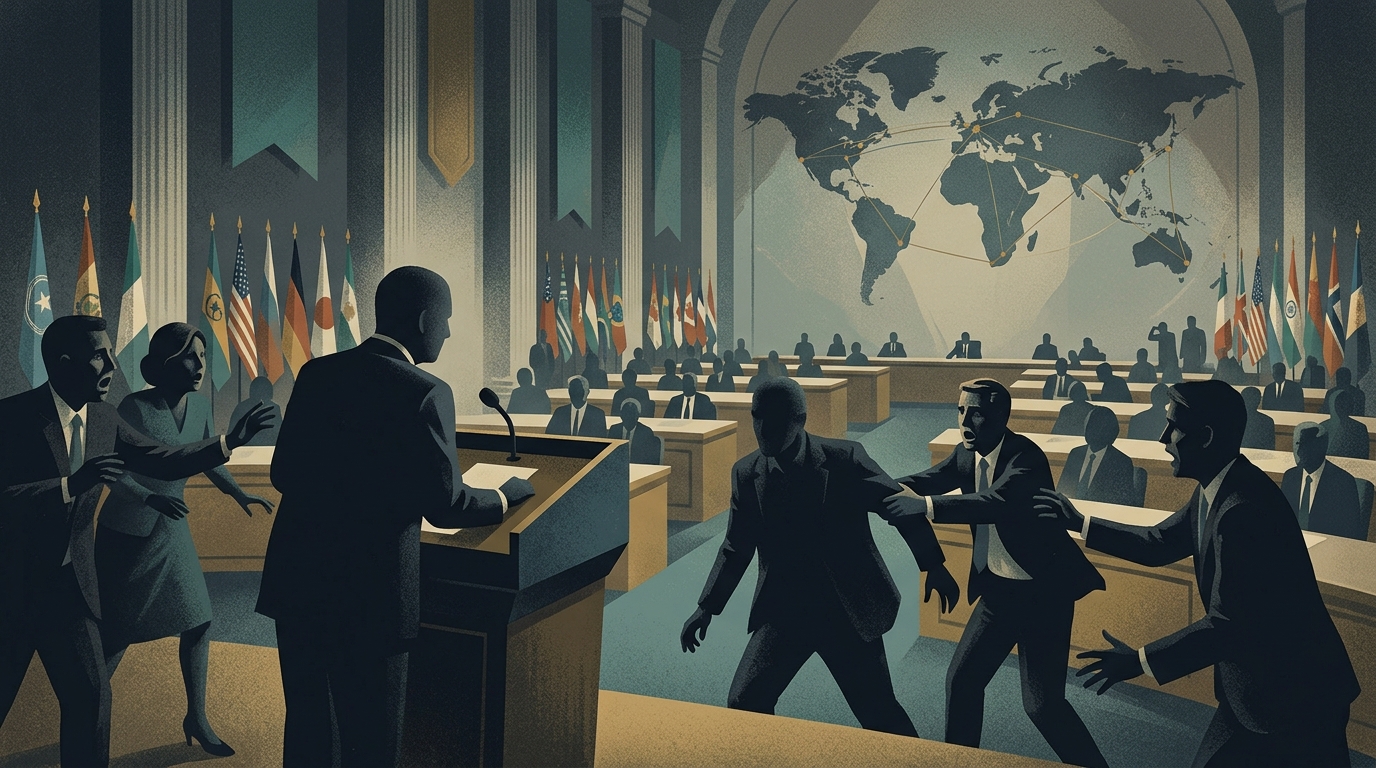
Washington D.C. found itself once again at the center of a grim reminder of the fragile political stability in the United States. On Saturday night, as the elite of American journalism and politics gathered for the annual White House Correspondents' Dinner (WHCD), the sound of gunfire outside the venue froze the atmosphere. Former President Donald Trump, the target of the alleged threat, wasted no time in labeling the detainee a "potential killer," emphasizing the arsenal found in his possession.
The Arrest and the Arsenal
According to initial reports from law enforcement and the Secret Service, the suspect was spotted near the entrance of the hotel where the event was being held. The intervention was instantaneous, as the man reportedly opened fire, causing panic among attendees and bystanders. During the subsequent search of his vehicle, officers discovered a terrifying collection of weapons: assault rifles, hundreds of rounds of ammunition, and equipment suggesting a premeditated act.
Donald Trump, in an angry statement hours later, stressed that "this man was not just a troublemaker, but a potential killer who intended to cause a bloodbath." This rhetoric, while expected from the former president, reflects a reality that American authorities have been trying to manage for years: the rise of lone-wolf radicalization and the ease of access to military-grade weaponry.
Political Violence as the New Normal
This incident is not isolated but part of a broader and disturbing pattern. In the America of 2026, political violence has transitioned from an extreme exception to a constant threat hovering over every public appearance of political figures. Polarization, which has reached levels reminiscent of darker eras in American history, is fueled by an endless cycle of conspiracy theories and inflammatory rhetoric on social media.
- The failure of preemptive security measures despite increased surveillance.
- The ease with which individuals with psychological issues or extremist beliefs gain access to heavy weaponry.
- The use of such incidents to further the political instrumentalization of "victimhood."
Analysts point out that the targeting of Trump, whether real or perceived, acts as a catalyst for his base of supporters, while simultaneously deepening the rift with his political opponents. The question now urgently asked is not whether there will be a next incident, but how ready the system is to withstand a real tragedy that could blow social cohesion apart.
Geopolitical Implications and the U.S. Image
Internationally, the image of a superpower unable to guarantee the safety of its leaders in its own capital sends alarming signals. U.S. allies watch with skepticism as internal erosion continues, while adversaries find opportunities to challenge the model of liberal democracy. The "export" of instability from the U.S. interior to the global stage is a risk that geopolitical analysts do not overlook.
"When the heart of democracy beats to the rhythm of gunfire, the whole world holds its breath," said a European diplomat speaking on condition of anonymity.
The debate over gun control, which remains stalled in Congress due to powerful lobbies and the constitutional interpretation of the Second Amendment, is expected to reignite. However, in the current political climate, any attempt at legislative intervention seems destined to hit the walls of partisan entrenchment. The "potential killer" in Washington is the symptom, not the disease; the disease is a society that has learned to settle its differences with a finger on the trigger.