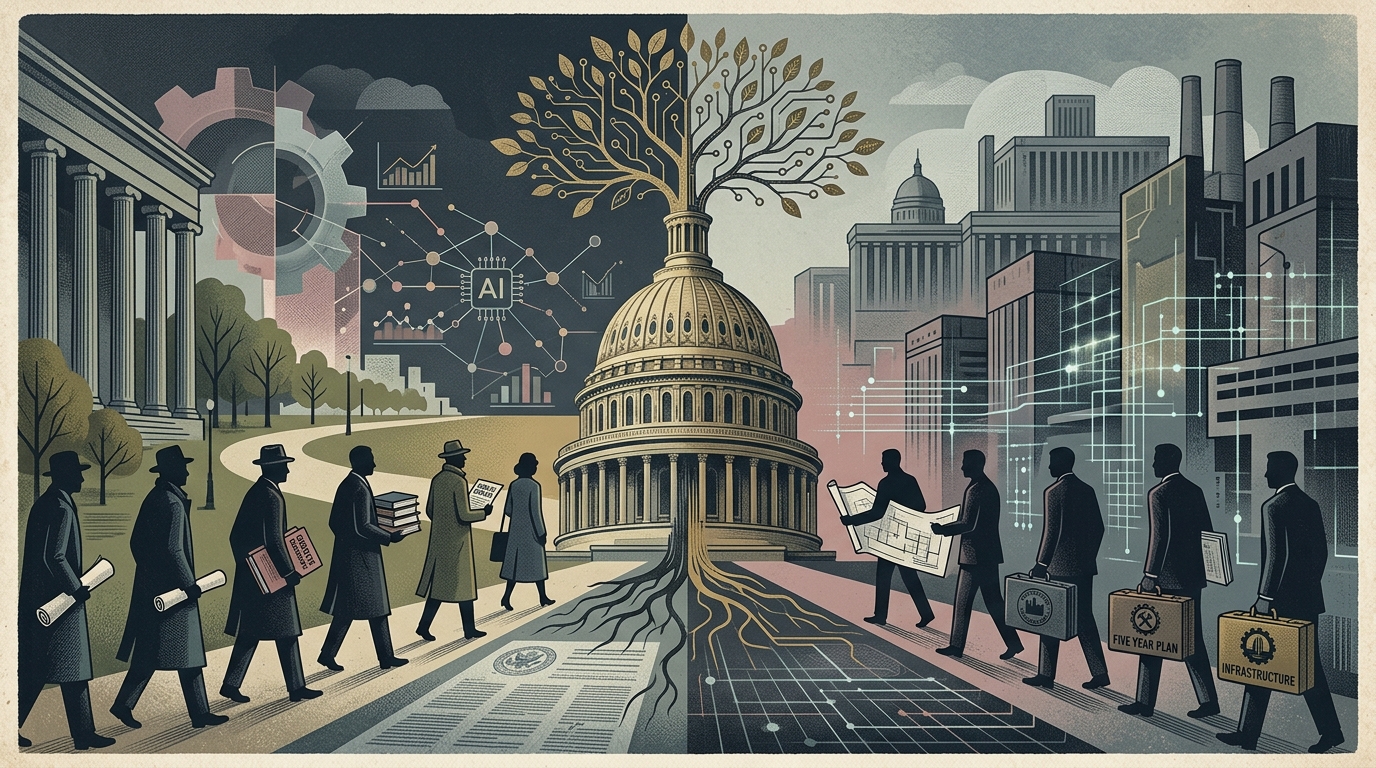
The global technological landscape is shifting following the recent assertions by Senator Jim Banks, who has brought to light the intensifying threat of Chinese espionage within the Artificial Intelligence (AI) sector. In an era where AI is no longer viewed merely as a productivity tool but as the cornerstone of future military and economic dominance, Banks' warnings resonate through the halls of Congress as an urgent clarion call for action.
The Anatomy of an Invisible Threat
According to the Senator, China is implementing a multi-layered strategy to acquire American expertise. This is not limited to cyberattacks but extends to academic infiltration and the recruitment of scientists working on sensitive programs. The primary concern lies in the fact that AI is a "dual-use" technology, meaning that algorithms designed to improve disease diagnosis can just as easily be repurposed to optimize autonomous weapons systems or suppress populations through advanced surveillance.
- Theft of source code and AI model architectures.
- Infiltration of university research laboratories.
- Acquisition of startups via shell companies.
The Geopolitics of Silicon
Banks argues that current legislation lags behind technological advancements. While the U.S. has imposed export controls on advanced semiconductors (such as NVIDIA GPUs), the Senator points out that "software" and "data" remain dangerously vulnerable. China, through its doctrine of "Military-Civil Fusion," ensures that every technological achievement in the private sector is immediately transferred to the People's Liberation Army. This practice renders any collaboration with Chinese entities a potential threat to U.S. national security.
"We cannot allow our greatest geopolitical rival to steal their way to global dominance using the very innovation that was born in America," Banks stated emphatically.
Proposed Measures and Strategic Impact
The measures under consideration include stricter vetting of foreign researchers on U.S. soil and the imposition of sanctions on Chinese companies proven to have benefited from stolen intellectual property. However, the challenge remains: how can the West protect its secrets without strangling the open scientific collaboration that serves as the engine of innovation? The balance between security and openness will ultimately determine the winner of the AI race.
In conclusion, Banks' intervention signals a pivot toward a more aggressive technological protectionism. As Artificial Intelligence becomes integrated into every facet of state function, the protection of algorithms is becoming as critical as the protection of nuclear codes.