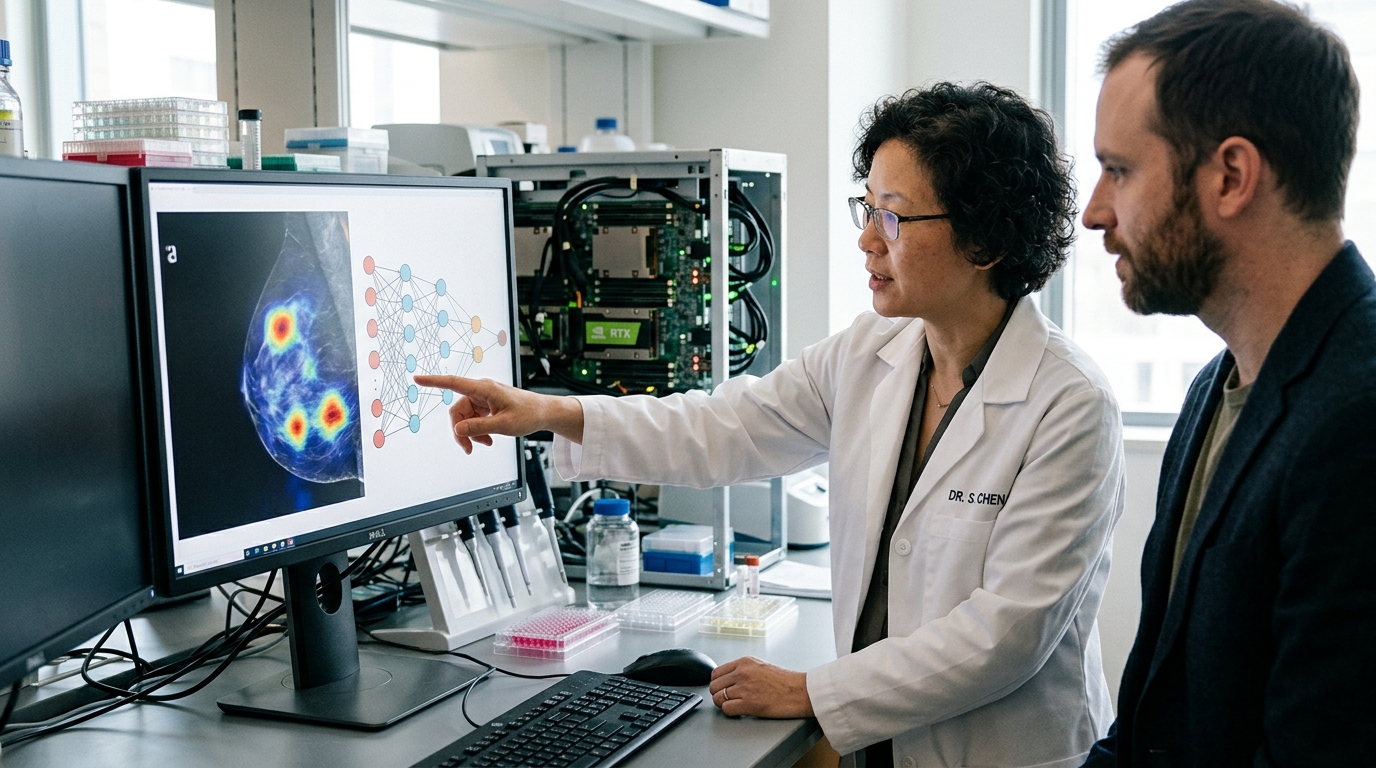
In an era where Artificial Intelligence (AI) has transitioned from a futuristic promise to the central infrastructure of the global economy, the recognition of academic excellence carries profound weight. The recent announcement that a computer science doctoral student from Arizona State University (ASU) has been awarded the prestigious IBM PhD Fellowship marks a significant milestone, not only for the institution but for the trajectory of AI research in 2026.
The IBM PhD Fellowship is one of the most competitive awards globally, designed to support students who demonstrate exceptional talent in fields such as hybrid cloud, quantum computing, and, naturally, artificial intelligence. For ASU, a university consistently ranked at the top for innovation in the United States, this distinction confirms its capacity to produce researchers capable of standing at the vanguard of the technological revolution.
Focusing on Explainable and Sustainable AI
While the specifics of the research remain partially confidential due to the partnership with IBM, current 2026 trends suggest a pivot toward "Explainable AI" (XAI) and model sustainability. With the EU and the US enforcing stricter ethical frameworks, the need for models that are not "black boxes" but can justify their decisions is more urgent than ever.
The ASU fellow appears to be working on algorithms that reduce the energy footprint of training Large Language Models (LLMs), an issue that has escalated into an environmental crisis. Through the Fellowship program, IBM provides not only financial support but also access to high-performance computing resources and mentorship from leading industry scientists, allowing the researcher to bridge the gap between theoretical computer science and practical, large-scale application.
The Academy-Industry Nexus: A Delicate Balance
This award brings the conversation regarding the relationship between public universities and tech giants back to the forefront. On one hand, funding from corporations like IBM accelerates innovation and provides students with invaluable market experience. On the other, questions arise about research autonomy and whether academic priorities are becoming overly aligned with corporate interests.
- Access to proprietary data sets not available to the general public.
- Acceleration of technology transfer from laboratory to market.
- Creation of a "talent pipeline" for Big Tech companies.
- Risk of focusing on short-term solutions over fundamental basic research.
At ASU, the approach is clear: collaboration with industry is viewed as an essential component for solving humanity's "grand challenges." The IBM fellowship is not seen merely as an award, but as an investment in a scientist tasked with redefining how machines perceive the world.
The Future of Research in 2026
Looking ahead, the case of the ASU graduate highlights a major shift: computer science is no longer an isolated discipline. AI research now demands knowledge of ethics, sociology, and environmental science. IBM's 2026 fellowships place a particular emphasis on interdisciplinary projects aimed at social good, such as using AI for climate disaster prediction or personalized medicine.
"Computer science today isn't just about code; it's about the responsibility we carry for the systems we build," notes an IBM Research executive.
In conclusion, this success is a testament to the fact that research excellence remains the strongest driver of growth. As the competition between the US and China for AI supremacy intensifies, investing in human capital through such programs is the only viable strategy for maintaining innovation within an ethical and productive framework.