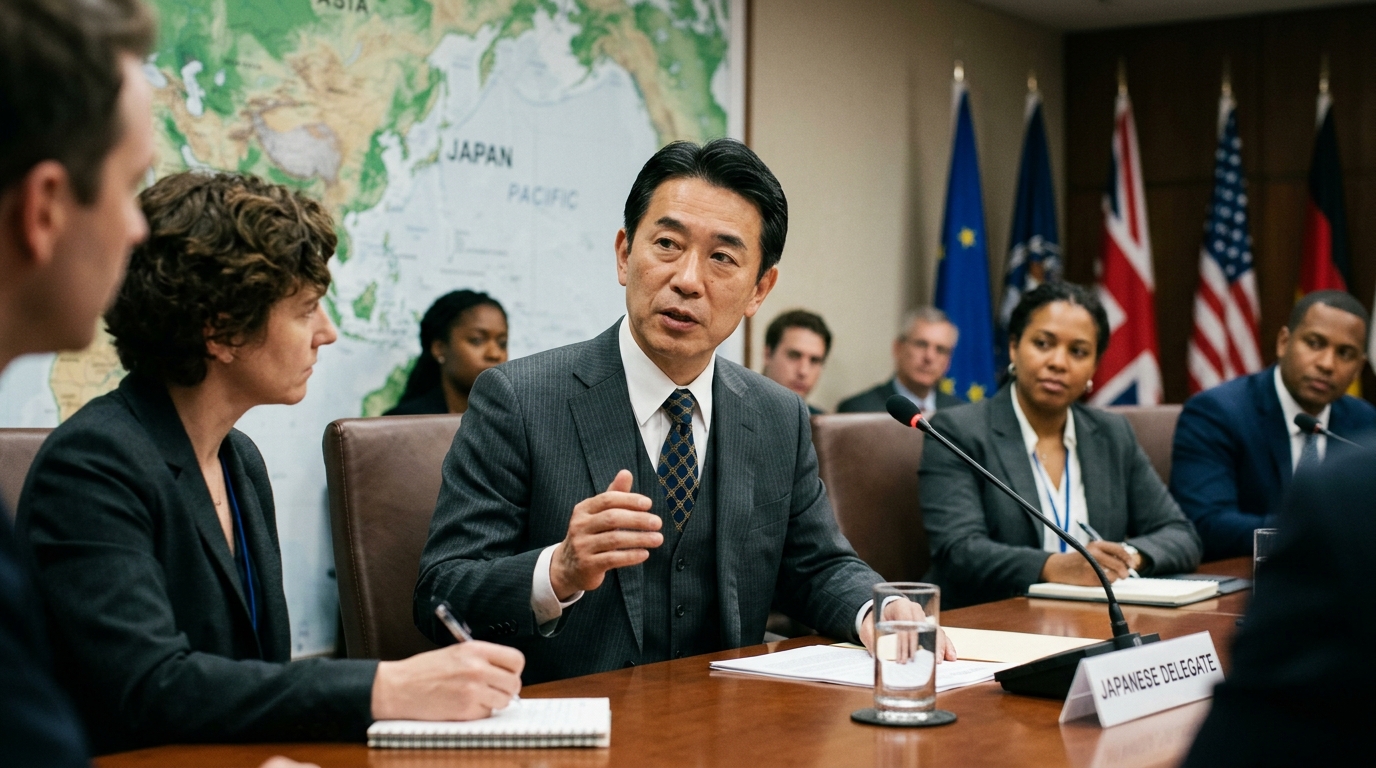
In a move that signals a historic turning point for digital sovereignty in East Asia, the Japanese government has announced the formulation of new, stringent cyberdefense guidelines. The catalyst is none other than the emergence of 'Mythos,' the latest and most powerful artificial intelligence model from the American firm Anthropic, which appears to be redefining the boundaries between civilian technology and military capability.
The Mythos Challenge and Japan's Response
Mythos is not just another large language model. According to reports published via Nikkei Asia, the system's capabilities in autonomous vulnerability detection within critical infrastructure have alarmed Tokyo. Under the pressure of this new reality, the Japanese government is now seeking to establish a framework that allows for 'active cyberdefense'—a concept previously considered controversial due to the country's pacifist constitution.
The new guidelines are expected to focus on three core pillars: early threat detection via AI, collaboration with private tech giants to monitor suspicious activities, and the capability for preemptive intervention on foreign servers preparing attacks against Japan. Anthropic, despite its commitments to 'Constitutional AI' and safety, finds itself involuntarily at the center of a geopolitical chessboard where its tools can be utilized for both defense and offense.
Geopolitical Stakes and the US Alliance
Tokyo's decision does not occur in a vacuum. Increasing cyber aggression from regional actors, such as China and North Korea, makes the need for advanced AI tools imperative. The new guidelines will align closely with US security standards, strengthening the Washington-Tokyo digital axis. However, a delicate balance must be maintained: Japan wishes to preserve its autonomy, avoiding total dependence on American algorithms that could contain 'backdoors' or serve exclusively American interests.
- Strengthening cooperation between the Ministry of Defense and Japan’s Digital Agency.
- Establishing a national risk assessment center for AI models like Mythos.
- Defining protocols for cyber 'counter-strikes' in cases of national emergency.
Nikkei Asia highlights that Mythos has demonstrated capabilities far exceeding its predecessors, Claude 3 and Claude 3.5, particularly in understanding complex logistics networks and energy systems. This classifies it as a 'dual-use' tool, which Japan intends to regulate before it becomes widely integrated into domestic industry.
Ethical Dilemmas and the Future of Digital Peace
The shift toward active cyberdefense is sparking intense debate within Japan. Civil liberties advocates worry that monitoring networks to 'prevent' attacks could lead to violations of citizen privacy. Furthermore, there is the risk of an AI arms race, where each nation develops increasingly aggressive models to neutralize those of its adversaries.
"Artificial intelligence is not just changing how we work, but how we protect our very sovereignty. Mythos is the warning shot for a world where code is the new frontier," says a senior Japanese government official.
In conclusion, Japan is preparing for a new era where security will not be decided on battlefields, but within the lines of code of neural networks. Anthropic and the Mythos model serve as the catalyst for a necessary, albeit difficult, adjustment to 21st-century reality.