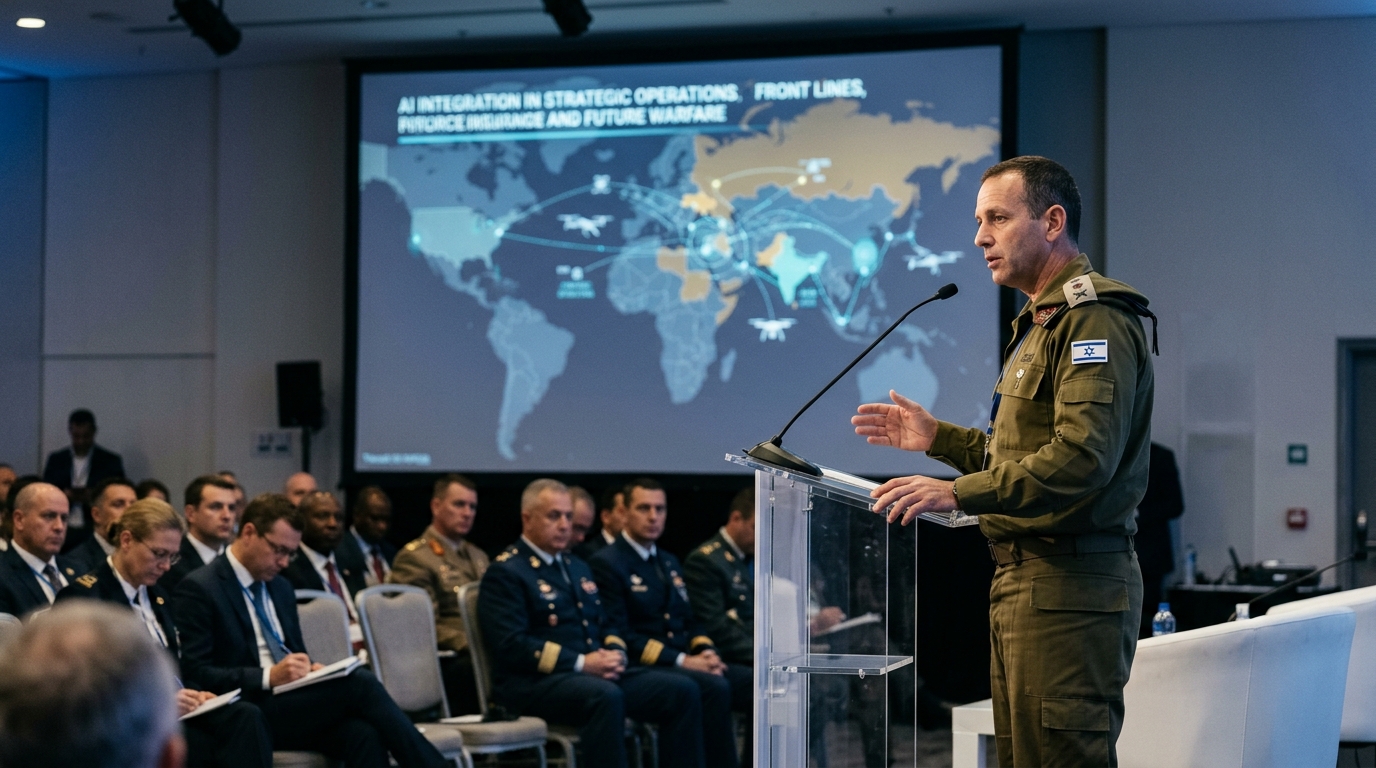
In a move that signals the complete transition of military power into the digital age, the Israel Defense Forces (IDF) have announced the establishment of a new technological division dedicated exclusively to Artificial Intelligence (AI). This development, revealed via The Jerusalem Post, is not merely an organizational shift; it is a fundamental reimagining of modern conflict, turning the battlefield into a living ecosystem of data and algorithms.
The Architecture of Digital Supremacy
The new division, which will operate under the C4I Directorate and the Air Force, aims to consolidate the military's fragmented AI initiatives under a unified command. The objective is to create tools that allow soldiers in the field to make split-second decisions based on analyses that previously required hours of processing by human analysts. The core philosophy is 'sensor fusion': collecting data from drones, satellites, signals intelligence, and ground sensors, and synthesizing them into a clear, actionable operational picture.
This strategy is not just about offensive capabilities. The new division focuses on what military analysts call 'Edge AI'—the ability to process data directly on the device (e.g., on a drone or a smart scope) without needing a connection to central servers. This drastically reduces latency and enables operations in environments where communications are jammed by the adversary. By decentralizing intelligence, the IDF aims to maintain a tactical advantage even in the most chaotic combat scenarios.
From 'The Gospel' to Mass Target Generation
The IDF's use of AI is not new, but its institutionalization through an autonomous unit demonstrates the scale of their ambition. In the past, systems like 'Habsora' (The Gospel) were used to rapidly generate targets at rates far exceeding human capacity. However, the new unit promises to go a step further, integrating AI into the supply chain, predictive maintenance of equipment, and, most importantly, real-time combat scenario simulations.
Critics, however, warn of the dangers of 'algorithmic detachment.' When war is reduced to a series of notifications on a screen, the ethical responsibility of the human operator can become blurred. The international community is watching closely, as Israel serves as the de facto laboratory for the future of warfare, setting precedents that other major powers, such as the US and China, are certain to follow. The question remains: as the machine takes over the 'kill chain,' where does the human accountability end?
Geopolitical Implications and the Arms Race
The establishment of this unit is expected to trigger a new arms race in the Middle East. As Israel solidifies its supremacy in AI warfare, adversaries like Iran will seek to develop equivalent systems or find ways to 'blind' Israeli algorithms through sophisticated cyberattacks. Furthermore, the technology developed within this unit will soon become the 'heavy artillery' of Israeli defense exports. Nations worldwide will seek combat-proven AI systems, strengthening Israel's position as a global tech hub while raising profound questions about the proliferation of lethal autonomous tools to various regimes.
Ultimately, the IDF's new AI division is more than a technical milestone. It is a declaration that in the 21st century, information is as lethal as ammunition. A nation's ability to train its models faster than its enemy may become the deciding factor between victory and defeat. As silicon meets steel, the very nature of heroism and strategy is being rewritten by lines of code.