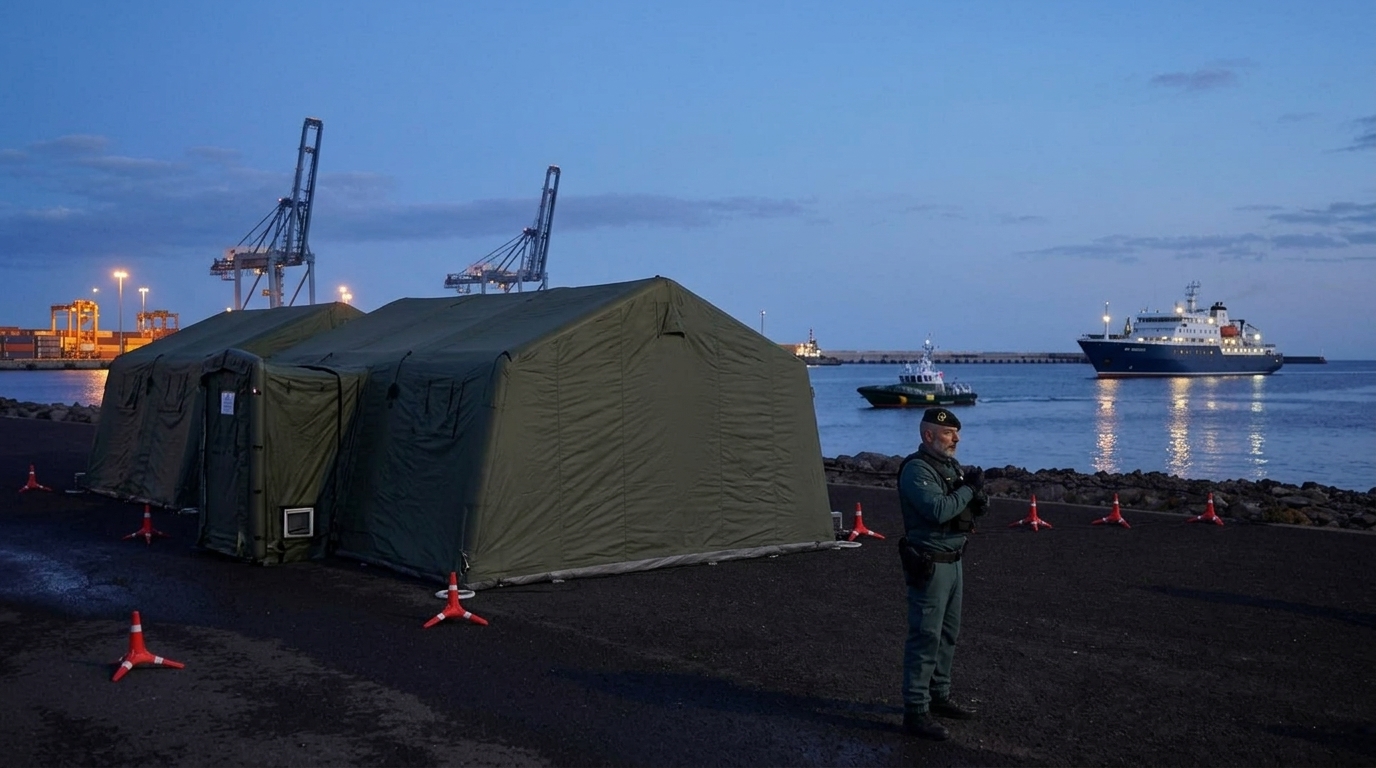
The arrival of the cruise ship MV Hondius at the port of Santa Cruz de Tenerife bore no resemblance to the typical disembarkation of tourists in one of the world's most popular destinations. Instead of a festive atmosphere, the pier was transformed into a sanitary "red zone," with specialized Spanish task forces, epidemiologists, and Civil Protection units coordinating an unprecedented operation. The vessel, which remained quarantined offshore for nearly a month following the confirmed death of a passenger from Hantavirus, has now become a symbol of a new era of health insecurity at sea.
The Chronicle of an Offshore Crisis
The ordeal began four weeks ago when a passenger on the MV Hondius—a vessel specifically designed for expeditions to polar and remote regions—exhibited severe symptoms of pulmonary syndrome. His death a few days later triggered alarms at the World Health Organization and among port authorities in West Africa and Europe. Hantavirus, primarily transmitted through rodent droppings, is rare in cruise ship environments, a fact that raises serious questions about the adherence to health protocols during the ship's resupply.
"This is not just a medical crisis, but a test of international maritime regulations regarding high-risk zoonotic diseases," stated an official from the Spanish Ministry of Health.
The ship's prolonged stay in international waters highlighted a significant gap in international law. Many states refused the vessel entry, fearing potential spread, despite the fact that Hantavirus does not easily transmit from human to human. Tenerife eventually agreed to host the disembarkation operation, albeit applying protocols reminiscent of the darkest days of the 2020 pandemic.
Operation 'Shield' in Tenerife
The disembarkation of approximately 200 passengers and crew is being carried out in small groups. Each individual undergoes exhaustive medical examinations before being transferred to controlled quarantine areas on land. Spanish authorities have deployed specialized disinfection robots and HEPA air filtration systems to clean luggage and the ship's common areas.
- Strict temperature monitoring and biochemical tests for everyone.
- Transfer of passengers to specially designated hospital-hotels.
- Psychological support for trapped passengers who remained in cabins for 30 days.
- Full disinfection of the MV Hondius using biocidal gases.
The question that remains unanswered is how the virus found its way onto a ship of such high technological caliber. Initial estimates suggest contaminated food supplies loaded at a South American port, where Hantavirus is endemic. The investigation is focusing on the ship's storage areas, where rodents may have evaded detection.
Geopolitical Implications and Luxury Tourism
The case of the Hondius is not just an isolated incident. It highlights the vulnerability of "expedition cruising," a sector that promises access to the most pristine parts of the planet. The geopolitical dimension concerns the ability of port states to manage biological threats without causing diplomatic incidents or the economic collapse of the operating companies.
Spain, through Tenerife, seeks to demonstrate a leadership role in the health security of the Mediterranean and the Atlantic. However, the delay in providing assistance underscores the EU's reluctance to establish a unified protocol for "ships in crisis." The Hantavirus crisis could serve as the catalyst for stricter international regulations in the supply chain management of cruise ships, turning health into a fundamental pillar of maritime diplomacy.