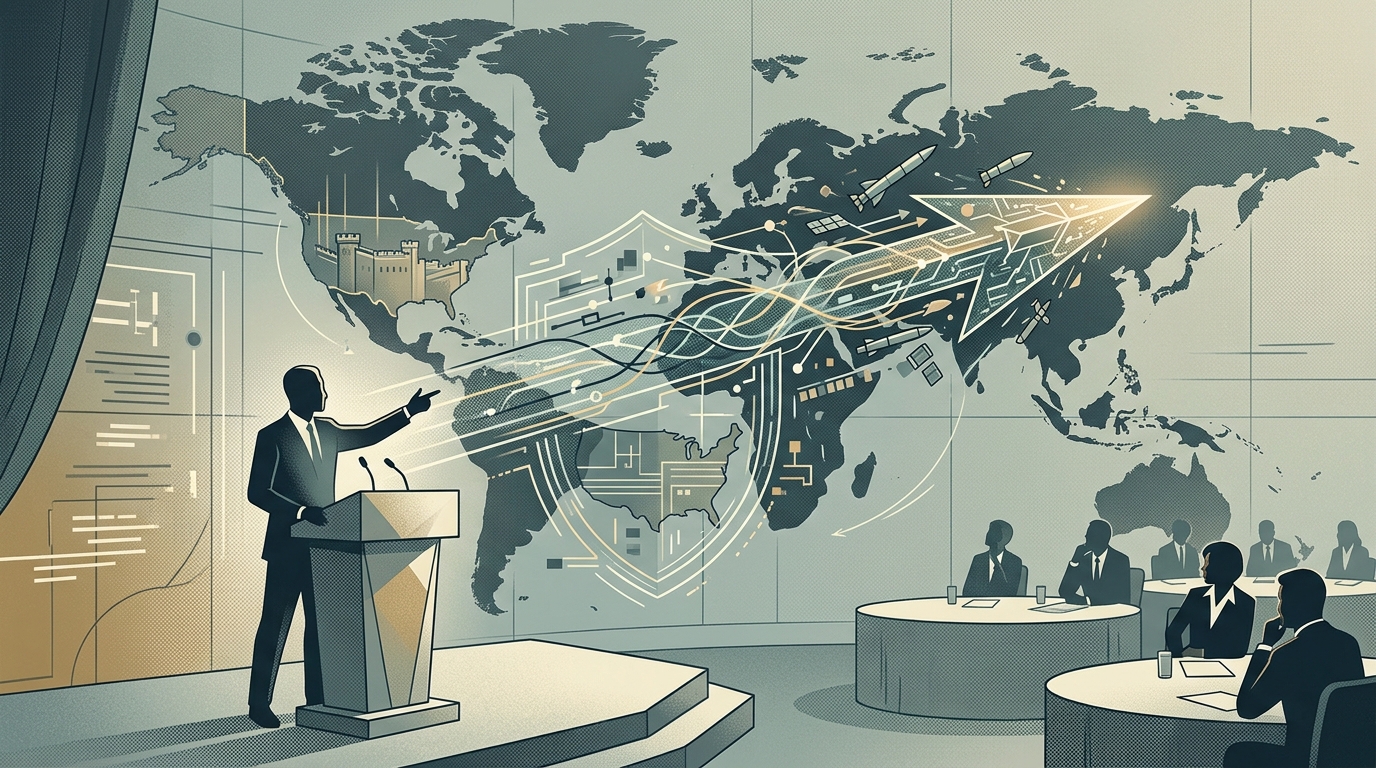
For decades, the global economic narrative regarding China was straightforward: the "factory of the world" flooding international markets with low-cost consumer goods, amassing enormous trade surpluses. However, 2026 marks a historic turning point. The advent of Generative Artificial Intelligence and the urgent need for advanced computing infrastructure are not just altering the country's internal production; they are fundamentally reshaping its trade profile. According to recent analyses, China's imports are projected to grow faster than its exports, a development not seen since 2021.
The Shift from Quantity to Quality and Technological Sovereignty
China is no longer interested merely in assembling devices. Under the "Dual Circulation" strategy, Beijing aims to make domestic consumption and technological innovation the primary drivers of growth. Artificial Intelligence lies at the heart of this transition. To power its own Large Language Models (LLMs) and automate its heavy industry, China is compelled to import vast quantities of specialized equipment.
Despite stringent restrictions imposed by the United States on high-end semiconductor exports, China has found ways to absorb technology through alternative routes or by investing in less advanced but essential components that support the AI ecosystem. This has led to a paradoxical increase in imports: while the country strives for autonomy, the very process of building that autonomy requires foreign expertise and equipment, ranging from lithography machines to specialized chip design software.
Impact on Global Supply Chains
The transformation of the Chinese model is causing chain reactions worldwide. China's traditional trade partners in Asia and Europe are seeing demand for raw materials and basic components stabilize, while demand for high-value-added products surges. AI enables Chinese enterprises to optimize their supply chains in real-time, reducing storage costs and increasing responsiveness to international orders.
- Port Automation: Chinese ports, such as Shanghai, now utilize AI for cargo management, making imports more efficient than ever.
- Energy Requirements: The development of data centers for AI requires immense amounts of energy, leading China to increased imports of natural gas and renewable energy technologies.
- BRICS Realignment: China is leveraging its technological prowess in AI to establish new trade agreements with the Global South, offering "smart" infrastructure in exchange for preferential access to resources.
The Geopolitical Chessboard and AI
This is not just about economics; it is about power. Washington watches with concern as China transforms from a buyer into a standard-setter for AI. The surge in AI-related imports indicates that Beijing is willing to pay a premium to close the technological gap. Analysts suggest that if China manages to integrate AI into its manufacturing base faster than the West, its trade surplus may shrink in the short term due to imports, but in the long run, it will dominate through the export of "smart" services and industrial robotics.
"China is no longer just buying products; it is buying the tools that will allow it to never have to buy anything from the West again," notes an executive from an international trade organization.
In conclusion, the rise of Artificial Intelligence is forcing China to reinvent itself. The transition from an economy based on low-cost exports to one supported by high-tech imports and domestic innovation is a risky but necessary move. For the rest of the world, this means that competition with China will no longer be decided on retail shelves, but in algorithms and cloud computing environments.