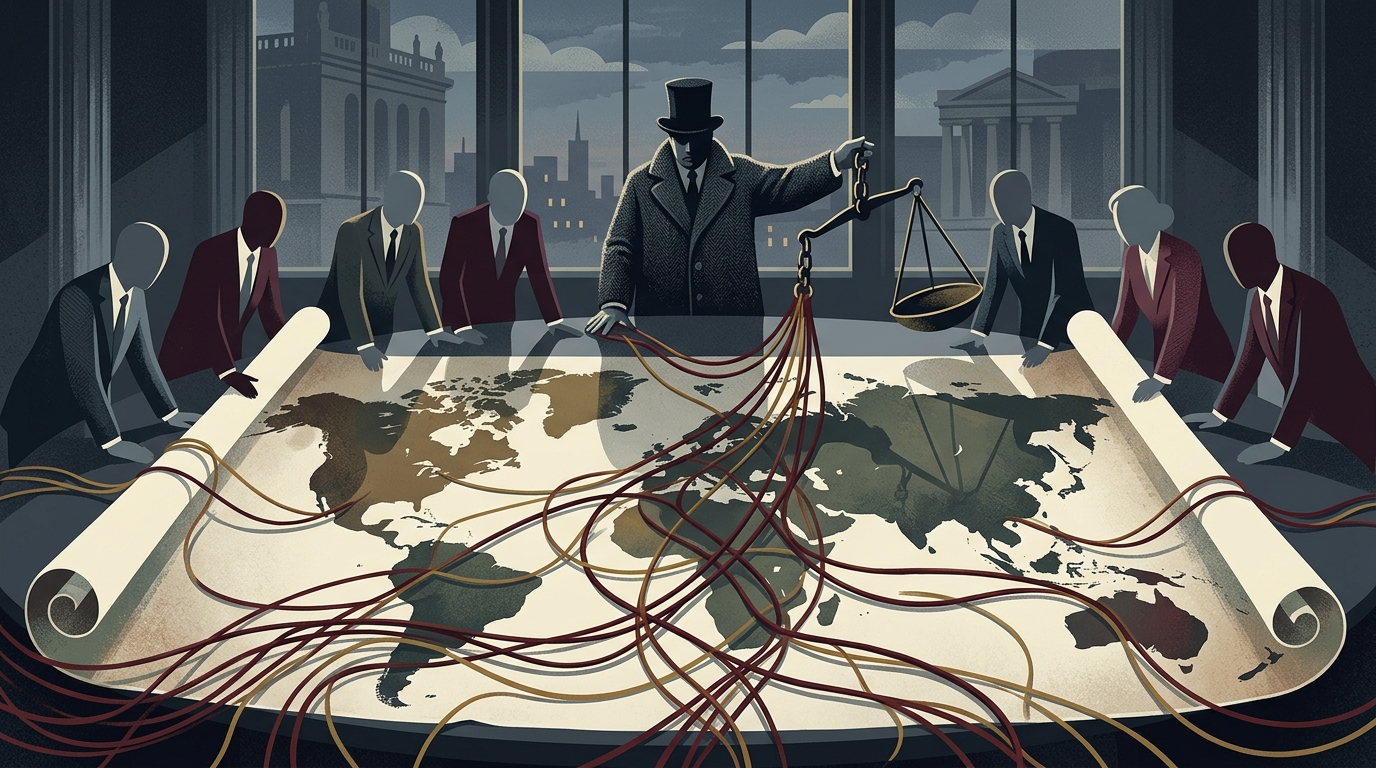
For decades, the popular image of the CIA was inextricably linked to the 'lone wolf' operative, clandestine meetings in dimly lit alleys, and the human intuition capable of discerning truth within a web of lies. However, as we navigate the first quarter of the 21st century, Langley is undergoing a tectonic shift. The era of James Bond is yielding to the era of Big Data and Artificial Intelligence (AI). Espionage, perhaps the oldest statecraft, is being transformed into an algorithmic science, where intelligence is no longer merely extracted from human sources, but from the billions of digital footprints left behind by modern civilization.
The Rise of Digital Intelligence and OSINT
The primary challenge for modern intelligence agencies is no longer a lack of information, but an overwhelming deluge of it. Every day, astronomical amounts of data are generated by satellites, social media, commercial transactions, and Internet of Things (IoT) sensors. What we call Open Source Intelligence (OSINT)—information derived from publicly available sources—now constitutes 80% to 90% of the raw material processed by the CIA. At this juncture, AI becomes indispensable. No army of analysts could possibly read, listen to, or watch all this data in real-time.
The CIA has already deployed its own generative AI tool, similar to ChatGPT, which allows analysts to 'chat' with their classified databases. This system can synthesize reports from thousands of disparate sources, identify patterns that would escape the human eye, and suggest potential scenarios for the evolution of a crisis. Speed is the decisive factor: in a world where decisions must be made in seconds, AI offers the advantage of instantaneous analysis.
The Algorithmic Cold War: USA vs. China
The pivot to AI is not merely a technical upgrade; it is a critical front in the new Cold War. China has invested billions in AI, utilizing it for internal repression and the tracking of foreign operatives. Through facial recognition and massive data analytics, Beijing has made traditional tradecraft extremely difficult for spies on its soil. The CIA is forced to respond with 'digital camouflage,' using AI to create plausible digital identities and bypass sophisticated authoritarian surveillance systems.
"Technology does not replace the spy; it redefines them. The operative of the future must be as proficient in code as they are in psychology," state sources close to the Agency's leadership.
However, reliance on AI carries significant risks. Algorithms are susceptible to 'hallucinations' or falling victim to intentional misinformation campaigns by adversaries. If a rival power manages to 'poison' the training data of the CIA's AI models, the consequences for U.S. national security could be catastrophic.
Ethics, Transparency, and the 'Black Box'
One of the most thorny issues is the lack of transparency regarding how AI arrives at its conclusions. In the world of intelligence, the rationale behind a decision is as vital as the decision itself. If an AI identifies a target for a strike or designates a country as a threat, policymakers must know the 'why.' The 'black box' nature of deep learning creates an accountability gap that concerns many legal experts and human rights activists.
Furthermore, the use of AI in espionage raises profound questions about global citizen privacy. As the CIA combs through the digital ocean to find terrorists or spies, the data of millions of innocent individuals is analyzed and categorized. The fine line between national security and total surveillance is becoming increasingly blurred.
The Future: Human-Machine Symbiosis
Despite the technological explosion, CIA leaders insist that the human element (HUMINT) remains irreplaceable. AI can analyze the 'what' and the 'how,' but it often struggles with the 'why'—the human motivations, emotions, and irrational decisions that shape history. The future of espionage lies in symbiosis: humans providing context and moral judgment, while machines provide the raw computational power.
In conclusion, the CIA is not just changing its tools; it is changing its philosophy. The transition from the battlefield to the data field is definitive. Success in this new world will not be judged by who has the most spies, but by who possesses the superior algorithms and the ability to control them without losing the human touch with reality.