The recent visit of the Emir of Qatar, Sheikh Tamim bin Hamad Al Thani, to Athens and his meeting with Greek Prime Minister Kyriakos Mitsotakis at the Maximos Mansion was far from a routine diplomatic encounter. It was the formalization of a strategic shift long in the making, positioning Greece as a key partner for Doha within the European Union. The Emir’s public expression of gratitude towards the Greek government resonates beyond the walls of the Prime Minister's office, highlighting Greece's role as a pillar of stability in a volatile region.
The Geopolitical Dimension: A Bridge Between Worlds
At a time when the Middle East is being tested by the conflict in Gaza and broader regional tensions, Greece is seeking to play the role of an "honest broker." The meeting between Mitsotakis and Al Thani focused heavily on the need for an immediate ceasefire and the provision of humanitarian aid, with Athens explicitly recognizing Qatar's crucial role as a mediator in hostage negotiations.
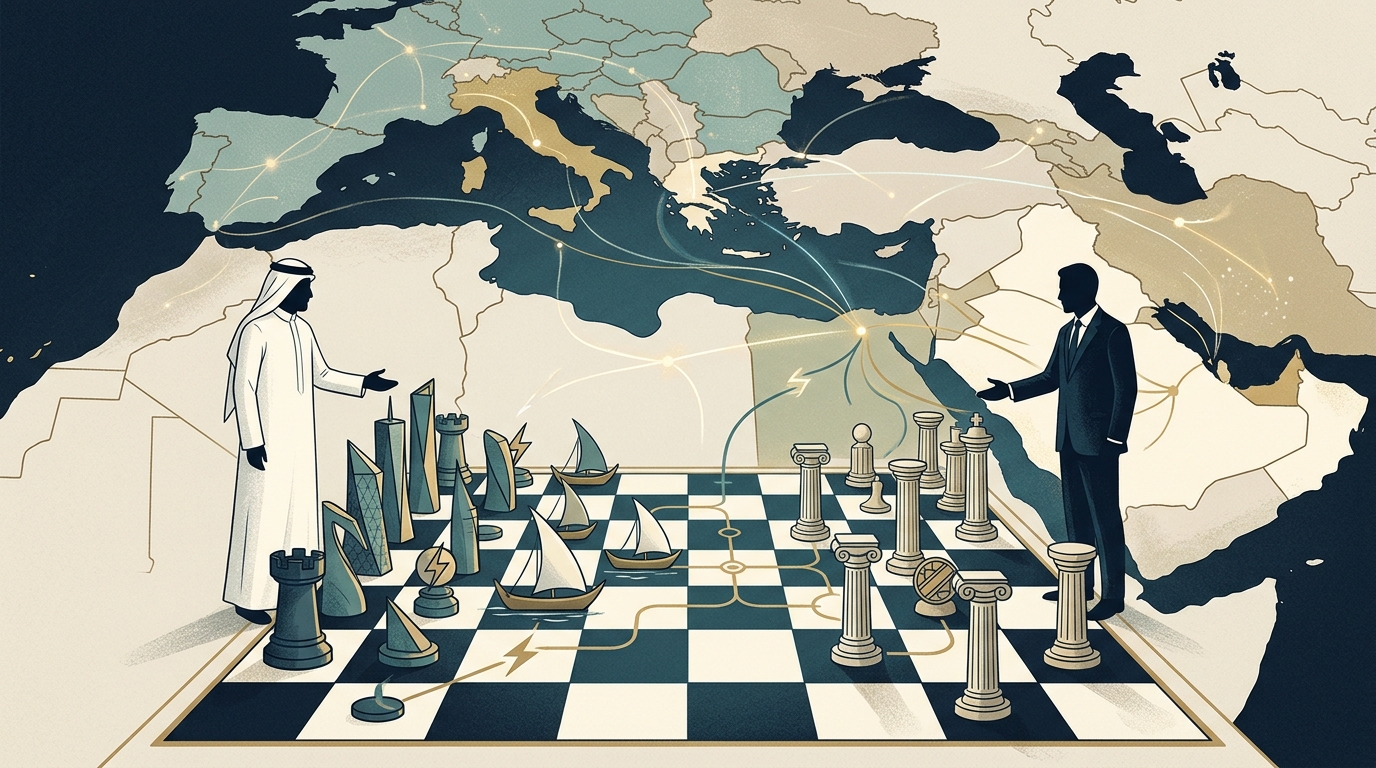
For Greece, strengthening ties with Qatar is part of a broader "multidimensional foreign policy." Following the normalization of relations with Saudi Arabia and the United Arab Emirates, the rapprochement with Doha completes the puzzle of Greece's relations with the Gulf monarchies. Athens offers Qatar a secure gateway to the European Union, while Doha offers Athens geopolitical depth and access to capital that could transform the region's economic landscape.
Energy and Infrastructure: The 'Vertical Corridor'
Qatar, one of the world's largest exporters of Liquified Natural Gas (LNG), views Greece as an ideal energy hub. The energy discussion is not limited to gas supply but extends to infrastructure. The Alexandroupolis Floating Storage Regasification Unit (FSRU) and the interconnection with the Balkans and Central Europe via the "Vertical Corridor" are points of intense interest for Qatar.
- Increasing LNG shipments to Revithoussa and Alexandroupolis.
- Participation in energy storage and renewable energy projects.
- Strategic cooperation for the energy security of Southeast Europe.
The Greek side presented a wide range of investment opportunities, from port modernization to the creation of data centers—sectors where Qatar possesses immense experience and capital power. The signing of agreements in military infrastructure and technology indicates that the partnership is moving beyond the traditional "buyer-seller" model.
Investment Interest: Beyond Tourism
While Qatar already has a presence in Greek tourism (e.g., the Astir Palace investment), the new phase of relations targets more productive sectors. The Qatar Investment Authority (QIA) is seriously considering Greek real estate, as well as the privatization of strategic infrastructure. The Greek economy, having regained its investment-grade status, is now an attractive destination for Gulf sovereign wealth funds.
"Greece is no longer Europe's problem, but part of the solution for its energy and geopolitical security," a government source noted after the meeting.
This meeting sends a clear signal to international markets: Greece is open for business at the highest level. However, the challenge remains bureaucracy and the speed of implementation, as Qatar is known for demanding quick and tangible results. The two leaders agreed to establish a joint investment monitoring committee to ensure that promises translate into actions.
Conclusion
The Emir of Qatar's visit to Athens is a landmark event. In a rapidly changing world, the alliance between a European NATO member and a powerful Gulf state creates new balances. Greece gains a powerful economic ally, while Qatar consolidates its presence on Europe's eastern flank. The bet now lies in the consistency and longevity of this relationship.