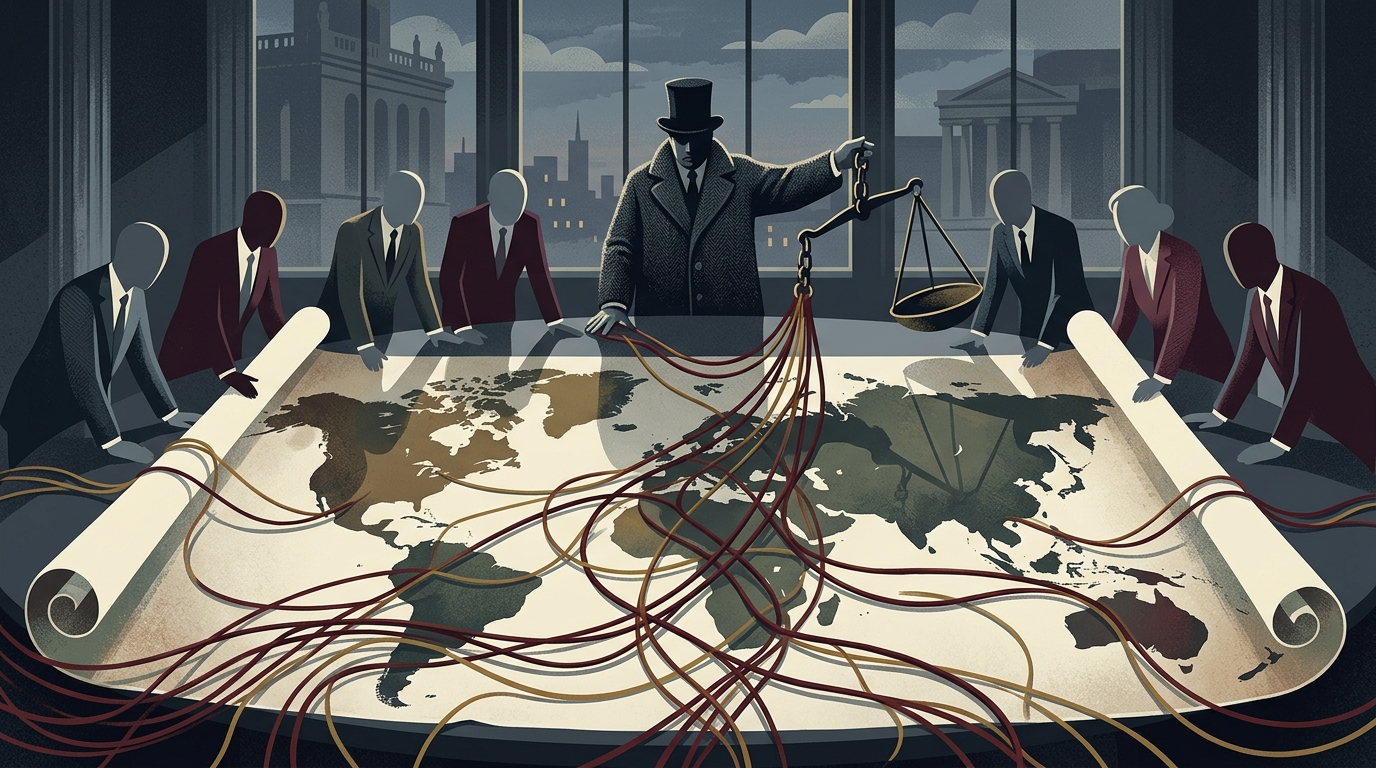
The recent visit of Vladimir Putin to Beijing, occurring just four days after the departure of the U.S. President, was far from a routine diplomatic exchange. In the wake of events in May 2026, this meeting signifies a deeper solidification of an axis that aspires to overturn Western unipolar dominance. The 'no limits friendship,' first declared in 2022, is now being tested in an environment where artificial intelligence, energy security, and new monetary balances define the power of nations.
The Asymmetry of Power and Strategic Necessity
Despite the rhetoric of an equal partnership, the reality of 2026 highlights a clear asymmetry. Russia, cut off from Western markets and burdened by ongoing sanctions, has transformed into a critical yet dependent partner for China. For Beijing, Russia represents an inexhaustible source of raw materials and a strategic ally to the north, keeping U.S. forces occupied and allowing China to focus on the Indo-Pacific.
However, Xi Jinping moves with characteristic Chinese caution. While providing Moscow with a vital economic lifeline, he avoids moves that could trigger secondary sanctions on Chinese banks or permanently close the doors to the European market. Their relationship is a 'marriage of convenience' built on a shared adversary: U.S. hegemony.
Technology and AI: The New Frontier
On the agenda of the 2026 summit, cooperation in Artificial Intelligence held a central position. As the West restricts access to advanced semiconductors, Moscow and Beijing are intensifying efforts to create an alternative technological ecosystem. Russian expertise in cybersecurity and algorithms is being combined with Chinese superiority in hardware manufacturing and Big Data management.
- Joint AI research centers in Shanghai and Novosibirsk.
- Development of alternative blockchain-based payment systems to bypass SWIFT.
- Cooperation on satellite navigation systems (Beidou and GLONASS) for military use.
This technological convergence is not just about the economy; it is about the control of information. Both leaders seem to agree on a model of 'sovereign internet,' where the state maintains absolute control over data flow, shielding their regimes from external influences.
Energy Ties and the 'Power of Siberia 2' Pipeline
Energy remains the backbone of this relationship. Discussions regarding the 'Power of Siberia 2' pipeline have reached a critical juncture. Russia seeks to compensate for the lost ground in the European market, while China wants to secure energy flows via land routes, fearing a potential naval blockade in the Malacca Strait in the event of a conflict over Taiwan.
"The geopolitics of energy is no longer just about oil, but about who controls the transport routes and the currencies in which transactions are cleared," analysts in Beijing note.
The gradual de-dollarization of energy trades, using the Yuan, represents the most significant blow to the economic structure built by the West post-WWII. By 2026, more than 80% of trade between the two countries is conducted in their national currencies.
Conclusion: A Fragile Yet Necessary Alliance
The 'no limits friendship' actually has many limits, most of them dictated by Beijing. Nonetheless, the convergence of China and Russia is the most significant geopolitical development of the 21st century. As long as the West continues to treat them as a unified threat, they will be pushed further into each other's arms, creating a counterweight that will define the coming decades.