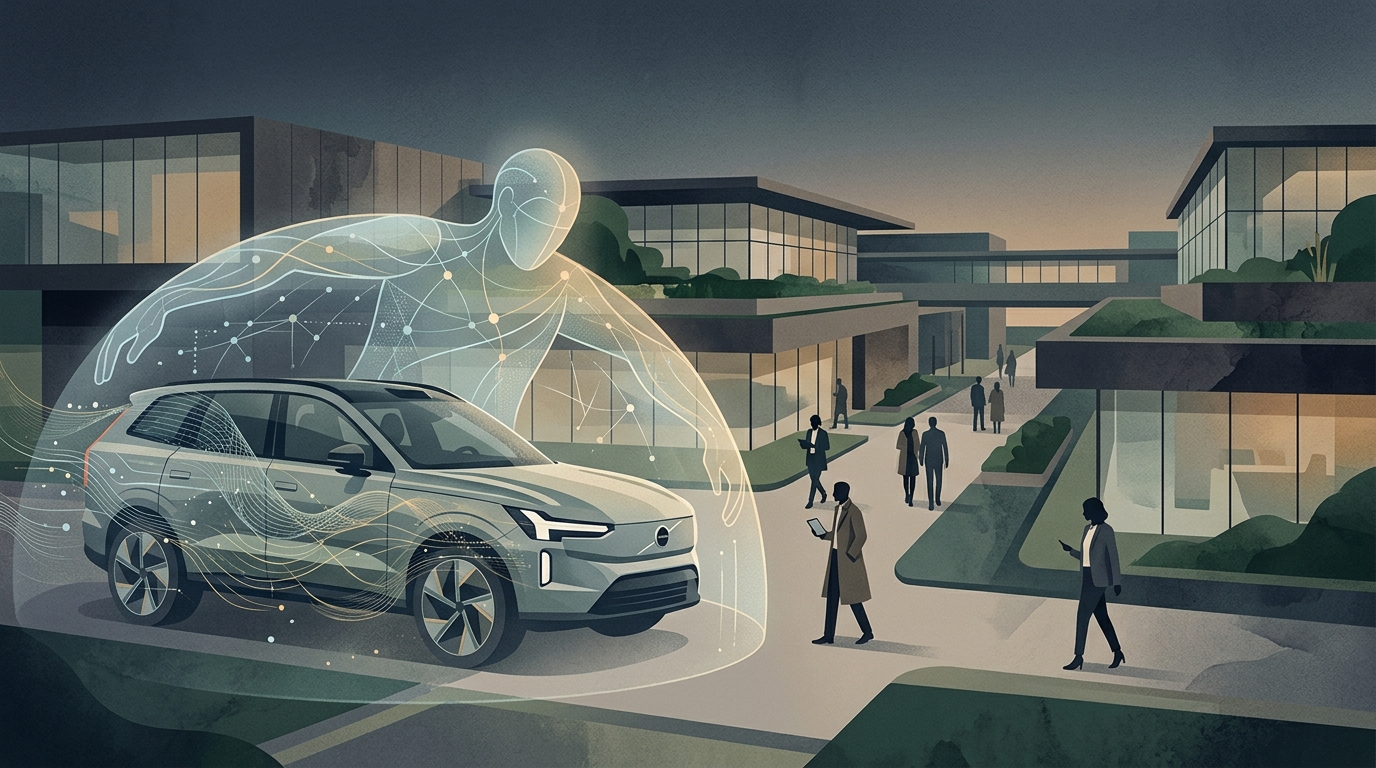
For decades, the name Volvo was synonymous with passive safety: robust frames, three-point seat belts, and airbags that protected passengers in the worst-case scenarios. Today, as we navigate through 2026, the company's strategy has shifted radically. Safety is no longer just about the strength of the metal, but the intelligence of the code. The recent announcement regarding the full integration of advanced AI models into its new lineup, led by the EX90 and the upcoming EX30, marks the brand's definitive entry into the era of the 'Software-Defined Vehicle' (SDV).
The Central Brain: Partnering with NVIDIA
The heart of the new generation of Volvos is not the engine, but a high-performance central computer. Volvo Cars has chosen to abandon the traditional architecture of dozens of individual Electronic Control Units (ECUs) in favor of a single, powerful platform based on NVIDIA DRIVE technology. By utilizing the NVIDIA Drive Thor chip, new models gain the ability to process trillions of operations per second.
This transition allows the car to function as a unified system. Instead of isolated subsystems that struggle to communicate, the central brain manages everything: from autonomous driving and active safety to the infotainment system and battery management. This move is not merely technological but strategic. It allows Volvo to control its software in-house, reducing dependence on external suppliers and accelerating the pace of innovation.
"Artificial intelligence is not an add-on feature for us. It is the foundation upon which we are building the future of mobility," state company executives in Gothenburg.
Safety 2.0: Understanding Humans and the Environment
The greatest promise of AI in Volvo models is the prevention of accidents before they even occur. Through a sophisticated network of sensors, including LiDAR, radar, and cameras, the AI creates a real-time 360-degree map around the vehicle. However, the true innovation lies within the cabin.
The new 'Driver Understanding' system uses internal cameras and AI algorithms to monitor driver concentration. It can detect signs of fatigue, distraction, or even emotional distress by analyzing eye movements and driving patterns. If the system deems the driver unable to react, the car can take control, slow down safely, and call for assistance. This is a transition from 'reacting to collision' to 'predicting risk.'
- Autonomous Driving: Gradual introduction of Level 3 and Level 4 capabilities on selected highways.
- Predictive Maintenance: AI predicts failures before they strand the vehicle.
- Energy Optimization: Smart battery management to increase range by up to 15%.
User Experience and Over-the-Air Updates
One of the most significant advantages of AI integration is that the car ceases to be a static product. Through Over-the-Air (OTA) updates, Volvo can send new features and software improvements directly to the vehicle, much like a smartphone. This means a Volvo purchased today will be smarter and more capable two years from now.
Artificial intelligence also extends to the user interface (UI). The system learns driver preferences, adjusts cabin settings, suggests routes based on history, and interacts via natural language. The partnership with Google for the Android Automotive operating system further enhances this experience, making the car a digital assistant on wheels.
Challenges and the Future
Despite the excitement, the transition to AI-centric motoring brings challenges. Cybersecurity is now a critical factor, as a bug in the code can have physical consequences. Furthermore, the collection of vast amounts of data from sensors raises questions about user privacy. Volvo, however, insists that the ethical use of AI is part of its Scandinavian heritage.
In conclusion, Volvo is not just adding technology to its cars; it is transforming into a software company that happens to build hardware. In a world where competition from China and Tesla is intensifying, investing in AI is not an option but a prerequisite for survival. The bet is whether traditional build quality can keep pace with the speed of digital evolution.