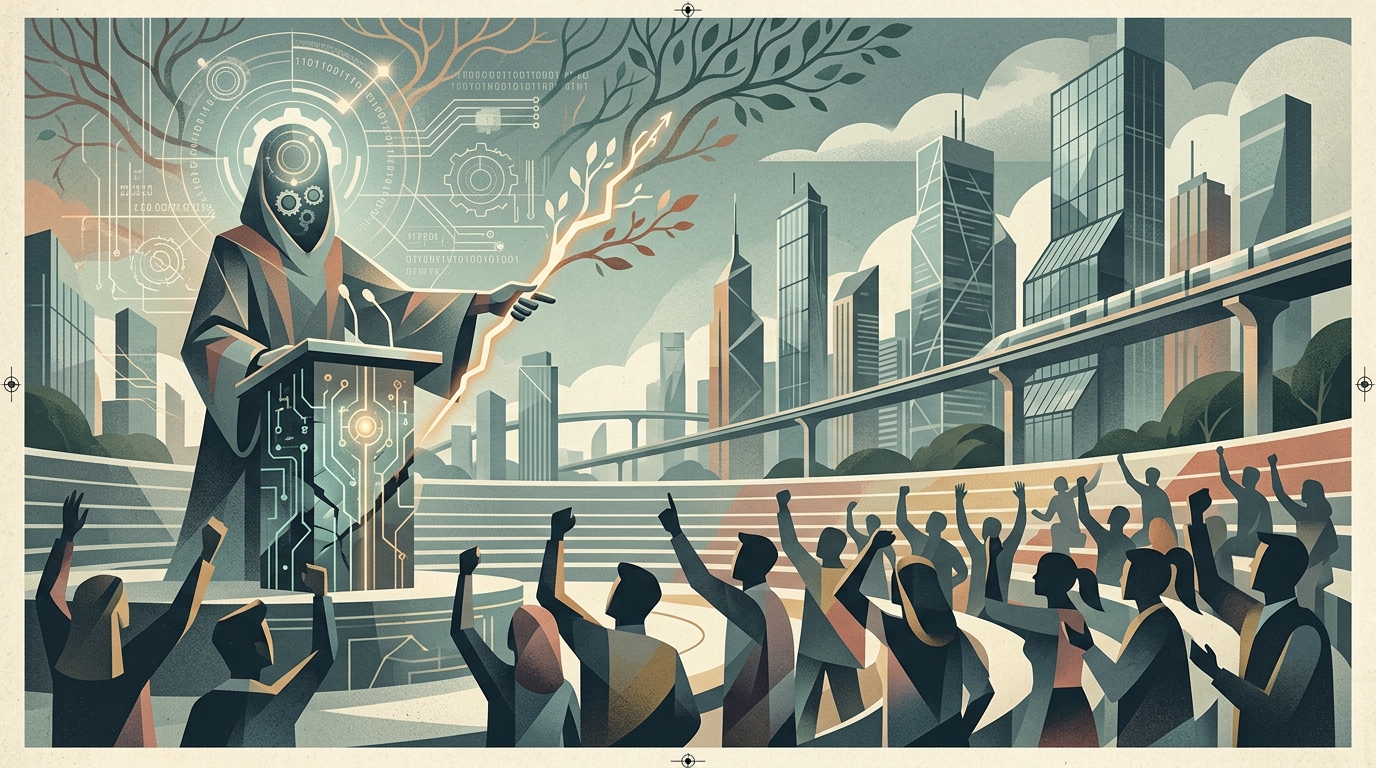
In an era where technological messianism seems to dominate every corner of Silicon Valley, the voice of Steve Wozniak, the legendary co-founder of Apple, resonates with a paradoxical yet necessary simplicity. Recently, during addresses to student audiences, the man who designed the first personal computers didn’t speak about the omnipotence of algorithms, but rather about the limitations of the machine and the supremacy of human consciousness. The fact that thousands of students cheered him is no coincidence; it represents a collective sigh of relief in the face of automation anxiety.
Demystifying the 'Intelligence' in AI
Wozniak, known for his candor and aversion to corporate marketing fluff, posed a fundamental question: Can a machine ever possess a 'soul' or true understanding? According to him, the current iteration of Artificial Intelligence (AI) is essentially a highly sophisticated system of statistical prediction. "ChatGPT can write an essay, but it doesn't know what the word 'love' or 'pain' actually means," he pointed out. This distinction is vital for students who feel the looming threat of being replaced by Large Language Models (LLMs).
Wozniak’s analysis focuses on the fact that AI lacks the ability to make ethical decisions based on lived experience. Machines process data, but humans process meaning. For the new generation of engineers and creators, the reminder that creativity is not just the recombination of existing data, but the birth of something new through emotion, served as a source of inspiration and empowerment.
The Fear of Replacement vs. Reality
One of the primary reasons students warmly applauded Wozniak is his stance on the labor market. While many tech leaders predict the end of human coding or writing, Wozniak argues that technology will remain a tool—a "hammer" for the modern artisan. The anxiety young people feel about whether their degrees will be relevant in five years found an answer in his urging to focus on the fundamental principles of problem-solving.
- AI as an assistant, not a replacement for human intellect.
- The critical importance of skepticism regarding algorithmic output.
- The necessity for human oversight at every stage of the creative process.
Wozniak also warned of the dangers of over-reliance. If students stop learning the "hard way"—that is, understanding the core structure of a problem—and rely exclusively on AI, they will lose the ability to truly innovate. Innovation, in Woz's view, comes from questioning the status quo, something an algorithm trained on historical data inherently struggles to do.
Ethics, Deepfakes, and the Creator’s Responsibility
On a darker note, which nonetheless resonated with the audience, the Apple co-founder spoke about the threat of misinformation. Having signed the famous letter calling for a pause in the development of giant AI models, he expressed fear that this technology could be used to manufacture convincing lies on a scale humanity has never seen. "We need to know who the creator is behind every piece of content," he stated emphatically.
"Technology must be something we control, not something that controls or deceives us. The human must remain the ultimate arbiter of truth."
This call for responsibility struck a chord with students who are tasked with navigating a world where truth is becoming increasingly blurred. The reception Wozniak received was not just an acknowledgment of his past achievements, but an endorsement of his vision for a future where technology serves humanity without diminishing it.
Conclusion: 21st Century Digital Humanism
Steve Wozniak’s message is clear: Do not let the excitement for the "new" overshadow the value of the "human." The students who cheered him did not do so out of technophobia, but out of a deep-seated desire to maintain control over their own destinies. At the dawn of the AI age, Wozniak reminds us that the most powerful computer remains the one between our ears, provided we learn to use it with wisdom and empathy.