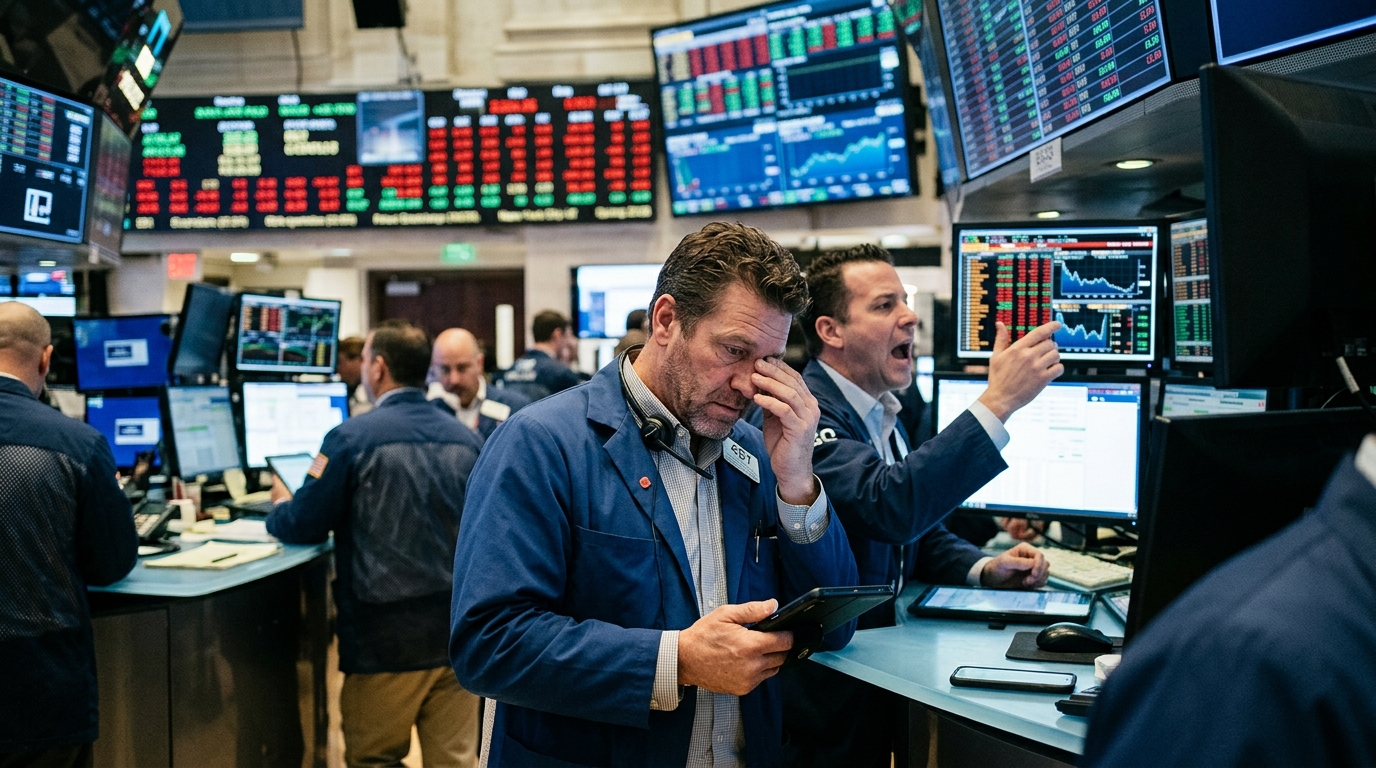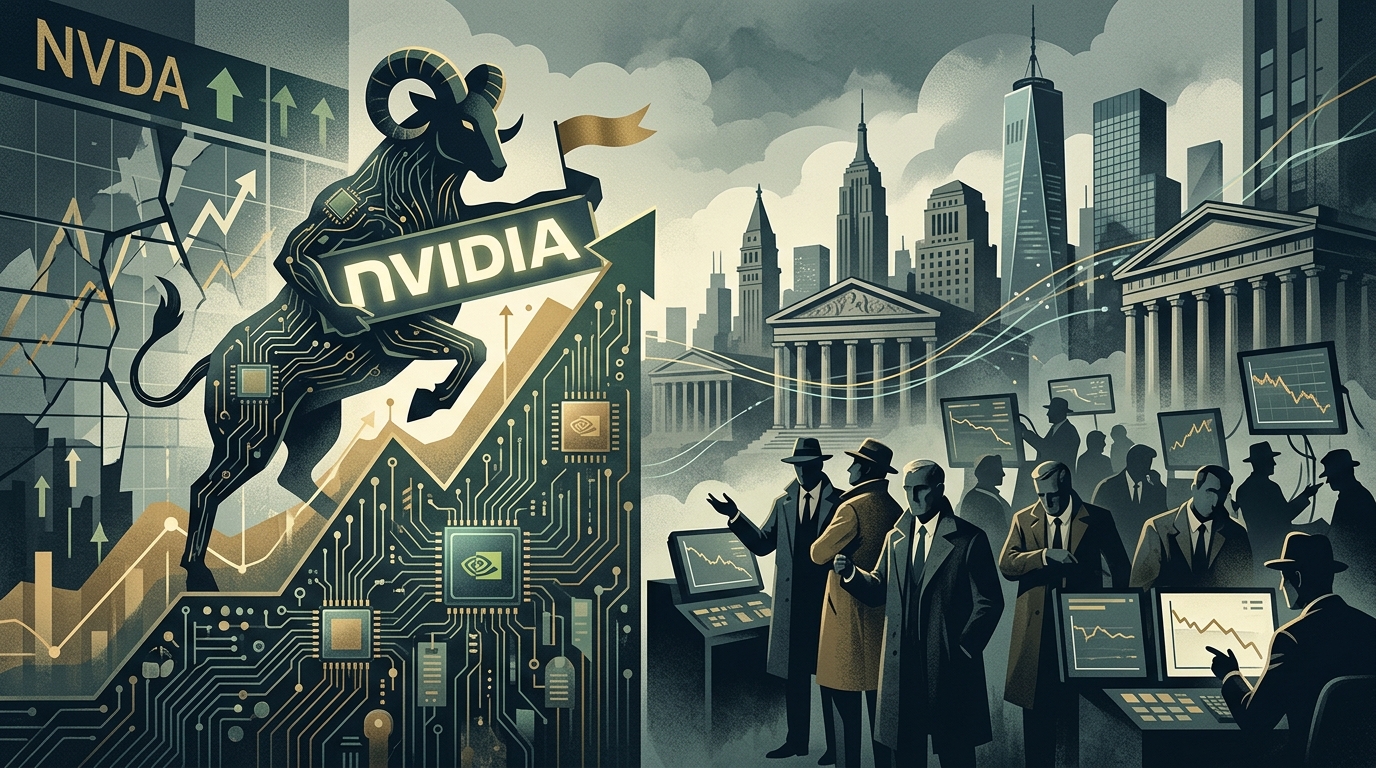
The story of Nvidia over the last few years resembles a Greek epic: a protagonist who overcomes every obstacle, reaches unthinkable heights, but eventually faces the hubris of expectations. Today, in May 2026, Jensen Huang's company announced results that in any other era would have triggered a frenzy of excitement. However, Wall Street reacted with icy indifference, or even a slight decline in the share price. The question hanging over Palo Alto and New York is clear: Can a company become a victim of its own success?
The Phenomenon of 'Pricing to Perfection'
Nvidia is no longer just a semiconductor company; it is the backbone of the global digital economy. With revenue from the Data Center segment hitting a new all-time high, thanks to the full commercial rollout of the Blackwell architecture and initial orders for the next-generation "Rubin" chips, the company's financial health is indisputable. However, Wall Street analysts have become addicted to "earnings beats" in the range of 20% and 30%. When Nvidia "merely" beats forecasts by 5% or 10%, the market perceives it as a slowdown.
This "priced to perfection" psychology creates a precarious environment. Investors are no longer looking at what the company achieved in the previous quarter, but whether it can maintain these extraordinary growth rates indefinitely. The slightest hint of a decline in gross margins—which remain at levels above 75%—triggers waves of liquidations from the algorithmic funds that dominate trading.
The Great Shift: From Infrastructure to ROI
One of the main reasons for market jitters doesn't concern Nvidia itself, but its customers. The so-called "Hyperscalers" (Microsoft, Google, Amazon, Meta) have spent hundreds of billions of dollars purchasing H100, H200, and Blackwell chips. The question now being asked by the shareholders of these giants is: "Where are the AI profits?". Although generative AI has been integrated into every piece of software, direct monetization has not yet reached levels that would justify the continued exponential increase in capital expenditure (Capex).
If Nvidia's major customers decide to hit the "brakes" on orders to absorb existing hardware, Nvidia will find itself with massive inventory and a sharp drop in revenue. This "digestion" scenario is an investor's nightmare. Nevertheless, Jensen Huang insists that we are still at the beginning of the "modernization of $1 trillion worth of data centers," arguing that demand will remain strong for the next decade.
Geopolitics and Competition: Thorns in the Crown
Beyond financial metrics, Nvidia is navigating a geopolitical minefield. Export restrictions to China have deprived the company of a massive market, while Beijing's efforts to develop domestic processors (via Huawei and others) are beginning to bear fruit. At the same time, the reliance on TSMC in Taiwan remains the "Achilles' heel" of the supply chain. Any tension in the Taiwan Strait could halt Nvidia's production within hours.
Furthermore, internal competition is intensifying. Apple, Google, and Amazon are now developing their own custom chips (TPUs, Trainium, Inferentia) to reduce their dependence on Nvidia and lower costs. Although Nvidia maintains its software advantage through the CUDA platform, its "castle" is under attack from all sides. Wall Street is aware of this and is starting to price in a future erosion of profit margins.
Conclusion: A Maturing Market
The current stock market reaction may not be an indication of Nvidia's failure, but an indication of the AI market's maturation. The initial excitement, where every piece of AI news led to double-digit gains, has given way to a more rigorous, analytical approach. Nvidia remains the undisputed leader, but it is now called upon to prove it can maintain its dominance in a world that no longer settles for promises but demands tangible, sustainable results. The bet for 2026 and 2027 will be the transition from the "hardware boom" to the "software and services ecosystem," where real profit has greater longevity.