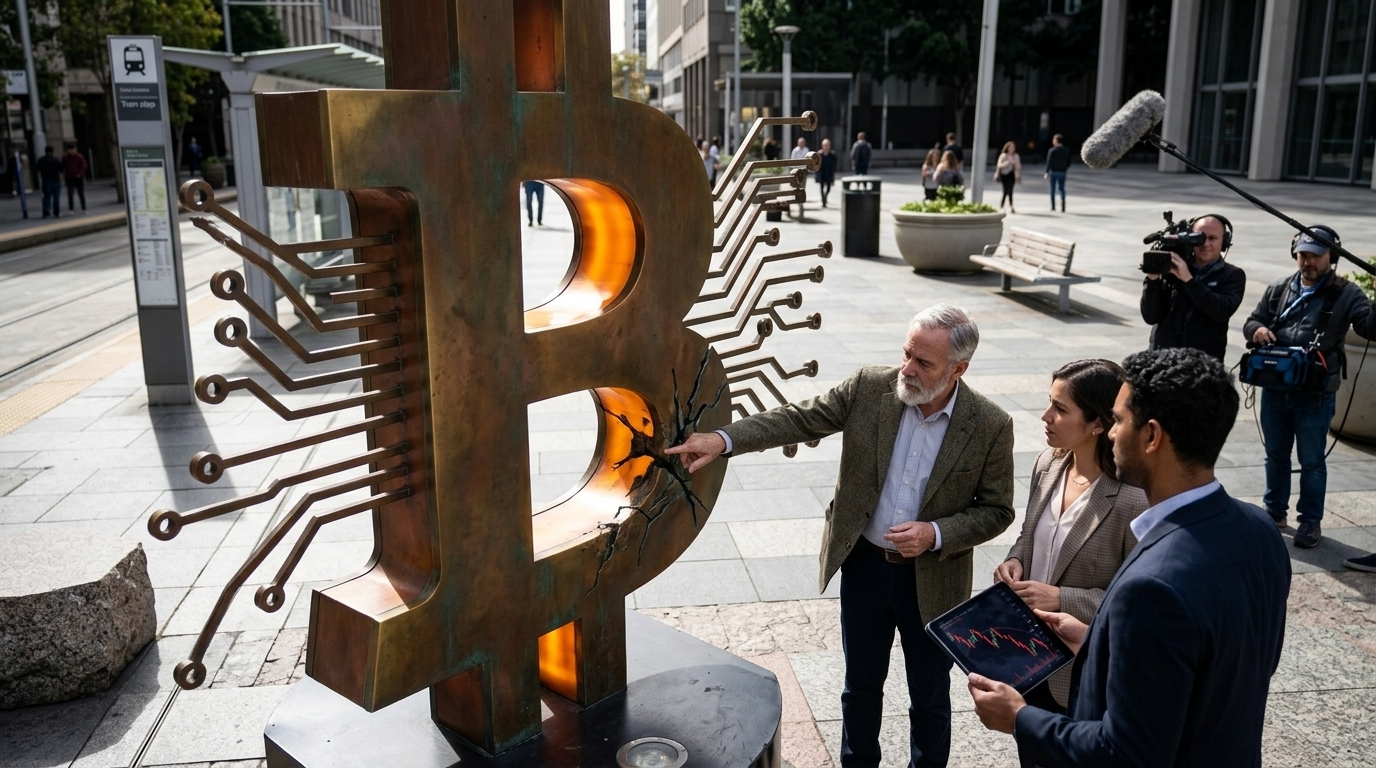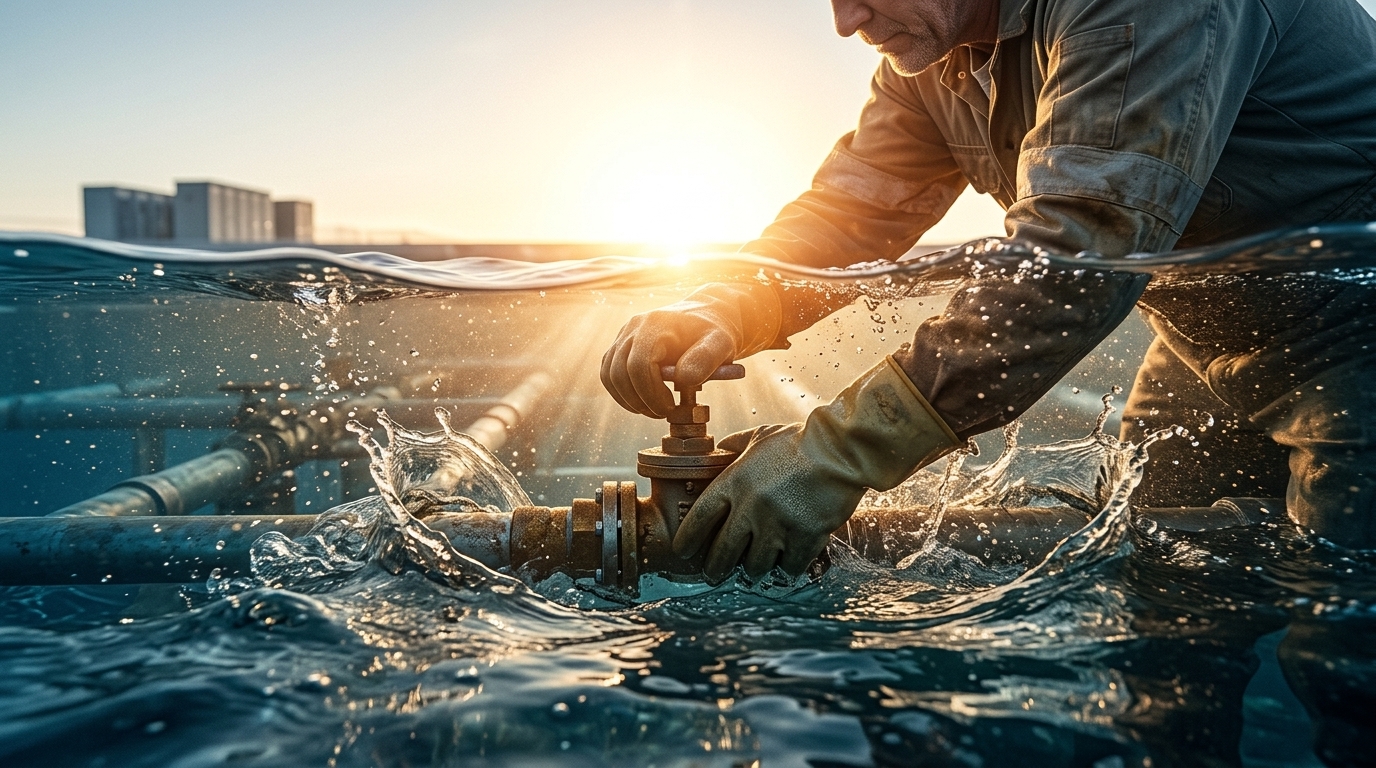
In the age of digital abundance, we often forget that the 'Cloud' is not composed of air, but of tons of silicon, copper, and, most importantly, water. As Artificial Intelligence (AI) integrates into every facet of the global economy, the demand for computing power is skyrocketing, dragging with it the need to cool massive data center complexes. Water, the most fundamental natural resource, is now emerging as a strategic factor that will define the future of digital infrastructure and the survival of tech giants.
The Invisible Thirst of Generative AI
Every time a user submits a query to a Large Language Model (LLM) like ChatGPT, an amount of water roughly equal to a 500ml bottle is consumed. This happens because the GPU processors executing the complex calculations generate immense heat. To maintain functional temperatures, data centers use cooling towers that evaporate water to release heat into the environment. According to recent studies, water consumption by Microsoft, Google, and Meta has surged by 20-30% in the last two years, following the trajectory of the AI revolution.
The challenge is not just quantitative but also local. Many of these data centers are located in regions already facing water stress. The conflict between the need for digital growth and the requirements of local agriculture or urban water supply is becoming increasingly intense, transforming water from a simple operational cost into a reputational and operational risk.
The TNFD Framework: A New Era of Transparency
The adoption of the Taskforce on Nature-related Financial Disclosures (TNFD) framework marks a radical shift in how businesses perceive nature. Until recently, attention was almost exclusively focused on carbon emissions (Net Zero). TNFD, however, forces companies to report how their activities affect biodiversity and water resources. For an investor, a data center's water consumption is no longer a footnote in a sustainability report but a key resilience indicator.
If a data center in Arizona or Spain cannot secure water access due to drought, the investment becomes a 'stranded asset.' Consequently, water management is now integrated into strategic planning, with companies seeking ways to reduce reliance on fresh water by using recycled water or air-cooling technologies, despite the higher energy costs.
From Consumption to 'Water Positivity'
Under pressure from regulators and public opinion, Big Tech firms have set ambitious goals to become 'Water Positive' by 2030. This means they aim to return more water to the environment than they consume. This is achieved through investments in aquifer restoration projects, fixing leaks in municipal networks, and desalination technologies.
- Closed-loop cooling: Technologies that recycle the same water repeatedly, drastically reducing evaporation.
- Liquid Cooling: Immersing servers in special dielectric liquids that transfer heat more efficiently than air or water.
- Geographic dispersion: Moving data centers to colder climates (e.g., Scandinavia) where the natural ambient temperature reduces the need for active cooling.
However, this transition is not without obstacles. Air cooling requires more electricity, which can increase a company's carbon footprint. This 'trade-off' between water and energy is the new major dilemma for infrastructure engineers.
Conclusion: The Political Economy of Water
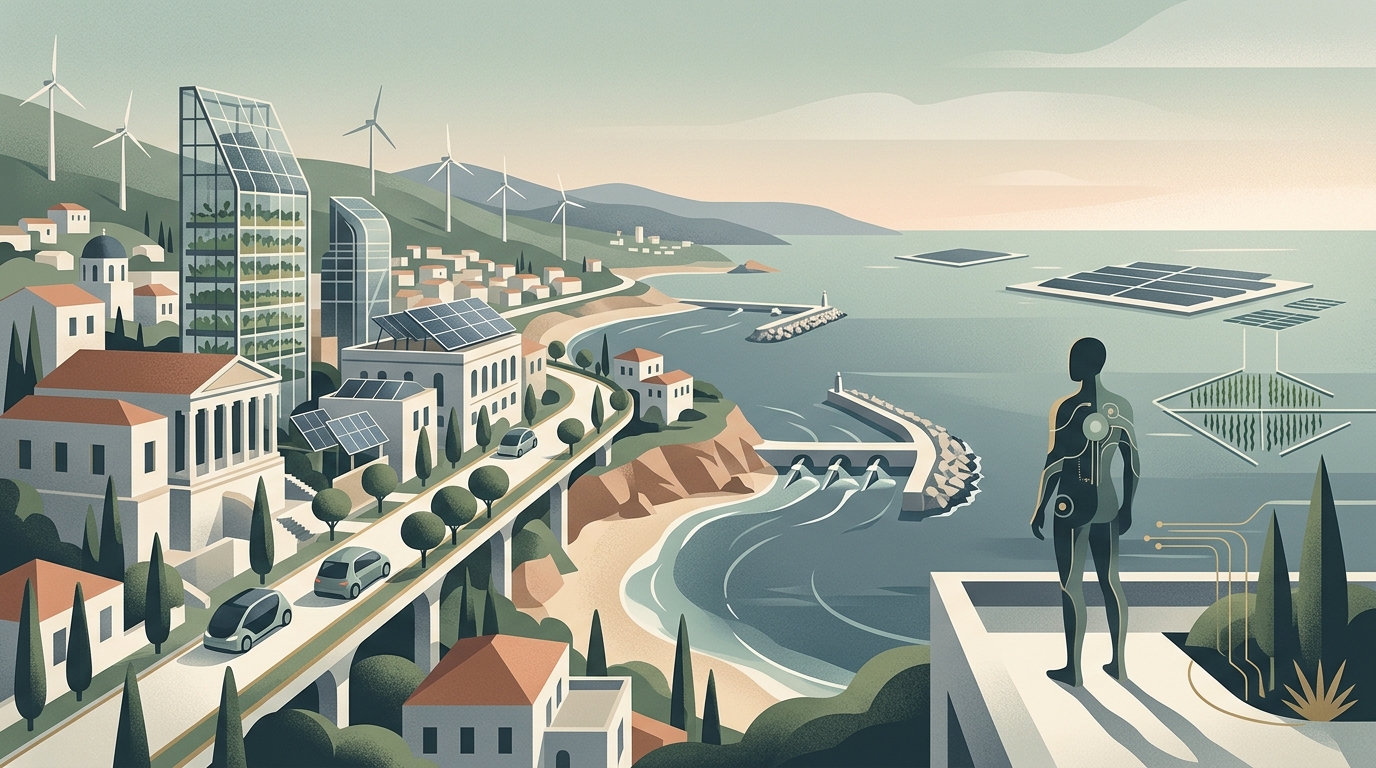
The transformation of water into a strategic factor highlights a deeper truth: the digital economy is not detached from physical reality. The resilience of digital infrastructure now depends on the ability of states and corporations to manage natural resources wisely. In countries like Greece, with increasing water scarcity in island and southern regions, the placement of new data centers must be done with strict water sustainability criteria to ensure that digital progress does not undermine the basic survival of local communities.
"Water is to the 21st century what oil was to the 20th: the resource that will define geopolitical power and economic stability."
As we move toward 2030, success in the field of AI will not be measured only in FLOPS and model parameters, but in liters of water per compute cycle. The transparency mandated by TNFD is just the beginning of a new era where technology must finally reconcile with the limits of the planet.