The insatiable thirst of Artificial Intelligence for computational power has led tech companies to an unexpected search: your personal living space. As massive data centers face growing backlash over energy consumption and land use, a new strategy is emerging. The idea is simple yet radical: instead of building giant facilities in the desert, why not distribute computing power across thousands of homes?
As we move through 2026, the AI market finds itself at a critical crossroads. Demand for model training and, more importantly, 'inference'—the process where AI answers user queries in real-time—has surpassed all predictions. Traditional cloud providers are struggling to keep up, not due to a lack of chips, but because power grids cannot support new gigawatt-scale installations. Enter the pitch for 'mini data centers' at home.
The Technology: Moving from Cloud to Edge
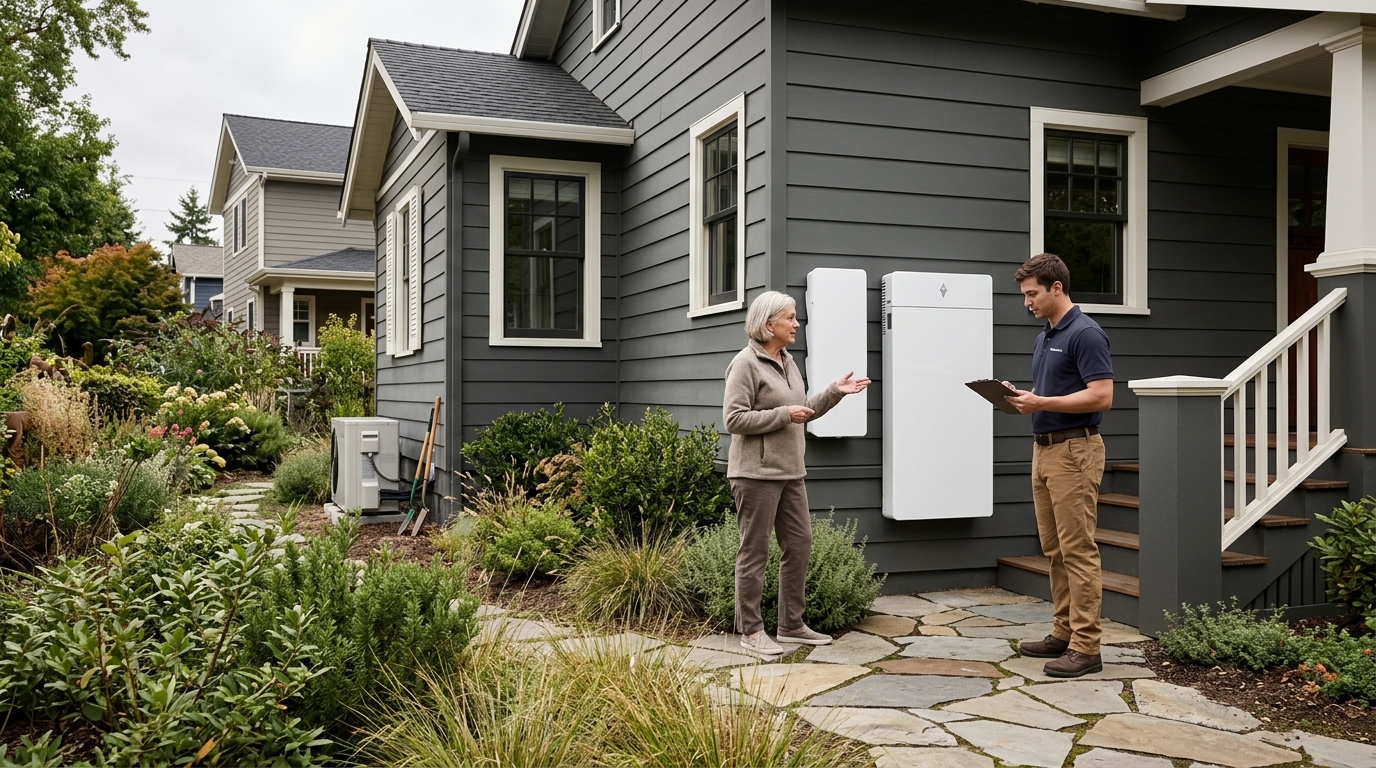
These devices are not your typical PC towers. They are specialized nodes equipped with the latest processing units (GPUs or NPUs), designed to operate silently and connect directly to residential fiber-optic networks. The core innovation lies in heat management. Many of these devices are marketed as 'smart heaters,' converting the waste heat generated by AI data processing into warmth for the home.
- Decentralization: Reducing pressure on centralized power grids.
- Latency Reduction: Processing data closer to the end-user.
- Dual-use: Providing compute power while simultaneously heating the living space.
The corporate pitch is enticing: "Host our node, and we will cover your electricity bill while paying you a monthly stipend." For many consumers struggling with the rising cost of living, turning a corner of their home into a digital factory seems like easy money.
Economic Incentives and the 'Heating Economy'
This model is based on a fundamental economic shift. In traditional data centers, cooling the machinery accounts for up to 40% of operational costs. In a home setting, heat is not a waste product, but a commodity. Companies like France's Qarnot and the US-based ExaCompute are leading this charge, arguing that distributing compute is the only sustainable way to continue AI growth without collapsing the energy grid.
"We aren't just selling compute; we are selling a symbiotic relationship between the digital and physical worlds," says one industry executive.
However, analysts warn of significant hurdles. Maintaining thousands of scattered units is a logistical nightmare. If a node in a London flat breaks down, the cost of sending a technician could wipe out months of profit. Furthermore, there is the issue of network reliability: what happens if a user unplugged the device or if their home Wi-Fi becomes unstable?
Security, Privacy, and the 'Industrialization' of the Home
Beyond the technicalities, serious ethical and social questions arise. Installing a corporate 'black box' inside a home raises data protection concerns. Although companies assure that the data processed by these nodes is encrypted and unrelated to the homeowner, the physical presence of processing equipment creates a sense of intrusion.
Moreover, there is the risk of 'digital feudalism.' In a future where citizens depend on tech giants to pay their rent or electricity through the hosting of these machines, the power balance shifts dangerously. The home ceases to be a sanctuary and is transformed into a cog in a global machine of algorithm production.
In conclusion, moving data centers into our homes is a bold response to the limits of physics and economics. If AI is to become as ubiquitous as electricity, perhaps its infrastructure must indeed be everywhere. But the price of this diffusion—in terms of privacy and social fabric—remains to be seen.