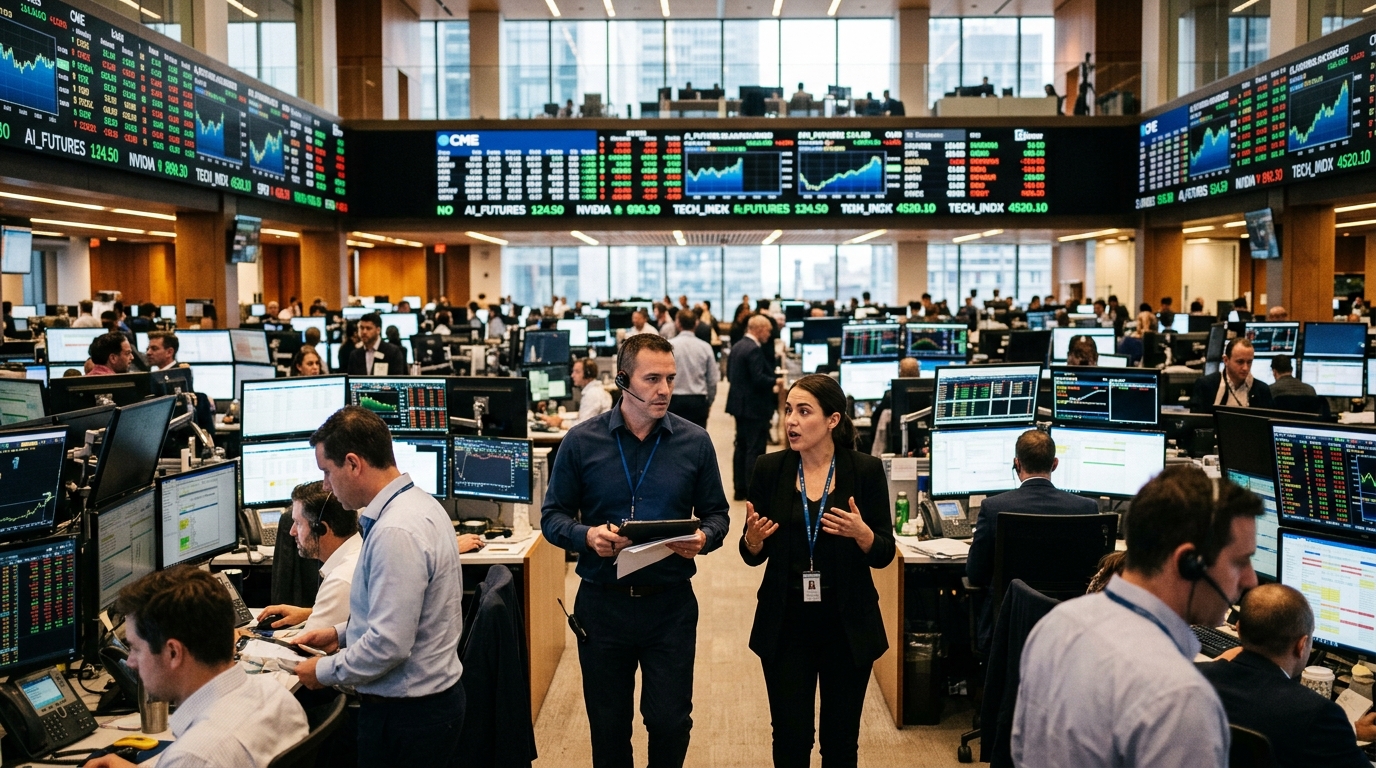
In a historic move that signals the full maturation of the Artificial Intelligence economy, derivatives giant CME Group, in partnership with index provider Silicon Data, has announced the creation of the first futures market for AI computing power. This development, first reported by Bloomberg, officially transforms GPU cycles and terahertz from technical infrastructure into an internationally tradable financial product, on par with crude oil, natural gas, and gold.
From Silicon to Chicago: The Need for Risk Mitigation
Until today, access to computing power—primarily through Nvidia’s GPUs—has been a fragmented and often volatile market. AI labs and cloud providers have faced immense price swings and availability issues. With the introduction of CME futures, companies like OpenAI or Anthropic can now "lock in" the price of the compute they will need six months or a year from now, shielding their R&D budgets from sudden price spikes caused by supply chain disruptions.
Silicon Data steps in to solve the critical problem of standardization. Unlike a barrel of West Texas Intermediate oil, computing power is not naturally homogeneous. An hour on an Nvidia H100 is vastly different from an hour on an older A100 or an AMD MI300X. Silicon Data’s indices will create a "basket" of compute value, allowing investors and enterprises to trade based on a common unit of measurement. This standardization is the prerequisite for liquidity: without it, a commodity market cannot exist.
Compute as the "New Oil" of the 21st Century
The comparison between AI compute and oil is no longer a metaphor; it is a structural reality. Just as the Industrial Revolution relied on the predictable flow of energy, the AI-driven digital revolution relies on the predictable flow of compute. The creation of a futures market allows "miners" (in this case, data center operators) to finance their expansion. An infrastructure provider can sell future compute capacity to raise capital today, enabling them to purchase the next generation of Nvidia Blackwell chips.
- Price Transparency: For the first time, the market will have a public, daily price for compute, reducing the prevalence of opaque, back-room deals between hyperscalers.
- Institutional Entry: Hedge funds and investment banks can now bet on AI growth without necessarily holding volatile equity in individual chipmakers or software firms.
- Democratization of Access: Smaller startups can use financial instruments to compete with giants, managing their infrastructure costs with institutional-grade precision.
Geopolitical Implications and Sovereign Power
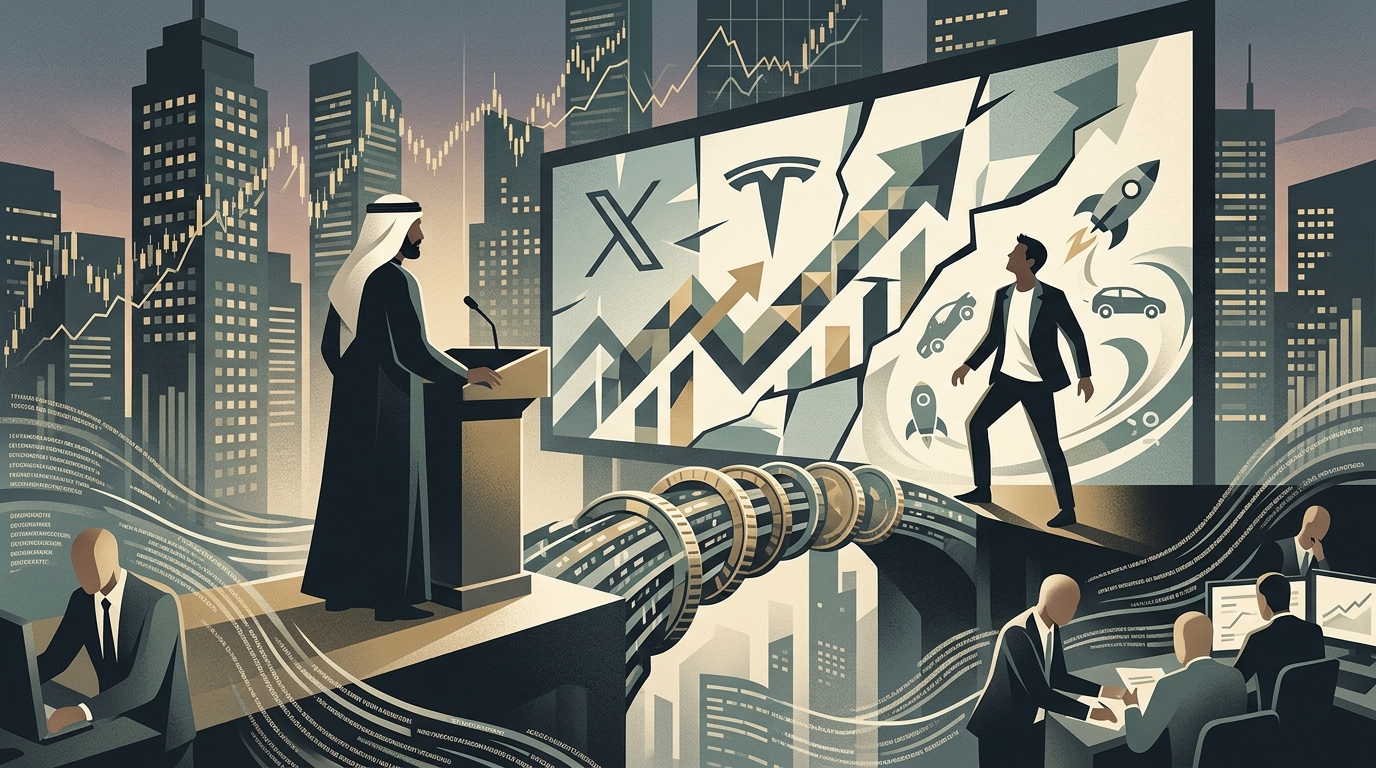
CME Group’s move is not merely financial; it is deeply geopolitical. By establishing Chicago as the global hub for compute trading, the United States is reinforcing its hegemony over the AI ecosystem. If the price of compute is denominated in dollars on an American exchange, it creates a new kind of "Petrodollar"—the "Compute-Dollar."
"The creation of this market is the ultimate admission that AI is no longer an experiment, but the fundamental infrastructure of the modern state," market analysts noted during the announcement.
However, risks abound. The financialization of compute could lead to speculative bubbles. If futures prices skyrocket due to speculation rather than actual demand, the cost of training new AI models could become prohibitive for everyone except the most well-capitalized players. Furthermore, reliance on centralized indices grants immense power to firms like Silicon Data, which will effectively define what constitutes "quality" computing power.
Conclusion: A New Economic Order
The CME Group initiative will be remembered as the moment AI decoupled from pure technology and entered the realm of global macroeconomics. As 2026 unfolds, the ability of a nation or a corporation to produce and manage compute will determine its standing in the world. The Chicago Mercantile Exchange has just laid the tracks upon which the next industrial revolution will run. The era when compute was just an expense on a balance sheet is over; it is now an asset, a weapon, and a currency.