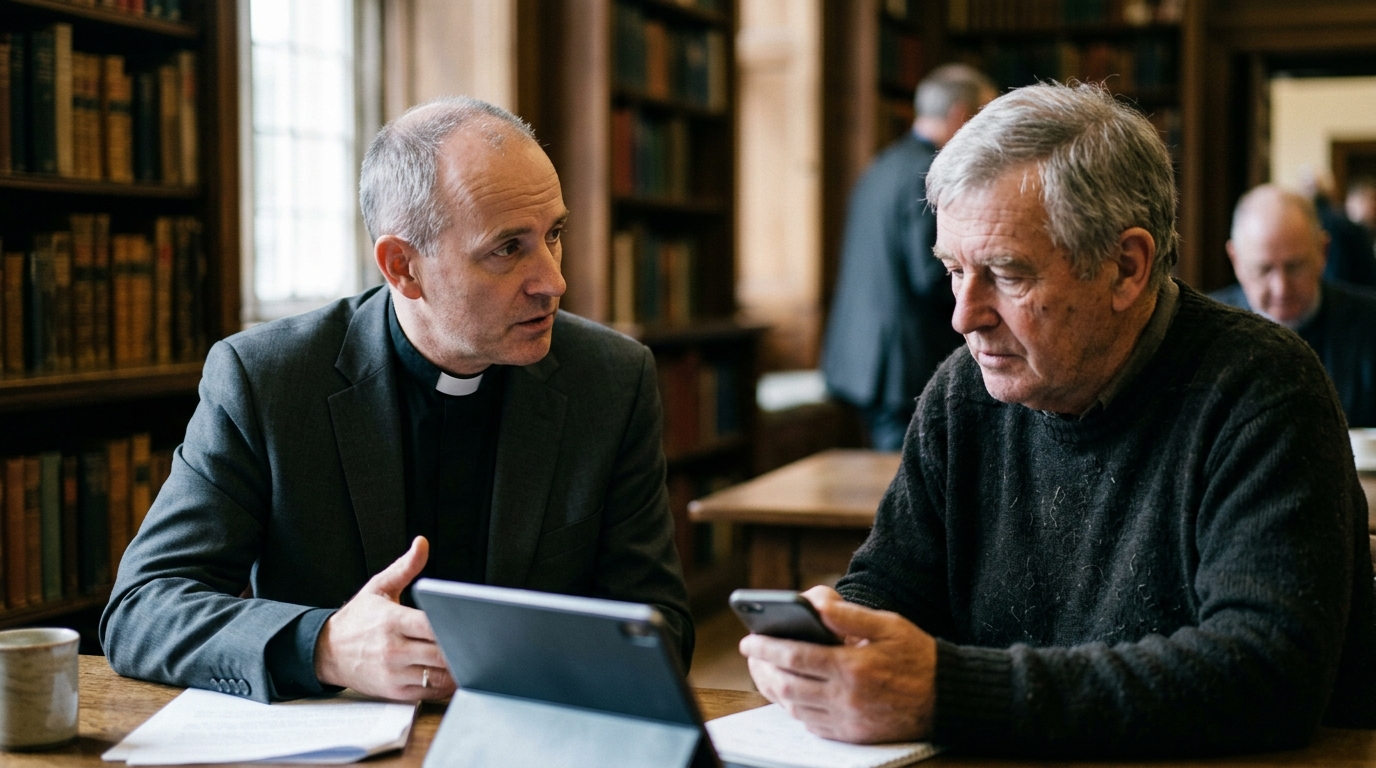
As we navigate the first half of 2026, Artificial Intelligence is no longer an exotic tool but an omnipresent force reshaping every facet of human activity. For the Muslim world, a community of 1.9 billion people with deep traditions and rigorous ethical frameworks, the rise of AI raises questions that go far beyond mere technological adoption. The central question posed by thinkers and religious leaders is clear: Can an algorithm, built in the laboratories of Silicon Valley, ever truly align with the values of Islam?
The Challenge of Digital Authority and Automated Fatwas
One of the most thorny issues is the emergence of 'AI Imams' and the use of Large Language Models (LLMs) to issue religious rulings (fatwas). Traditionally, Islamic jurisprudence (fiqh) is based on the concept of *isnad*—an unbroken chain of human-to-human transmission of knowledge, reaching back to the sources of revelation. AI, however, functions as a 'black box.' When a believer seeks guidance from an AI, they receive a response that lacks spiritual weight and human empathy.
Critics argue that AI can parrot texts but fails to grasp the *Maqasid al-Sharia* (the higher objectives of divine law), such as the preservation of life, faith, and intellect. The possibility of AI producing incorrect or misleading interpretations—so-called 'hallucinations'—poses the risk of leading believers into practices that contradict their fundamental principles. Furthermore, the lack of accountability is critical: if an AI provides ethically harmful advice, who bears the responsibility?
Algorithmic Bias: A New Digital Orientalism?
The issue of trust is further complicated by the nature of training data. Most dominant AI models have been trained on datasets reflecting Western, secular values and biases. This creates a risk of 'cultural imperialism' through code. For example, algorithms used to identify radicalization or for risk assessment often exhibit bias against Muslims, conflating religious practices with suspicious behavior.
IslamiCity and other organizations point out that unless AI is 'decolonized,' it will continue to reproduce stereotypes. The need for 'Halal AI'—models trained on Islamic sources with respect for cultural specificity—is now imperative. Already, states like Saudi Arabia and the UAE are investing billions in developing their own models, such as Jais, attempting to reclaim sovereignty over their digital narrative.
The Ethics of Privacy and the Concept of Haya
In Islam, the concept of *Haya* (modesty and privacy) is central. Mass data collection by tech giants and the use of biometric surveillance systems clash directly with the individual's right to privacy. Using AI to violate the sanctity of the home or for unjustified surveillance of citizens is considered by many scholars as *haram* (forbidden), as it undermines human dignity.
However, technology also offers opportunities. AI can be used for the rapid analysis of thousands of manuscripts, detecting authenticity in Hadith traditions, and facilitating the learning of the Arabic language. Trust, therefore, is not a binary 'yes' or 'no' but a dynamic process of negotiation. Muslims are called to be not just consumers but architects of AI, ensuring that technology serves humanity without eroding its soul.
Conclusion: Toward an Ethical Convergence
Trust in AI for the Muslim community depends on three pillars: algorithmic transparency, data representativeness, and human oversight. Just as previous generations of Muslims integrated the printing press and the radio, today's generation must develop an 'algorithmic literacy' rooted in critical thinking (*ijtihad*). AI can be a powerful tool for the public good (*maslaha*), provided it remains in the service of values rather than the other way around.