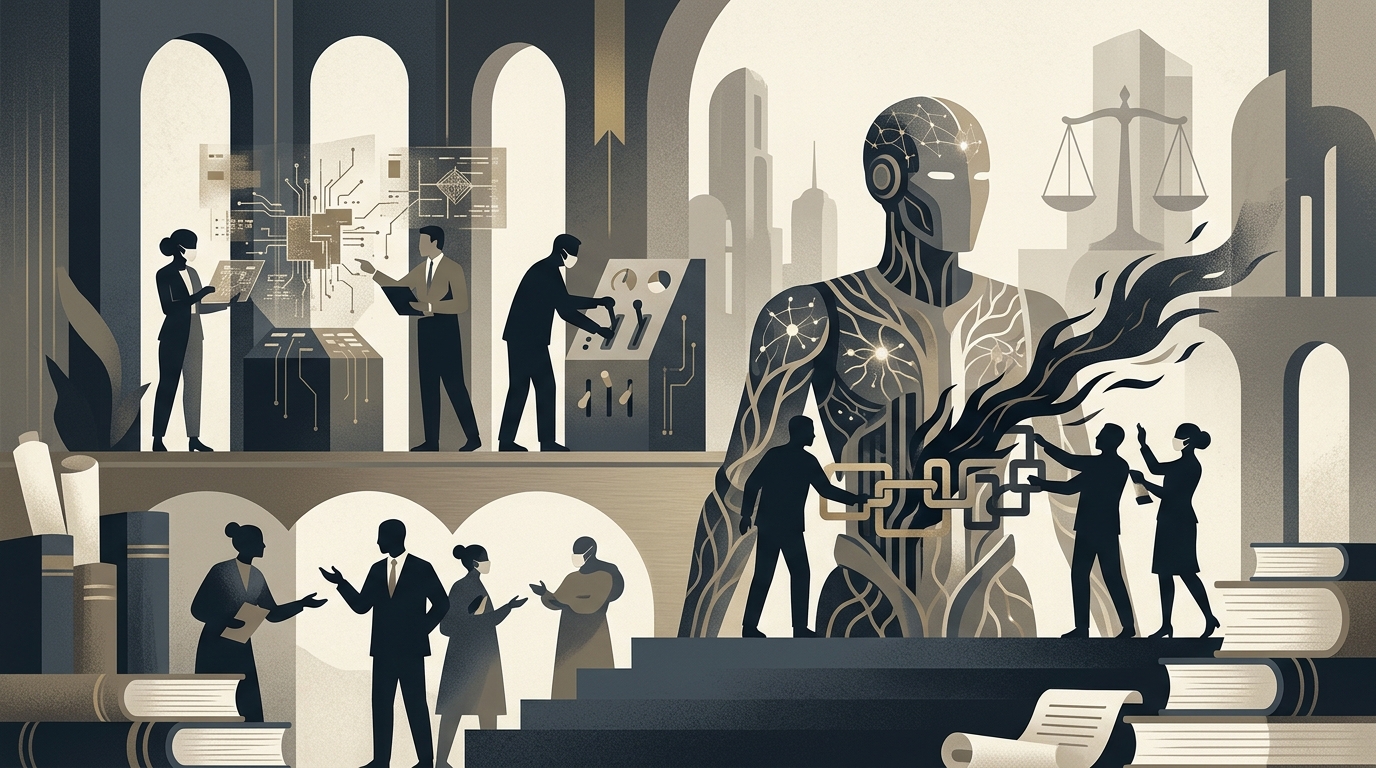
In an era where algorithms dictate everything from news feeds to hiring processes, the voice of the Church is emerging to add a necessary moral dimension to the debate over Artificial Intelligence (AI). Archbishop Eamon Martin, speaking recently in Derry, caused a stir by linking contemporary technological concerns with the work of Pope Leo XIII and the landmark 1891 encyclical *Rerum Novarum*. This intervention is not merely a theological position but a profound socio-political analysis of the risks that an unregulated digital revolution poses to human dignity and social cohesion.
The Connection to the Past: From the Industrial to the Digital Revolution
Just as Pope Leo XIII recognized the tectonic shifts brought by the Industrial Revolution to the relationship between capital and labor, Archbishop Martin points out that AI represents the "new industrial revolution" of our time. *Rerum Novarum* (Of New Things) was the Church's response to the exploitation of workers and the rise of unbridled capitalism. Today, Martin argues that we face similar "new things"—challenges where machines do not just replace muscle, but cognition, threatening the very core of human agency.
The Archbishop's concern centers on the fact that while technology promises progress, it often ends up concentrating power in the hands of a few, widening the gap between the rich and the poor. "History repeats itself," he notes, emphasizing that ethics must precede innovation. The reference to Pope Leo is no coincidence; it is a reminder that the economy and technology must serve humanity, and not the other way around.
The Dehumanization of Labor and the AI 'Black Box'
One of Martin’s central warnings concerns the nature of work. In Catholic social teaching, work is not just a means of survival but an expression of human creativity and dignity. Automation through AI, if left unregulated, risks turning the worker into a mere cog in an opaque system. The Archbishop spoke of the "black box" of algorithms, where decisions are made without transparency, without accountability, and most importantly, without mercy.
- The loss of human contact in caregiving and education sectors.
- Algorithmic bias that reinforces social discrimination.
- The erosion of privacy in the name of efficiency.
- The urgent need for "algorethics," a term championed by the Vatican.
Martin emphasizes that AI lacks a conscience and a moral compass. If we outsource judgments on who deserves a loan, a job, or even medical care to machines, we risk creating a society where justice is a cold mathematical calculation, stripped of the understanding of the human condition.
Toward a Global Ethical Compact
Concluding his address, the Archbishop called for global mobilization to regulate AI, similar to international treaties on nuclear weapons or climate change. This is not a technophobic stance, but a call for responsibility. The Church, through the "Rome Call for AI Ethics," has already begun collaborating with giants like Microsoft and IBM, seeking to instill human-centric values into the design of new systems.
"Artificial intelligence is a gift of human intelligence, but like every gift, it carries with it the responsibility of right use," Martin stated.
The challenge for 2026 and beyond is to ensure that the digital age does not lead to a new form of servitude, where humans are subjects to the algorithms they themselves created. Archbishop Martin’s voice, drawing strength from a century-old tradition, reminds us that progress without ethics is merely a disguised regression.