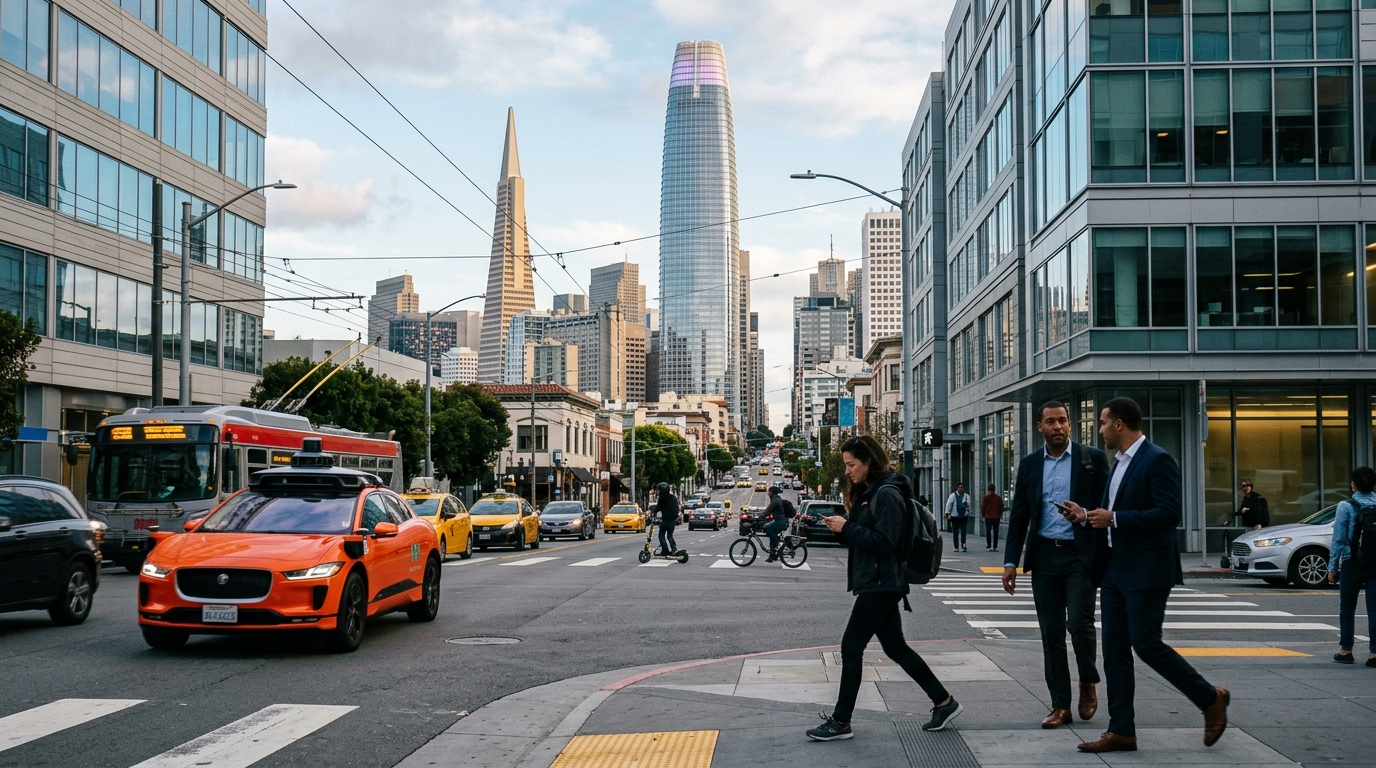
On the edge of the American continent, where the fog rolls over the Golden Gate Bridge, San Francisco has always been humanity's laboratory for the future. From the 1849 Gold Rush to the counter-culture of the 1960s and the dominance of the internet, this city has a unique ability to metabolize innovation and turn it into a global standard. However, as we move through 2026, something in the city's atmosphere has shifted. The rise of Artificial Intelligence (AI) is not just another economic cycle; it is an existential pivot that touches the very fabric of human experience and urban identity.
Historical Continuity and the Great Rupture
For decades, San Francisco was the mecca of software. Silicon Valley, stretching south of the city, has given way to a new concentration of power within the city limits themselves. Companies like OpenAI and Anthropic are not headquartered in isolated suburban campuses but in the heart of neighborhoods like the Mission District and South of Market (SoMa). This physical proximity creates a sense of urgency. Unlike the social media revolution, which was built on capturing our attention, AI is built on our ability to generate thought.
Previous tech booms were about tools: email helped us communicate, Uber helped us move, Airbnb helped us travel. AI, however, is not a tool in the traditional sense. It is a partner—or a replacement—for cognitive labor. This creates a different psychology among the city's inhabitants. There is an excitement bordering on awe, but also a low-frequency fear that this time, technology will not just supplement the city but redefine it without its consent.
From the 'Doom Loop' to the Intelligence Renaissance
Just two years ago, international headlines were obsessed with San Francisco’s 'Doom Loop.' Remote work had emptied offices, retail was collapsing, and the fentanyl and homelessness crises seemed insurmountable. AI acted as the 'deus ex machina.' The billions of dollars in venture capital flowing into the city have revitalized office real estate, albeit in a very specific way.
- Demand for office space from AI startups has surged by 45% compared to 2024 levels.
- New research centers and 'hacker houses' are popping up on every corner, reminiscent of the glory days of 1999.
- The city is once again the world’s gravitational center for talent, attracting engineers from every corner of the globe.
Yet, this renaissance is selective. While 'Prompt Engineers' command dizzying salaries, the rest of the city struggles with a cost of living that remains the highest in the U.S. The contrast between the state-of-the-art OpenAI facilities and the homeless encampments just a few blocks away is more jarring than ever. AI promises to solve humanity's greatest challenges, but in San Francisco, it seems to exacerbate the inequalities that tech itself created over the past decades.
Why Does AI Feel Different?
The fundamental difference lies in speed and ubiquity. In the past, a new technology took years to permeate society. ChatGPT and its successors did it in months. In San Francisco, this translates to a feeling of living inside a simulation running at double speed. Residents no longer discuss 'if' AI will change their lives, but 'how fast' it will happen.
"It's not just a new app on our phones. It's the first time we feel that the very concept of creativity and intelligence is being exported from the human mind and transferred into silicon," says a local tech analyst.
Furthermore, there is the issue of moral responsibility. San Francisco is a city with deep liberal and humanistic roots. The conflict between the pursuit of Artificial General Intelligence (AGI) and the preservation of human dignity is being debated in the cafes of Hayes Valley and the lecture halls of Stanford. AI feels different because this time, the stakes aren't just a company's profit margins, but the very essence of what it means to be human in an automated society.
The City as a Future Blueprint
As San Francisco moves deeper into the AI era, it becomes the guinea pig for the rest of the world. If the city manages to integrate this technology in a way that benefits all its citizens and not just the tech elite, it will have provided a valuable lesson for the 21st century. But if it fails, AI will be remembered as the catalyst that finally broke the social contract in one of the world’s most progressive cities. The stakes are high, and the world’s eyes are fixed on the hills of San Francisco.