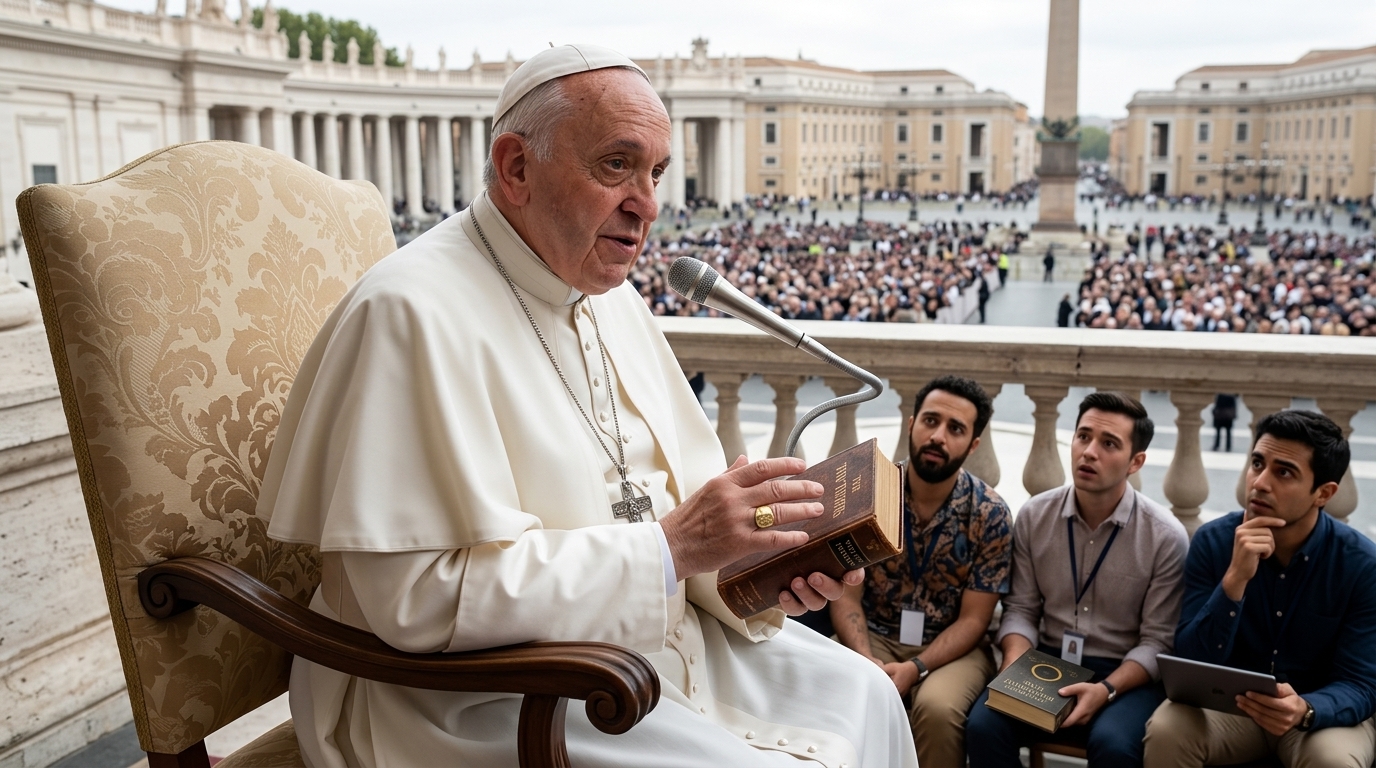
In the hallowed halls of the Vatican, a new encyclical by Pope Leo has sent shockwaves not only through theological circles but also across the glass offices of Palo Alto. The document, which focuses on the ethics of Artificial Intelligence, includes an extensive and remarkably sharp reference to the works of J.R.R. Tolkien. This move was not merely a literary flourish; it was a strategic deconstruction of the tech elites who have for decades appropriated Middle-earth mythology to cloak their expansionist ambitions in an epic mantle.
The Irony of Palantir and the Hubris of Power
For years, names like Palantir, Anduril, and Mithril have graced the companies of Peter Thiel and other prominent Silicon Valley figures. However, as the encyclical points out, these "tech bros" seem to have read Tolkien the same way an alchemist reads a chemistry manual: seeking power while ignoring the warning. Pope Leo emphasizes that in Tolkien’s world, the Palantir was not a neutral "data analysis" tool, but a trap that led Saruman to corruption and Denethor to despair.
The Vatican's analysis focuses on the fact that Artificial Intelligence, when treated as an all-seeing eye, becomes the "One Ring" of our era. The desire for absolute control through algorithms is, according to the encyclical, a form of spiritual blindness. The billionaires who call themselves "wizards" of technology are, in reality, repeating the mistake of the Smith-lords of Eregion, believing they can tame a force that by its very nature tends toward centralization and enslavement.
Sub-creation vs. Algorithmic Determinism
One of the deepest points of the encyclical is the distinction between the Tolkienian concept of "sub-creation" and modern algorithmic determinism. Tolkien believed that human creativity is a reflection of Divine creation, an act that honors freedom and individuality. In contrast, the current trajectory of Generative AI, as promoted by Big Tech, tends to replace human judgment with statistical probabilities.
- AI as a tool of dominion rather than a tool of service.
- The illusion of data "objectivity" echoing the dark vision of Sauron.
- The need for a "Hobbit-ethics": valuing the small, the local, and the human against gargantuan systems.
Pope Leo calls on the faithful and the global community to ask: Who is the Frodo in this story? Certainly not the CEOs accumulating wealth and power. The encyclical suggests that the truly heroic act in the age of AI is not building a more powerful model, but the ability to renounce "digital omnipotence" for the sake of human dignity.
The End of the Technocratic Paradigm
In closing, the Vatican's text is not limited to literary criticism. It serves as a manifesto against the "Technocratic Paradigm," a term introduced by Leo's predecessor and further developed here. The use of Tolkien serves as a cultural mirror. If Silicon Valley wants to use the language of Middle-earth, it must be prepared to face the moral consequences that come with it.
"Power that recognizes no limits, whether magical or digital, always ends up devouring its creator," the encyclical states poignantly.
This intervention comes at a time when the debate over AI regulation has stalled in technical minutiae. Pope Leo shifts the focus back to ontology and ethics, reminding everyone that even in the age of supercomputers, the most important battles are fought in the human heart, where the lust for power clashes with humility.