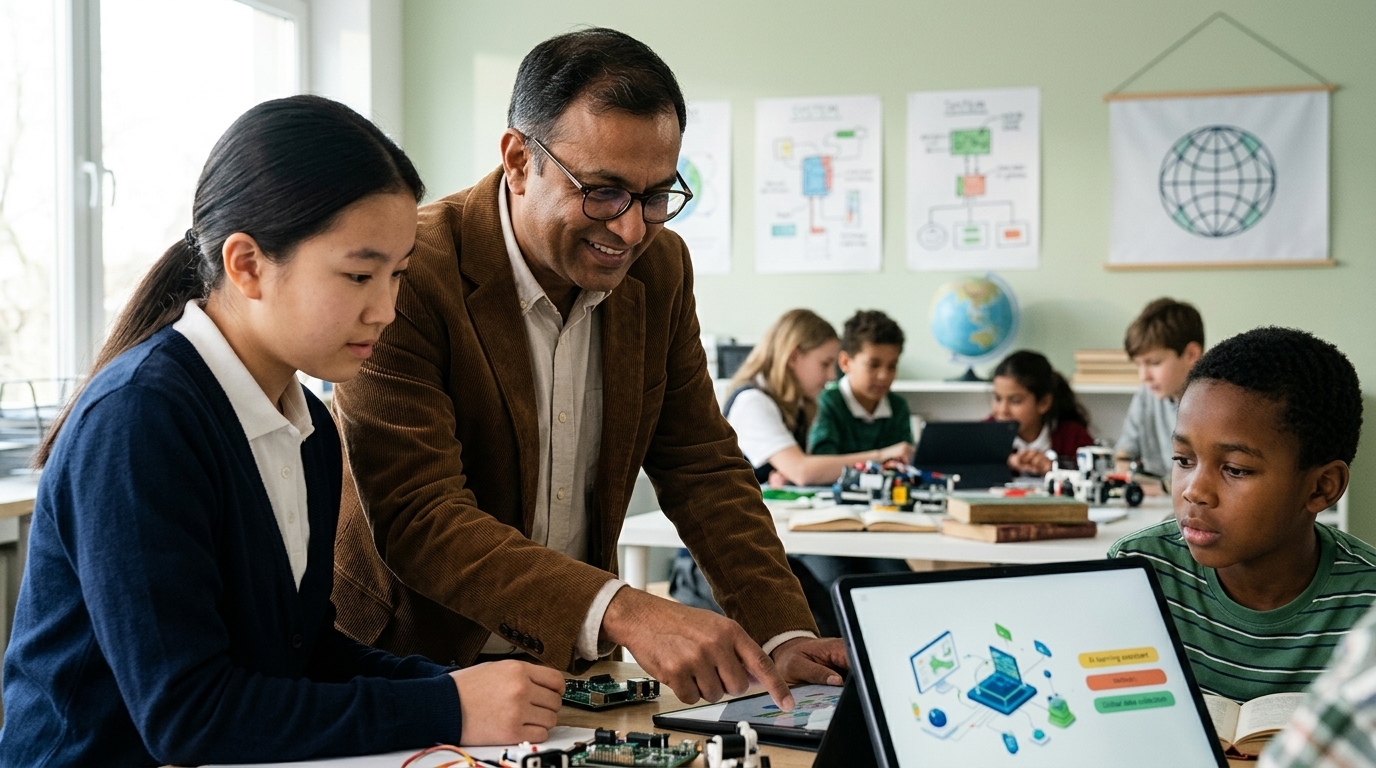
In an era where access to information is considered a fundamental human right, the gap between technologically advanced nations and the Global South remains provocatively wide. The recent announcement of the partnership between Google and UNICEF is not merely a corporate social responsibility initiative, but a geopolitical move aimed at the digital transformation of learning for millions of children. As we navigate through 2026, Artificial Intelligence (AI) has ceased to be an experimental tool and has become the backbone of modern pedagogy, making this intervention more critical than ever.
Bridging the Digital Divide
The education gap is no longer just a matter of school buildings or textbooks; it is a matter of connectivity and computing power. The Google-UNICEF partnership focuses on providing infrastructure that enables access to quality educational content even in the most remote areas. By utilizing cloud technologies and algorithms optimized for low-bandwidth connections, the initiative seeks to democratize knowledge.
UNICEF, with its vast field experience and ability to navigate complex bureaucratic and political landscapes, is the ideal partner for Google. The latter brings technological supremacy to the table, offering tools like Google Classroom and specialized AI models that adapt to local languages and cultural nuances. This convergence allows for the creation of an ecosystem where learning is not limited by geography.
AI as a Personal Pedagogue
The heart of this partnership beats to the rhythm of adaptive learning. Google's AI can analyze the performance and shortcomings of each student individually, creating personalized curricula. In classrooms where the student-to-teacher ratio is often discouraging, technology acts as a tireless teaching assistant. Educators, freed from the burden of grading and paperwork, can focus on the psychological and emotional support of children.
- Personalized support for students with learning disabilities.
- Automatic translation and adaptation of materials into local dialects.
- Early warning systems for students at risk of dropping out.
However, the introduction of AI in education brings with it serious questions regarding the protection of minors' personal data. Google and UNICEF are committed to adhering to strict ethical standards, ensuring that student data will not be used for advertising purposes or other commercial activities. The transparency of algorithms remains a central point of contention and dialogue.
Challenges and Ethical Dilemmas
Despite the noble intentions, criticism is not absent. Many analysts point to the risk of "digital colonialism," where major Western tech companies define the educational content and values of future generations in the developing world. Dependence on the platforms of a single company can create knowledge monopolies, limiting the educational autonomy of states.
"Education is the most powerful weapon to change the world, but this weapon must remain in the hands of local communities and not just algorithms," state UNESCO experts closely monitoring the partnership.
UNICEF's response to these concerns is the emphasis on "open education" and the co-creation of content with local stakeholders. The goal is not to impose a Western model but to empower local systems with modern tools. The success of this endeavor will be judged by whether it manages to produce citizens with critical thinking and not just skilled software users.
The Future of Global Learning
Looking toward the future, the Google-UNICEF partnership lays the groundwork for a new architecture of global education. Investing in innovation is not just about tablets or internet connections; it is about cultivating skills that will be essential in the 21st-century labor market. Programming, data analysis, and digital ethics are now becoming part of the core curriculum, even in the most disadvantaged areas.
In conclusion, this move by Google and UNICEF is a bet on the future of humanity. If successful, it could serve as a model for how the public and private sectors can collaborate to solve the planet's greatest crises. If it fails, it will be a missed opportunity that will further widen the gap between those who have access to knowledge and those who remain in the digital dark.