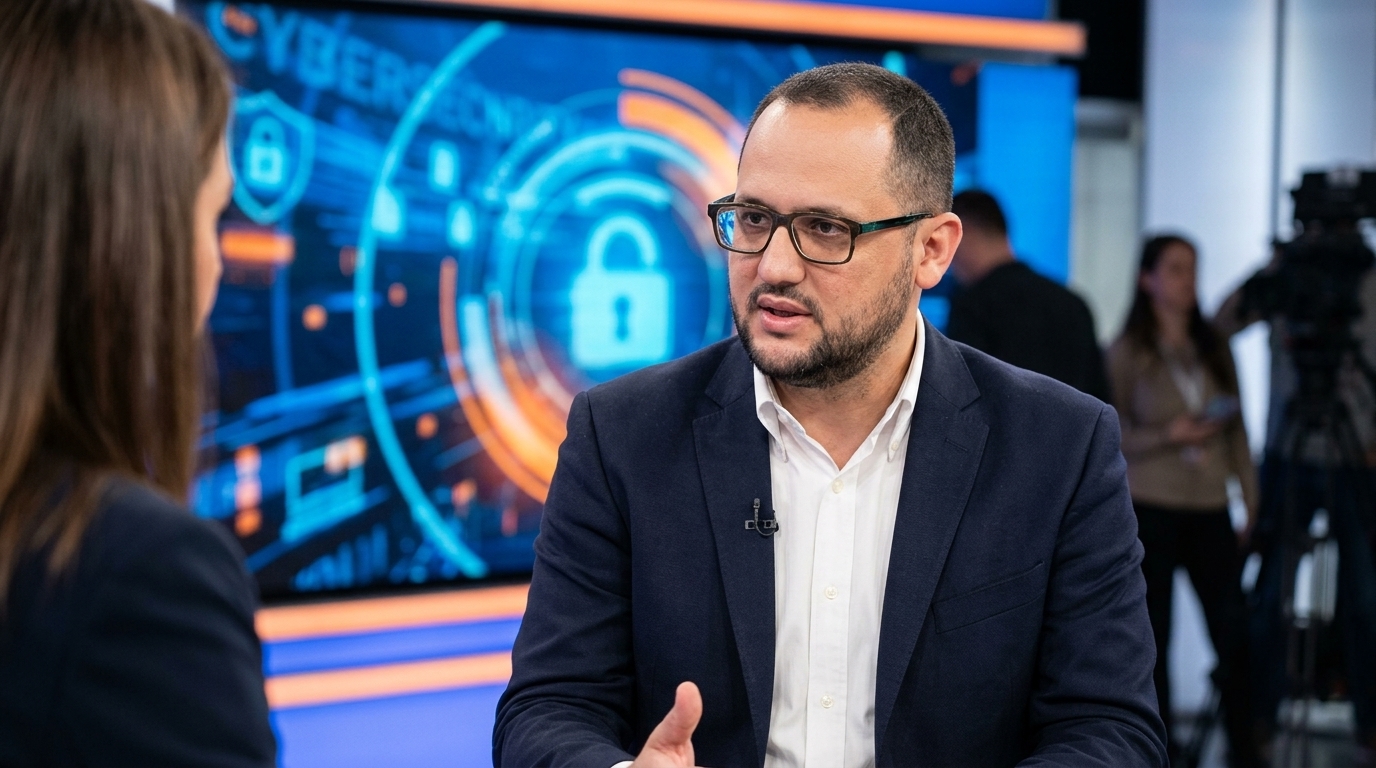
In an era where digital transformation is no longer an option but a prerequisite for survival, data security has emerged as the most critical wager for the business world. Stavros Kirikos, founder of Mind the Hack, through his recent intervention at Fortune Greece, sounds the alarm, pointing out that Greek businesses often remain one step behind attackers. The advent of Artificial Intelligence (AI) has added a new layer of complexity, turning cybersecurity from a technical issue into an existential strategy for every organization.
The Human Factor in the Age of Generative AI
The first and most significant weakness identified by Mr. Kirikos is the human factor. Traditionally, phishing relied on mass, often poorly written messages that a suspicious user could recognize. Today, Artificial Intelligence has eliminated these "telltale signs." Using tools like ChatGPT, attackers can create perfectly convincing messages in any language, without grammatical errors, tailored to the profile of the specific target.
Furthermore, the rise of deepfakes—both in terms of image and voice—makes social engineering attacks terrifyingly effective. Imagine an accounting employee receiving a call from the "CEO," whose voice is identical to the real one, requesting an urgent transfer of funds. Mr. Kirikos emphasizes that without continuous training and the cultivation of a security culture, employees remain the most vulnerable "backdoor" for any business.
Technical Debt and the Trap of Legacy Systems
The second major weakness concerns infrastructure. Many businesses in Greece, in their attempt to save resources, maintain outdated systems (legacy systems) that no longer receive security updates. This "technical debt" creates gaps that hackers can exploit with automated scanning tools. Artificial Intelligence now allows attackers to scan thousands of networks simultaneously, identifying known vulnerabilities in seconds.
The lack of patch management is often criminal. Mr. Kirikos underscores that security is not a product you buy once and are done with, but a continuous maintenance process. Businesses that believe the firewall they bought five years ago protects them live in a dangerous illusion. Moving to the cloud offers solutions, but also creates new configuration challenges that require specialized knowledge.
The Absence of Prevention and Response Strategy
The third weakness is the lack of a comprehensive action plan. Many companies operate reactively: they deal with security only after suffering an attack. However, in the age of ransomware, once data is encrypted, it is often too late. The absence of tested backups and a clear Incident Response protocol can lead to total disaster.
Stavros Kirikos suggests transitioning to the "Zero Trust" model. In this context, no user and no device, inside or outside the network, is considered trustworthy by default. Verification must be continuous. Also, the use of Artificial Intelligence in defense is now a one-way street. Only an AI system can analyze in real-time the huge volume of traffic data of a network and identify anomalies that indicate an evolving attack before it causes damage.
"Cybersecurity is no longer a cost in the IT budget, but an investment in business continuity. In digital warfare, ignorance is the greatest enemy." — Stavros Kirikos
Conclusions and the Day After
Mind the Hack's analysis highlights a harsh reality: attackers are becoming smarter, faster, and more effective thanks to technology. Greek businesses must invest in training their staff, modernizing their infrastructure, and creating a strategy that anticipates the worst-case scenario. Cyber resilience is the keyword for the future. It is not enough to try not to be breached; you must be ready to operate and recover rapidly when it happens.