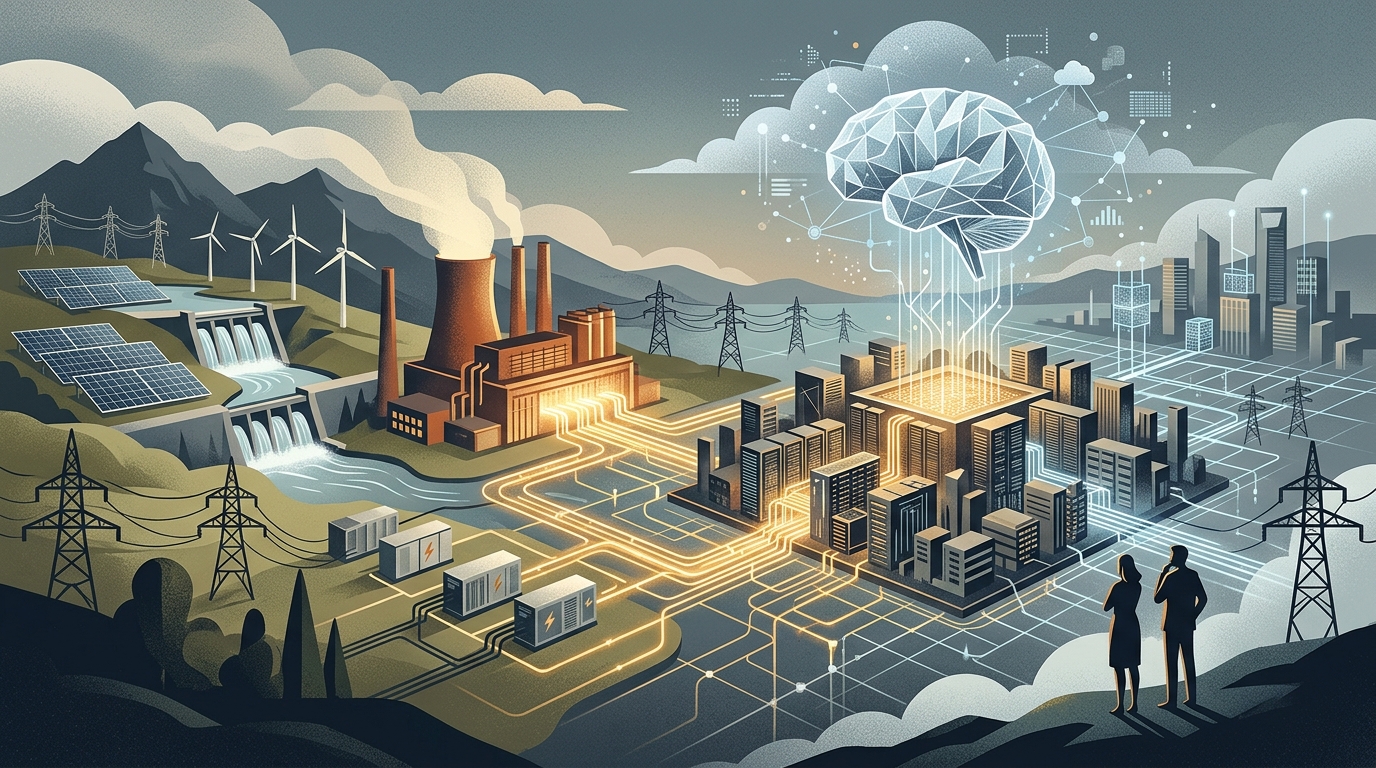
For over two decades, our experience of the internet was inextricably linked to a specific ritual: typing keywords into a white box and clicking on a list of "blue links." Today, this fundamental structure is collapsing. The advent of Generative AI is not merely a technological upgrade but an ontological shift in what it means to "navigate" the digital world. As we move through 2026, the transition from Search Engines to Answer Engines is reshaping the global information economy.
Google’s Existential Threat and the Chatbot Wars
Google, the undisputed sovereign of information for a quarter-century, found itself in a state of "code red" the moment ChatGPT emerged. The challenge is not just technical; it is profoundly economic. Google's traditional model relies on advertisements displayed alongside search results. However, when a user receives a comprehensive, synthesized answer directly from an AI, they no longer have a reason to click on third-party websites or browse through ad-heavy search engine result pages (SERPs).
The tech giant's response—Search Generative Experience (SGE) and the integration of the Gemini model—attempts to square the circle: offering the convenience of AI without destroying its own revenue ecosystem. Yet, the market shows that users increasingly prefer direct interaction. OpenAI's ChatGPT, Perplexity AI, and Microsoft's Copilot have established a new paradigm where information is not just "discovered" but "synthesized" in real-time.
The Publisher Crisis and the Zero-Click Phenomenon
The most concerning aspect of this revolution involves content creators. For years, a tacit agreement existed: publishers allowed Google to index their content in exchange for traffic. AI is breaking this social contract. AI models are trained on publishers' data, but instead of sending users to the source, they "ingest" the information and reproduce it as their own.
The phenomenon of "zero-click search" is skyrocketing. According to recent analyses, over 60% of searches no longer result in a click to an external site. This creates an existential crisis for news organizations, bloggers, and creators who see their ad revenue evaporate while their content is used to power their competitors. The legal battle of the New York Times against OpenAI is just the tip of the iceberg in a copyright war that will define the future of the written word.
From Library to Oracle: The Shift in Human Cognition
Beyond economics, the change is psychological. The traditional internet required the user to evaluate sources, cross-reference information, and synthesize their own conclusions. AI promises to do this for us. We are transforming the internet from a "global library" into a "digital oracle."
This convenience, however, carries risks. The "hallucinogenic" nature of AI, where models produce false information with absolute confidence, can poison the public sphere. Furthermore, the personalization of answers risks trapping users in even narrower "echo chambers," where AI presents not reality, but a version of reality tailored to the user's preferences. The loss of serendipity and exposure to opposing views is a price we may be forced to pay for speed.
The Future: A Two-Tiered Internet?
As we progress, the emergence of a two-tiered internet is becoming apparent. On one side, a "synthetic" web, where the majority of users consume AI-generated summaries. On the other, a "premium" web, where authentic human analysis and primary reporting reside behind paywalls, accessible only to those who can afford to pay for the truth.
The challenge for Google, Microsoft, and Apple is to maintain user trust. Trust will be the currency of the future. In a world flooded with machine-generated content, authenticity will become the rarest and most valuable commodity. The internet is not dying, but the version of it we knew in the 2000s and 2010s is now a thing of the past. The new era requires new rules, new business models, and, above all, a new digital literacy on the part of users.