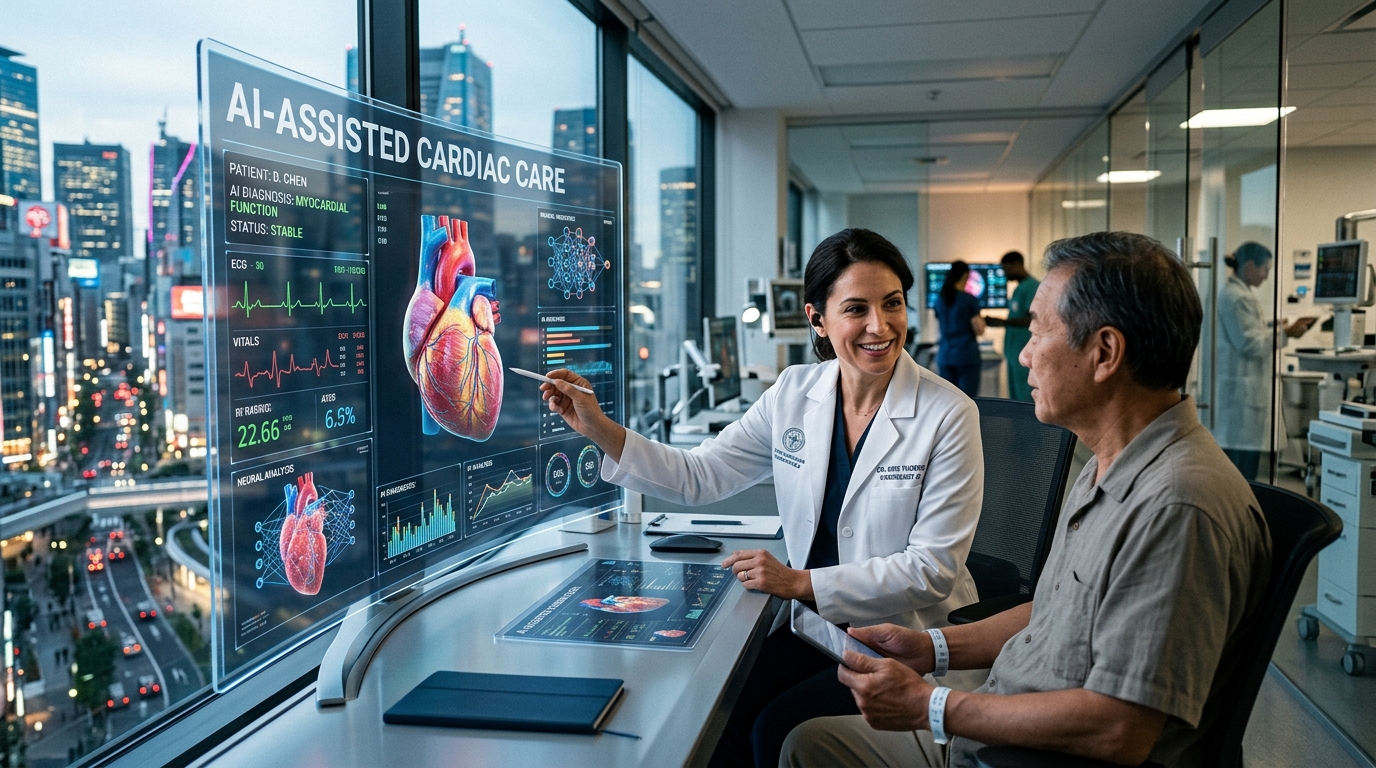
In the modern era of digital health, we stand at the threshold of a structural shift that promises to redefine how we perceive, diagnose, and treat cardiovascular diseases. Artificial Intelligence (AI) is no longer a science fiction scenario but a vital tool in the hands of cardiologists, placing the patient at the center of personalized and preventive medical care.
The New Digital Stethoscope: The Power of Data
Cardiology is traditionally a data-rich specialty. From electrocardiograms (ECGs) and ultrasounds to cardiac MRIs, the volume of information generated daily is immense. AI acts as a "super-analyzer," capable of identifying patterns that often escape the human eye. Deep learning algorithms can now analyze a simple ECG and predict the risk of atrial fibrillation or heart failure months before the first symptoms appear.
This shift from reactive medicine (treating symptoms) to proactive medicine (predicting disease) is the essence of the revolution. According to recent studies, the accuracy of AI systems in diagnosing rare heart diseases now reaches 95%, offering clinicians a valuable "second opinion" that reduces medical errors and accelerates decision-making.
Patient at the Center: Personalization and Empowerment
The concept of "precision medicine" finds its ideal field of application in cardiology. Every patient is unique, and AI allows for the creation of a "digital twin" – a virtual model of the patient's heart on which doctors can test different therapeutic approaches or surgical procedures before implementing them in the real world.
- Continuous Monitoring: Wearable devices collect real-time data, allowing for remote monitoring of patients with chronic conditions.
- Tailored Pharmacology: Algorithms calculate the optimal dose of medications based on an individual's genetic profile and lifestyle.
- Reduction of Waiting Times: Automation of administrative tasks and initial triage allows doctors to devote more quality time to communicating with the patient.
"Technology does not replace the doctor; on the contrary, it liberates them from the burden of data processing, allowing them to return to the essence of medicine: human contact and empathy," industry experts note.
Challenges and Ethical Dilemmas
Despite the impressive prospects, the integration of AI into medicine is not without challenges. The issue of personal data protection remains at the top of the agenda. Who has access to sensitive medical data, and how can we ensure it won't be used for discriminatory purposes by insurance companies? Furthermore, the "black box" problem – the inability to fully understand how an algorithm reached a specific diagnosis – raises serious questions of liability.
Ensuring equality in access is also critical. There is a risk that these advanced technologies could widen the gap between affluent and poorer social strata or between developed and developing nations. The medicine of the future must be universal, not a privilege for the few.
Conclusion: Towards a Symbiotic Relationship
The future of cardiology is undoubtedly hybrid. Success depends on creating a symbiotic relationship between artificial and human intelligence. As we move toward 2030, the challenge for the medical community will be to embrace innovation without losing its human-centric character. The heart of medicine will always beat for the human being, and AI is simply the rhythm that will help it beat stronger and for longer.