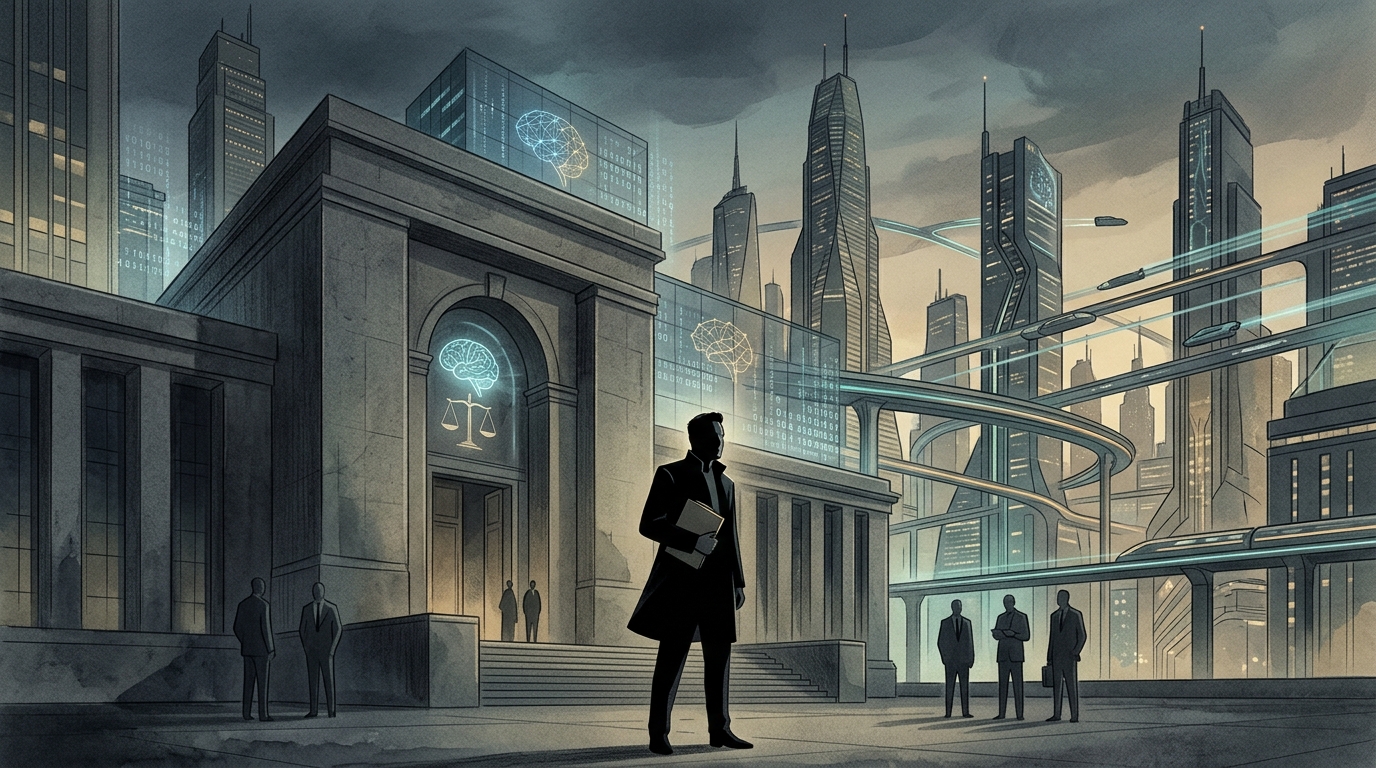
The courtroom transformed into a scene from a science fiction thriller as Elon Musk took the stand in his high-stakes lawsuit against OpenAI and its CEO, Sam Altman. The billionaire founder of Tesla and SpaceX passionately argued that his primary motivation for funding OpenAI in its infancy was not financial gain, but the prevention of a ‘Terminator outcome’—a future where an unaligned Artificial General Intelligence (AGI) could lead to the extinction of the human race. This testimony marks the peak of a legal and public relations battle that exposes deep rifts within the tech industry regarding ethics, safety, and the commercialization of intelligence.
The Existential Fear as a Catalyst
According to Musk’s testimony, the founding of OpenAI in 2015 was a direct countermeasure to Google’s dominance in the AI field at the time. Musk detailed his concerns regarding then-Google CEO Larry Page, whom he accused of possessing a ‘cavalier attitude’ toward AI safety, famously calling him a ‘specist’ for favoring digital life over biological life. “I wanted to create a counter-weight,” Musk stated, emphasizing that OpenAI was intended to be a non-profit, open-source entity to ensure that the power of AGI would not be concentrated in the hands of a single corporation.
The reference to the ‘Terminator’ was more than just pop-culture flair. Musk explained that the possibility of creating a ‘digital superintelligence’ that does not align with human values is the single greatest risk civilization faces. In his view, OpenAI betrayed this mission when it transitioned into a capped-profit entity that functions as a ‘de facto subsidiary’ of Microsoft. His legal team is attempting to prove that OpenAI breached a ‘Founding Agreement,’ though OpenAI’s counsel maintains that no such formal, signed contract ever existed, dismissing the claims as a ‘revisionist history’ fueled by Musk’s jealousy over the company’s success.
The Rivalry with Sam Altman and Judicial Admonishment
The trial is as much about personal animosity as it is about software architecture. Sam Altman, once Musk’s protégé and partner in the non-profit venture, is now portrayed by the plaintiff as an opportunist who leveraged Musk’s vision and seed money to build a multibillion-dollar empire. Conversely, OpenAI has presented evidence, including past emails, suggesting that Musk was well aware of—and even advocated for—the need for massive capital infusions that only a for-profit structure could realistically attract.
A notable moment occurred when the presiding judge issued a stern warning to both tech titans. Following a series of aggressive posts on the social media platform X (formerly Twitter), the judge urged Musk and Altman to curb their “propensity to use social media to make things worse outside the courtroom.” This highlights the modern nature of corporate litigation, where public perception is often fought through memes and direct digital attacks, sometimes at the expense of the legal process’s integrity.
The Open Source Debate and the Microsoft Connection
A central pillar of Musk’s testimony was his critique of OpenAI’s relationship with Microsoft. Musk argued that OpenAI has become ‘closed’ to serve the commercial interests of the Redmond-based giant. “The name is OpenAI, but the practice is ClosedAI,” he remarked. The legal battle hinges on whether the company’s latest models, such as GPT-4, constitute AGI. If the court finds that OpenAI has achieved AGI, it could potentially trigger clauses that terminate Microsoft’s license to the technology, as their agreement is specifically limited to pre-AGI software. This distinction is worth hundreds of billions of dollars in market valuation.
Conclusion and Global Implications
Musk’s testimony brings to the forefront a fundamental dilemma: Can the development of the most powerful technology in history be left to market forces alone? Musk argues that it cannot. However, critics point out that he has since founded his own AI company, xAI, which also seeks profit and investment. The ruling in this case will define not only the future of OpenAI but also the legal precedent for how non-profits can transition into commercial entities. Regardless of the verdict, this trial has pulled back the curtain on an industry that often markets itself as humanity’s savior while being driven by the same egos and financial incentives as any other sector of global power.