In a packed courtroom that felt more like the setting of a Greek tragedy than a standard legal proceeding, Elon Musk stood face-to-face with his former allies. The trial, sparked by the billionaire's lawsuit against OpenAI—the company he helped found in 2015—reached a fever pitch during his testimony. With a phrase that resonated throughout the tech world—'It’s not okay to steal a charity'—Musk established the moral and legal framework for a conflict that will determine who controls Artificial General Intelligence (AGI).
The Betrayal of the 'Open' Vision
Musk’s central argument is not merely about capital; it is about the very soul of technological progress. He testified that OpenAI was established as a non-profit organization designed to serve as an 'open' counterweight to Google’s dominance. According to Musk, the agreement was explicit: the technology would belong to humanity, and the code would be open-source to ensure safety and transparency. 'I was induced to donate tens of millions of dollars on the promise that we were building something for the public good,' Musk stated. 'Instead, they took those assets, which belonged to a charity, and flipped them into a closed, for-profit entity serving the interests of Microsoft.'
OpenAI’s defense, conversely, painted a different picture. Lawyers for Sam Altman and Greg Brockman argued that Musk initially attempted to seize total control of the company and, upon failing, decided to wage war against it. They presented historical emails in which Musk appeared to concede that OpenAI would require massive capital—billions of dollars—to compete with incumbents, a scale that traditional philanthropy could never sustain.
Ethics vs. Capitalism: The AGI Dilemma
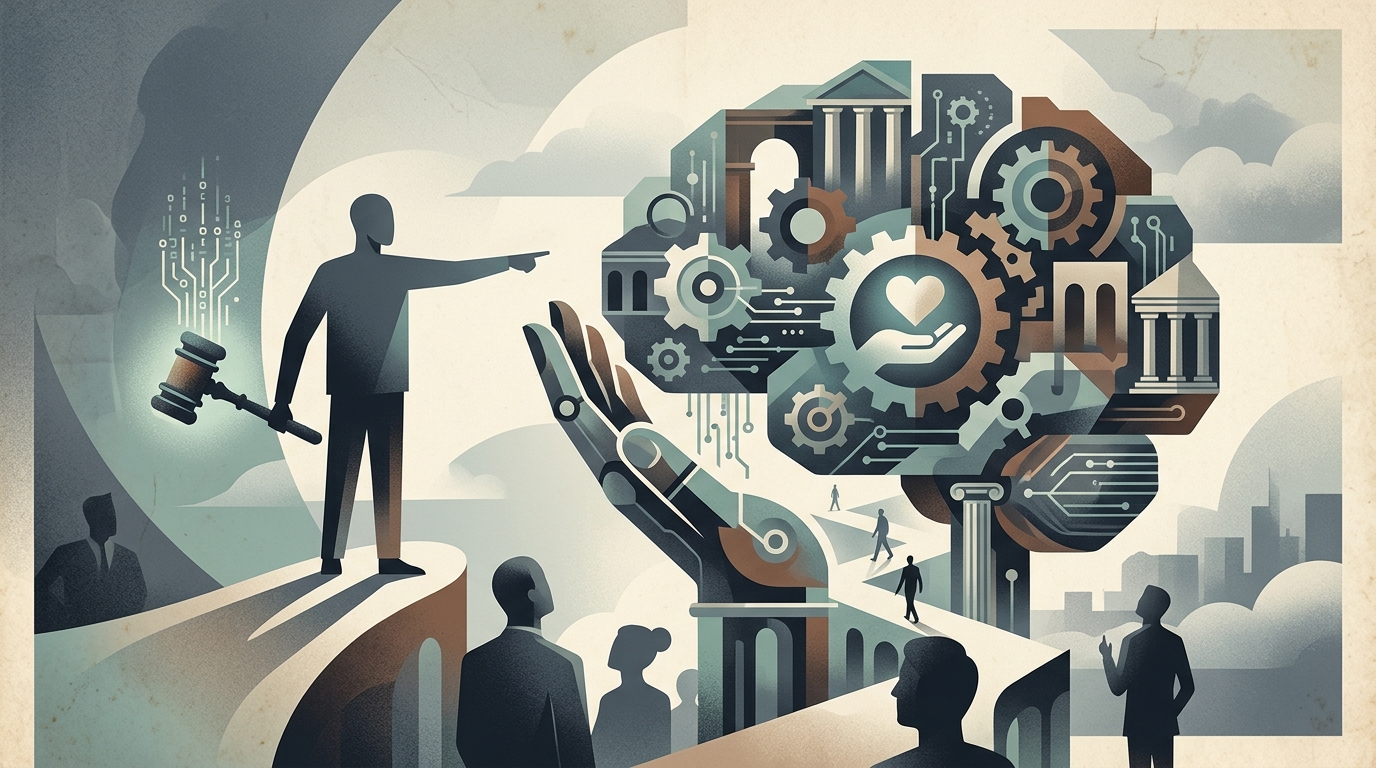
This trial highlights a profound existential question for Silicon Valley: Can the most powerful technology in human history be developed within a capitalist framework without jeopardizing the future? Musk contends that the 'closed' nature of GPT-4 and its successors is inherently dangerous, as the pursuit of profit will always override safety protocols. 'When a company is legally obligated to maximize shareholder value, AI safety guardrails become just another speed bump to be bypassed,' he emphasized during cross-examination.
Analysts suggest that the court's decision will have seismic implications. If the judge rules in Musk's favor, OpenAI could be forced to open-source its models or revert to a strict non-profit structure, a move that would likely invalidate its multi-billion dollar partnership with Microsoft. If OpenAI prevails, however, it will cement the 'capped-profit' model, where private corporations hold the ultimate power to shape the digital destiny of the planet.
Microsoft’s Shadow and the Future of xAI
Many observers view Musk’s moral outrage as a strategic maneuver to bolster his own AI venture, xAI. During the trial, the defense pointedly asked Musk if his lawsuit was a tactic to stall the competition. Musk dismissed these claims, asserting that xAI is his sole attempt to 'right the wrong' he helped create. Nevertheless, the OpenAI-Microsoft nexus remains the primary target. Microsoft, while not a direct defendant, sits at the center of the controversy as the 'silent owner' of a technology that began as a liberator and ended as a proprietary product locked behind a subscription wall.
In conclusion, Musk’s testimony was far more than a legal formality. It was a cry of alarm—or a masterstroke of public relations—regarding the ownership of knowledge. As the trial progresses, humanity watches two conflicting visions collide: one that views AI as a public utility and another that sees it as the ultimate commercial asset. The verdict will reveal whether the 'charity' Musk envisioned in 2015 is truly dead, or if it can be resurrected from the ashes of a courtroom battle.