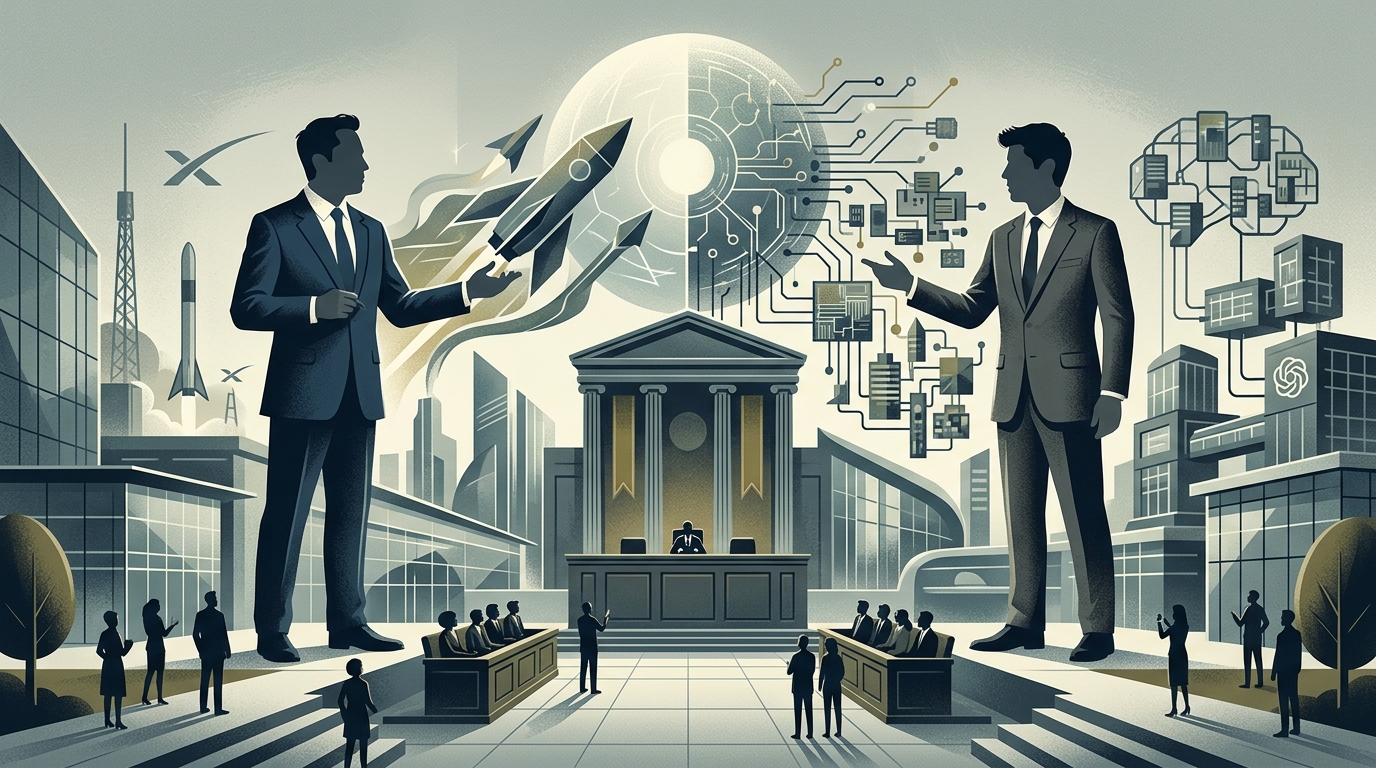
The courtroom in San Francisco became the epicenter of the global tech landscape this week as Elon Musk took the stand in his high-stakes trial against OpenAI and its CEO, Sam Altman. What began as a dispute over the direction of a non-profit organization has evolved into an existential battle over who will control the most potent technology ever devised: Artificial General Intelligence (AGI).
The Genesis of a Broken Promise
In his testimony, Musk painted a stark picture of OpenAI’s transformation from an "open and transparent" research lab into a "de facto subsidiary" of Microsoft. The billionaire entrepreneur alleges that the original 2015 founding agreement was fundamentally breached when the company pivoted toward a "capped-profit" model. Musk contends that OpenAI was established as a vital counterweight to Google’s dominance, intended to ensure that AI would be developed for the benefit of humanity rather than for shareholder enrichment.
"I was promised a non-profit that would share its code with the world," Musk stated before the court. "Instead, we are faced with a closed, for-profit entity extracting billions from technology developed with my funds and my vision." Altman’s legal team, however, maintains that no formal "founding agreement" ever existed in a legal sense and that Musk is merely attempting to sabotage a competitor after his own failed attempt to take over the company years ago.
The Definition of AGI and the Microsoft Shadow
At the heart of the legal argument lies the definition of Artificial General Intelligence. OpenAI’s governing documents stipulate that Microsoft’s license does not extend to AGI—the point at which AI surpasses human capabilities across all cognitive tasks. Musk argues that GPT-4 and its subsequent iterations already represent early forms of AGI, a claim that, if legally recognized, would terminate Microsoft’s exclusive rights and potentially force the technology into the public domain.
- Musk's legal team presented internal emails suggesting founders were aware of the risks of commercialization.
- OpenAI countered by showing emails from 2017 where Musk seemingly supported a for-profit pivot to secure funding.
- The court is examining whether the term "Open" in the company's name constitutes a binding mission or a marketing brand.
While Microsoft is not a direct defendant, its presence looms large. The $13 billion investment has granted the Redmond giant unprecedented leverage, drawing scrutiny from regulators in the US and the EU. This trial is expected to reveal whether complex corporate structures can truly safeguard AI ethics or if the profit motive will invariably supersede public interest.
Broader Implications for the AI Ecosystem
Regardless of the verdict, the Musk-Altman clash has already altered the industry's trajectory. The push for open-source AI has intensified, with competitors like Meta and Mistral positioning their transparency as a competitive advantage. Should Musk prevail, OpenAI could be forced to open-source its proprietary models, a move that would devalue Microsoft's investment and send shockwaves through the financial markets.
"This is not about the money," Musk insisted during cross-examination. "It is about whether we allow a handful of individuals to monopolize the intelligence of the future."
Conversely, Altman’s supporters argue that the sheer scale of compute required for modern AI necessitates massive private capital. They claim that without Microsoft’s resources, OpenAI would have stagnated, leaving the field open to Google or state-sponsored actors with even fewer ethical guardrails. The court’s decision will set a crucial precedent for how the technological titans of the 21st century are governed and held accountable.