In a San Francisco courtroom, the history of artificial intelligence is being rewritten, not with code, but with legal arguments and explosive email revelations. The trial between Elon Musk and OpenAI, the company he helped found, has begun with two diametrically opposed versions of what transpired during the pivotal years of 2015 to 2018. On one side, a betrayed benefactor who sees his vision of "open" AI sacrificed at the altar of profit. On the other, a group of pragmatists who claim Musk attempted to monopolize power and walked away when he failed to get his way.
The Birth of a Non-Profit Chimera
The case centers on a "Founding Agreement" that Musk alleges required OpenAI to remain a non-profit entity developing Artificial General Intelligence (AGI) for the benefit of humanity, free from corporate influence. Musk's legal team presented documents showing that his initial funding of $44 million was provided under the explicit condition of transparency and open-sourcing the technology.
However, OpenAI, led by Sam Altman, counters these claims by stating that no formal written agreement ever existed that bound the company to a perpetual non-profit status. The defense argues that Musk was well aware that developing AGI would require billions of dollars in computational power—sums that no non-profit could ever raise through donations alone. They portray Musk's lawsuit as a case of "revisionist history" fueled by his own competitive interests in the AI space.
Clashing Egos and the Shadow of Microsoft
One of the most compelling aspects of the trial is the revelation of internal friction in 2018. OpenAI presented evidence suggesting that Musk proposed merging OpenAI with Tesla to leverage the automaker’s resources as a "cash cow" for AI development. When the board rejected this proposal, Musk departed, cutting off funding and leaving the startup on the brink of insolvency.
This move, according to OpenAI, was the catalyst for their pivot to a "capped-profit" model and the subsequent historic partnership with Microsoft. Musk, however, characterizes this alliance as a "de facto acquisition," arguing that OpenAI has become a closed-source subsidiary of Microsoft, betraying its mission to protect humanity from the existential risks of AI. The trial has highlighted how the relationship between Altman and Musk soured from mutual admiration to public litigation.
Legal and Ethical Implications
The stakes of this trial extend far beyond the individuals involved. It raises fundamental questions about contract law and the governance of non-profit organizations: Can a verbal promise or a series of emails be considered a binding contract when it concerns technologies that could reshape civilization? Furthermore, the trial brings the "open vs. closed" AI debate to the forefront of the legal system.
"OpenAI has been transformed into a closed-source de facto subsidiary of the largest technology company in the world: Microsoft," the lawsuit alleges.
While Musk promotes xAI and Grok as open alternatives, OpenAI argues that full transparency in AGI development would be reckless and pose significant national security risks. The court must now decide if the fiduciary duty of the board was to the original non-profit mission or to the survival and advancement of the technology itself.
A Turning Point for the Industry
As the proceedings continue, the industry is watching closely. This is not just a spat between billionaires; it is a battle for the soul of AI. If Musk prevails, OpenAI could be forced to open-source its proprietary models, such as GPT-4, which would disrupt its business model and potentially benefit competitors. If OpenAI wins, it will solidify the "hybrid" corporate-nonprofit structure as a viable, albeit controversial, path for high-stakes technological development.
- The court must determine if the "Founding Agreement" is legally enforceable.
- The role of Microsoft’s investment will be scrutinized for anti-competitive behavior.
- The definition of AGI itself might be legally contested to trigger contractual clauses.
Conclusion: A Tale of Two Worlds
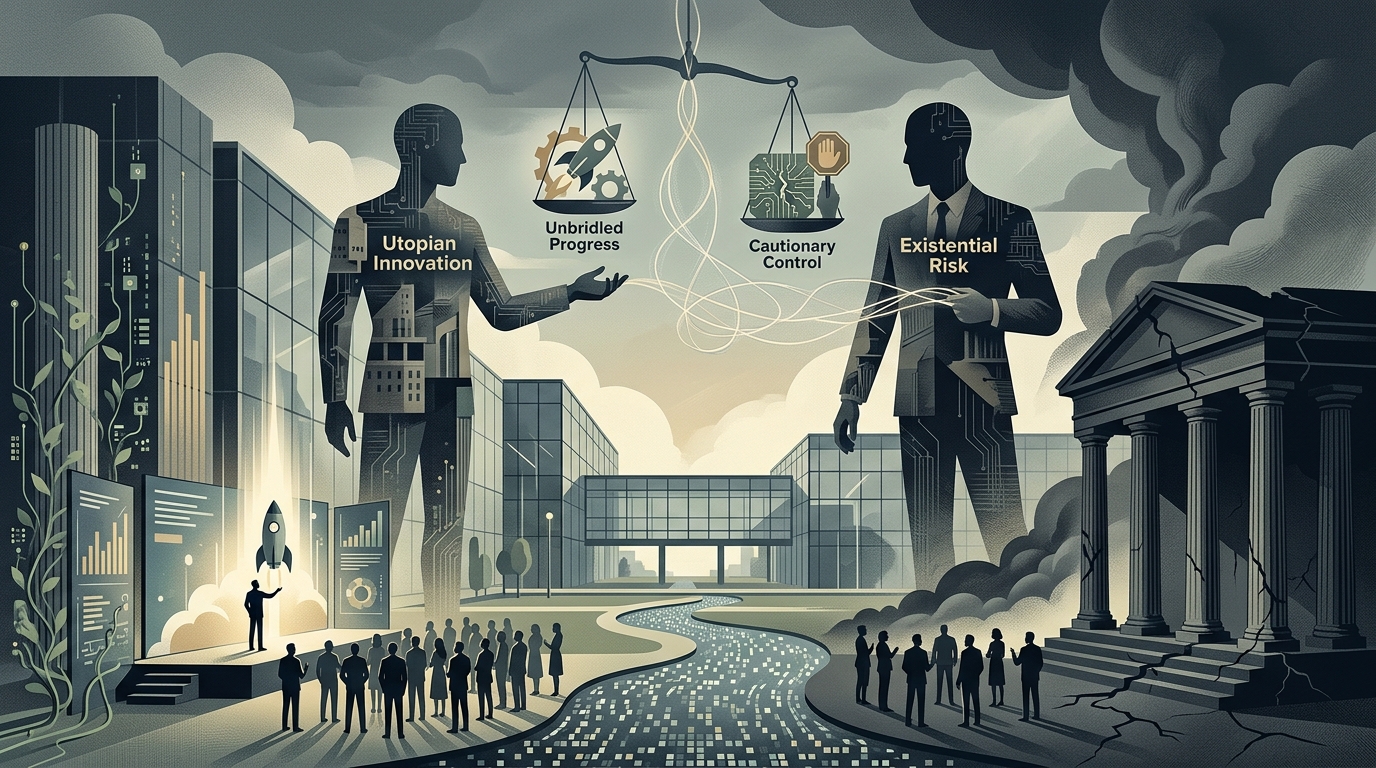
This trial highlights the chasm between the utopian visions of Silicon Valley and the harsh realities of the global market. Whether it is a story of betrayal or necessary evolution, OpenAI will never be the same. The question remains: Can humanity trust a technology born out of such animosity and legal strife? The answer may lie in the coming weeks of testimony, where the truth attempts to surface from an ocean of conflicting memories and digital paper trails.