In the heart of the French Riviera, where the tradition of the Seventh Art is guarded with almost religious devotion, a new force has emerged, sparking whispers, admiration, and intense backlash. The first AI Film Festival, held alongside the official Cannes Film Festival, was not merely a fringe event; it was a manifesto for the future of human storytelling.
A Clash of Two Worlds
For decades, Cannes has been the bastion of the auteur—the creator who uses a lens to capture the raw essence of the human experience. However, this year’s edition was marked by the presence of works generated using tools like Runway, Midjourney, and Sora. The conversation has shifted from whether AI can assist in editing or visual effects to whether it can become the very core of the creative process.
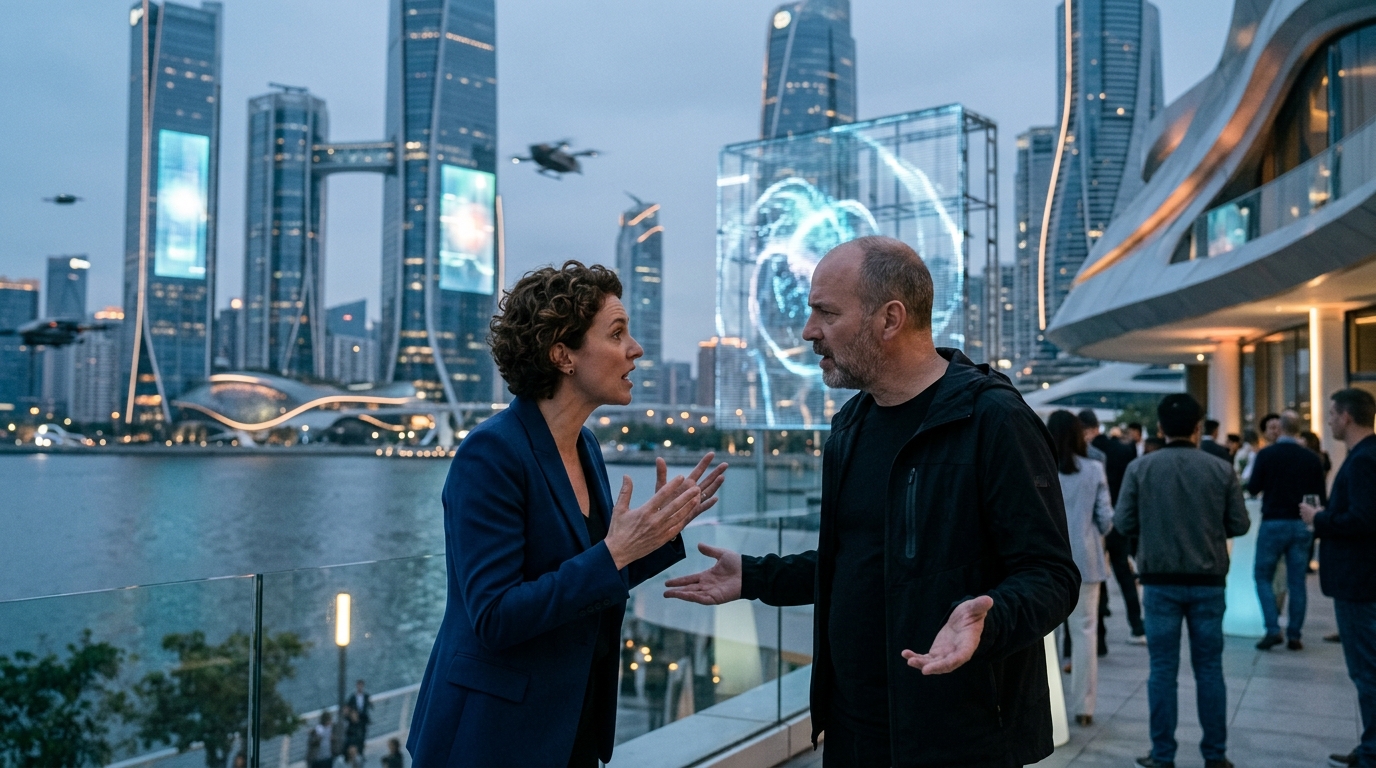
Critics, many belonging to the old guard of cinema, speak of a "digital invasion" that threatens to strip art of its emotional weight. They argue that a machine, no matter how sophisticated, lacks the lived experience and empathy required to truly move an audience. Conversely, AI proponents view it as the ultimate tool for democratization. For them, technology removes financial barriers, allowing creators without massive budgets to visualize worlds that previously required hundreds of millions of dollars.
The Technology Behind the Curtain
The films showcased at the AI Film Festival are not the traditional productions we are accustomed to. Many are characterized by a "dreamlike" aesthetic, as video generation algorithms often produce surreal transitions and visual paradoxes. This "uncanny valley," where the digital looks almost human but not quite, has become a new kind of cinematic language in its own right.
Companies like Runway, which spearheaded the initiative, argue they are not seeking to replace directors but to give them "superpowers." The ability to generate a scene simply by typing a description (text-to-video) radically changes pre-production and storyboarding. Yet, ethical issues remain at the forefront: Who owns the copyright to a film generated from data belonging to millions of other artists? How will actors be protected from digital cloning?
The Future of Narrative
The presence of AI at Cannes highlights a deeper existential crisis for cinema. If technology can produce perfect shots in seconds, what remains the value of manual cinematography? Perhaps the answer lies in a hybrid approach. Already, major directors are experimenting with AI to push the boundaries of their imagination, using it as a "digital canvas" rather than an autonomous creator.
- AI significantly lowers production costs, enabling independent creators to compete with major studios.
- The ethical use of training data remains the primary friction point in labor union negotiations.
- Audiences appear divided: curiosity for the novel clashes with a desire for authentic human connection.
As the lights dim on the Croisette, the lingering sentiment is that cinema has reached a point of no return. Artificial intelligence is no longer a futuristic promise but a present reality that demands we redefine what it means to be an artist in the 21st century. The challenge for the coming years will not only be technical but deeply philosophical: how do we preserve the "soul" of a film within an ocean of pixels generated by code?
"Cinema has always been a technological art. From the Lumière brothers' first camera to today, every evolution has sparked fear. AI is simply the next chapter—perhaps the most daunting, but certainly the most exciting."
In conclusion, the Cannes Film Festival, despite its adherence to tradition, cannot ignore the future. The coexistence of classical masterpieces with AI creations may be the only path forward for an industry surviving in a world changing at breakneck speed.