In an era where Artificial Intelligence (AI) is reshaping every facet of human activity, Quang Ninh province in Vietnam has become the center of an ambitious and simultaneously controversial experiment. The introduction of AI into kindergartens is no longer a science fiction scenario but a daily reality that promises to revolutionize how young students perceive the world and develop their skills. This initiative, backed by the local government and tech giants, aims to prepare the next generation for a digital world, starting from the most tender age.
Technology at the Service of Early Childhood Education
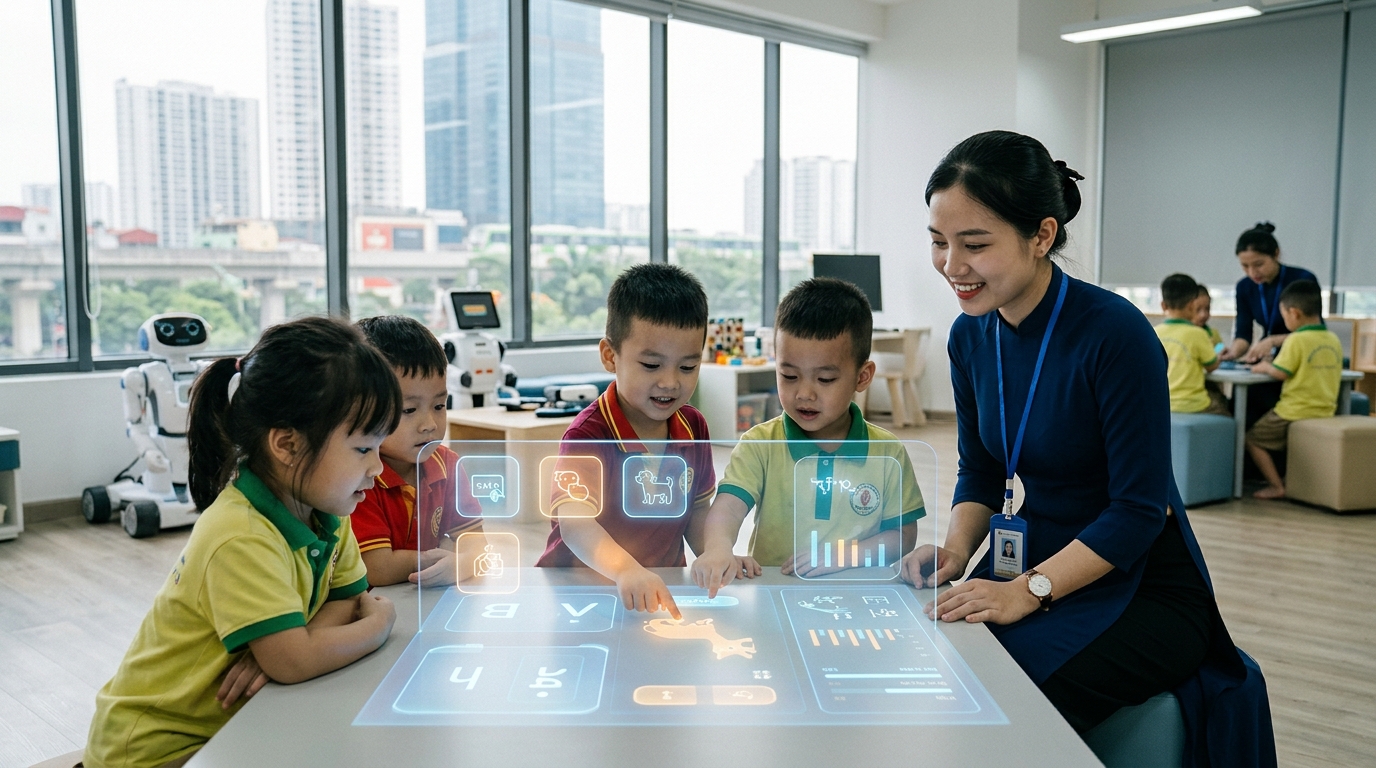
In the schools of Quang Ninh, traditional classrooms are being transformed into "smart" learning environments. The use of interactive robots, acting as teaching assistants, allows children to engage with foreign languages and basic programming concepts through play. These AI systems do not replace the teacher; instead, they function as tools that personalize learning. For instance, voice and image recognition algorithms help identify the learning needs of each child individually, adjusting educational material according to their pace of progress.
Furthermore, technology is being utilized to enhance safety and administrative efficiency. Facial recognition systems record student attendance and departures, while sensors monitor the health and activity of children throughout the day. This holistic approach aims to create an environment where technology serves both the education and the well-being of toddlers.
The Challenge of Human Contact
Despite the obvious benefits, integrating AI into early childhood raises serious questions. Many educators and psychologists express concerns about the reduction of human interaction, which is vital for children's emotional development. Empathy, social adjustment, and creativity are areas where machines, no matter how advanced, fail to provide the guidance of an experienced educator.
"Artificial Intelligence can teach a child to count or speak English, but it cannot comfort them when they cry or teach them the value of sharing through personal experience," notes a local educational analyst.
The balance between technological support and pedagogical care is the major challenge for Quang Ninh. Teachers are now called upon to take on a new role: that of an "orchestrator" of digital media, ensuring that technology does not isolate children but instead serves as a bridge for acquiring new knowledge.
Ethics and Privacy: The Invisible Cost
Another critical issue is the protection of personal data. Continuous monitoring and data collection by AI systems create a vast database of information regarding children's behavior and performance from a very early age. Who has access to this data, and how could it be used in the future? In Vietnam, data protection legislation is still in its formative stages, causing skepticism about the transparency of these processes.
Moreover, there is the risk of a "digital divide." While Quang Ninh leads the way, other more rural areas of Vietnam remain without basic infrastructure. The focus on AI could widen the gap between privileged and less privileged students, creating a two-tier society starting as early as kindergarten.
Conclusions and Perspectives
The example of Quang Ninh shows that Artificial Intelligence is no longer a distant promise but an active factor in education. The success of this venture will depend on the ability of authorities to set clear ethical boundaries and ensure that technology remains a tool rather than an end in itself. Teacher training is key: if educators are not properly trained to handle these tools, the experiment risks failure, leaving behind a generation dependent on screens without substantive critical thinking.
In summary, AI in Vietnam's kindergartens is a mirror of our future. It challenges us to reflect on what kind of people we want to shape and what the place of technology is in the formation of human consciousness. Quang Ninh has dared to take the first step. The world is watching the results with interest and anxiety.