In the present era, the question is no longer whether we "can" use Artificial Intelligence (AI), but whether we "should." As generative AI tools become embedded in every facet of our daily lives—from drafting simple emails to making critical medical decisions—the ethical boundaries are becoming increasingly blurred. The convenience offered by technology often acts as a Trojan horse, bringing with it the risk of alienation, loss of critical thinking, and the erosion of authenticity.
The Deception of Efficiency: When AI Replaces Empathy
One of the most enduring ethical "red lines" concerns the use of AI in situations that demand genuine human connection. When an employer uses ChatGPT to draft a termination notice, or when a friend sends a condolence message written by an algorithm, the act loses its essence. The ethical failure lies not in the quality of the text—which may be flawless—but in the absence of effort. Human communication is based on the assumption that the other person dedicated time and emotional energy to us. Automating these moments turns empathy into a hollow, industrial product.
Furthermore, the use of AI in fields like psychotherapy or spiritual guidance raises serious questions. Can code truly understand pain? Although Large Language Models (LLMs) can simulate support, using them as a substitute for human presence in vulnerable moments is considered by many an ethical failure, as it deprives the individual of a genuine recognition of their human condition.
The Erosion of Education and Critical Thinking
In the field of education, the use of AI has caused an earthquake. While technology can serve as an excellent personal learning assistant, using it to generate entire assignments or essays is a fundamental betrayal of the learning process. The problem is not just plagiarism; it is "cognitive atrophy." When we outsource the synthesis of our thoughts to a machine, we lose the ability to construct arguments, analyze data, and develop our own voice. Education is a process of struggling with ideas; if AI removes that struggle, knowledge remains superficial.
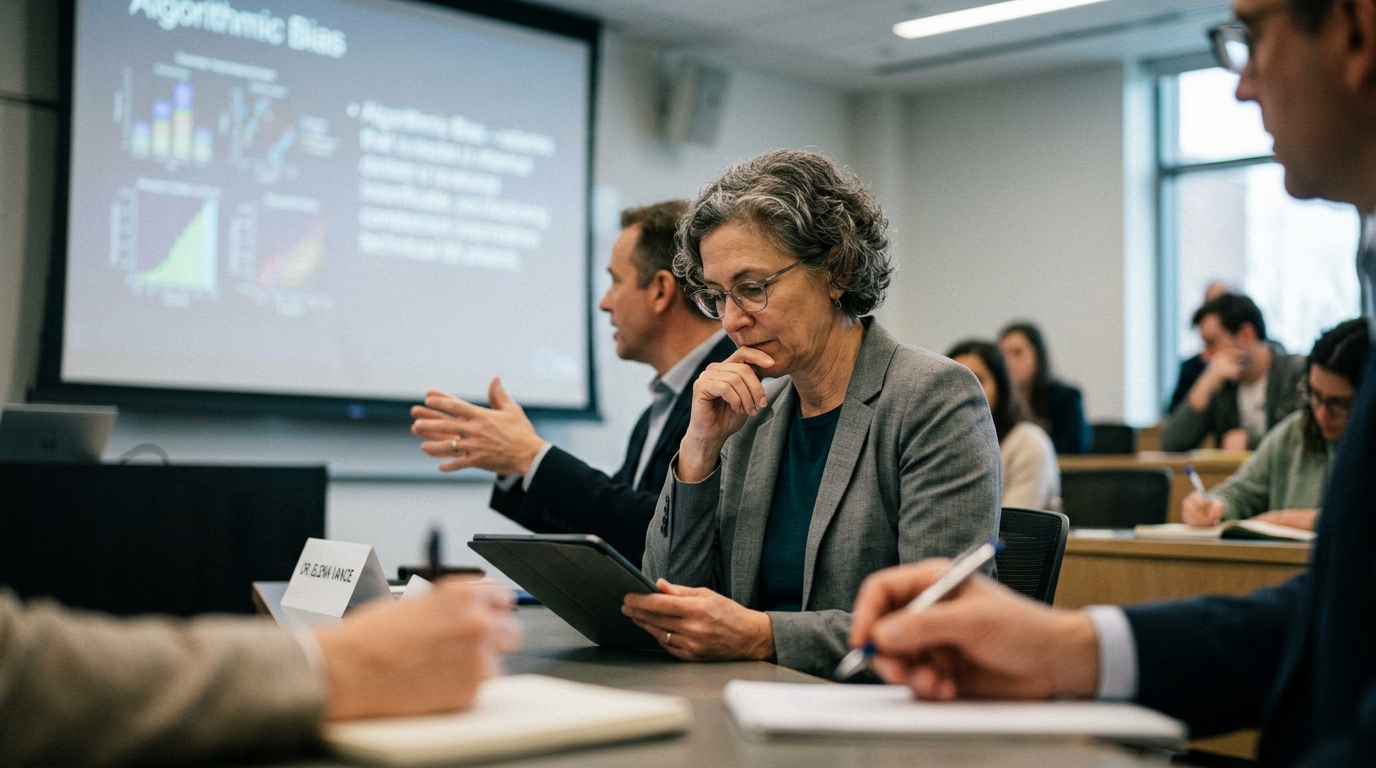
In the professional sphere, blind trust in AI for decision-making—such as recruitment or credit risk assessment—is equally problematic. Algorithms often replicate and amplify biases present in their training data. Using AI to automate social injustice, under the guise of "objectivity," is perhaps one of the most dangerous applications of our time.
Aesthetics and Truth in the Age of Deepfakes
Art and journalism are also in the crosshairs. It is wrong to use AI to create content presented as authentically human without proper disclosure. Producing "photographs" from war zones or creating deepfake videos of political figures is not just a technical challenge but an attack on the very concept of a shared reality. When we can no longer believe our own eyes, the social contract collapses.
Even in entertainment, the posthumous use of actors' and singers' voices or likenesses via AI raises issues of consent and respect for the deceased. Turning human legacy into an eternal, recyclable digital product robs art of the transience and sanctity that make it human.
Conclusion: The Need for a New Ethical Compass
The use of AI is wrong when it undermines our autonomy, when it hides the truth, and when it replaces responsibility with efficiency. Technology must remain a tool that enhances human capabilities, not a mechanism that relieves us of the burden of thought and solidarity. Distinguishing between using AI for "assistance" and using it for "replacement" is the key to preserving our humanity in the 21st century.