In today's world, where the boundaries between the physical and digital realms are increasingly blurred, a recent story from Vietnam confirms a disturbing, yet fascinating, trend. A beauty queen, spotted in the stands cheering for the South Korean national team, went viral not just for her enthusiasm, but because thousands of social media users described her appearance as 'exactly like AI.' This observation was not merely a compliment on her beauty; it was a profound realization of how AI standards have begun to dictate human physiology.
The Rise of 'Algorithmic Aesthetics'
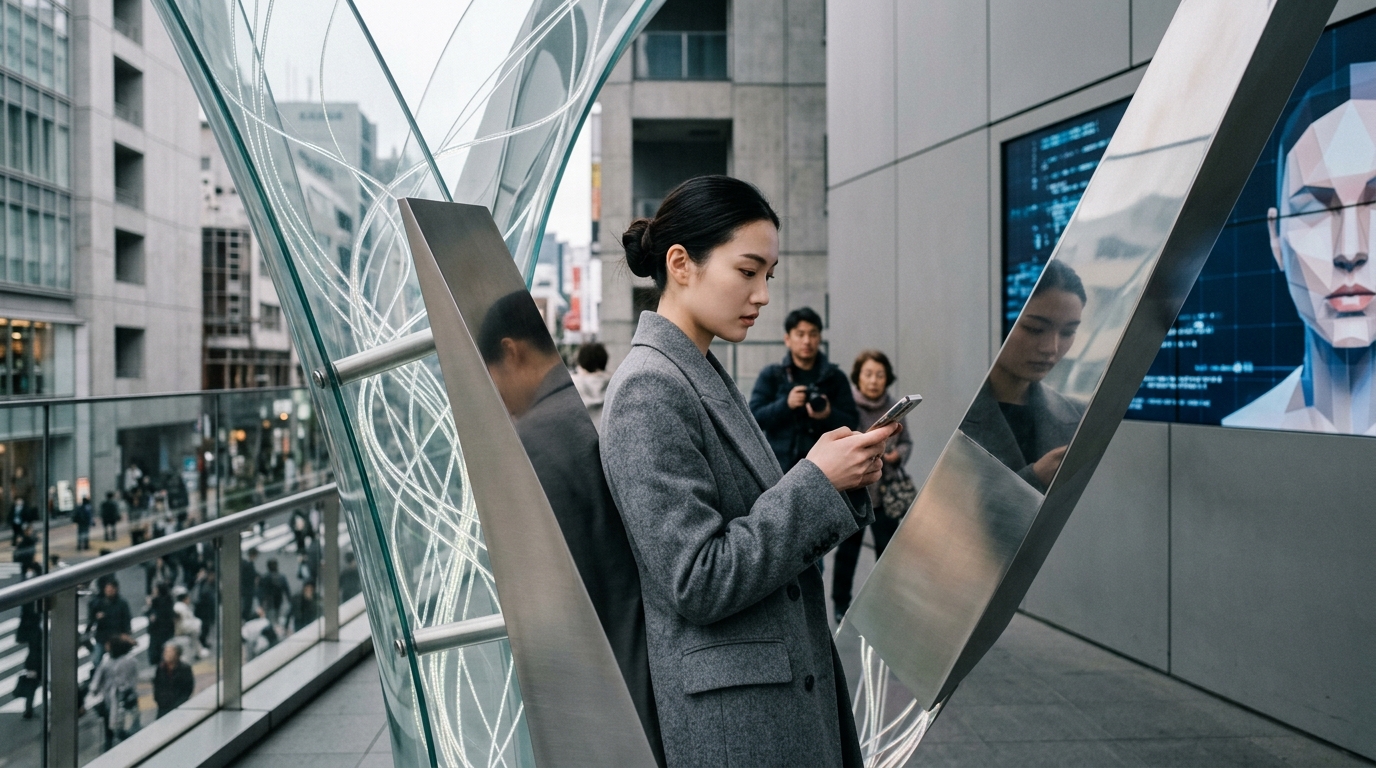
The concept of being 'AI-like' has evolved into a new aesthetic ideal across Asia, particularly in nations like Vietnam and South Korea. This standard typically involves porcelain-like skin, perfect symmetry, oversized eyes, and a general sense of 'flawlessness' previously found only in digitally edited images or video game characters. When a real woman is celebrated for looking like a digital creation, we are witnessing a reversal of the 'uncanny valley': it is no longer AI trying to mimic humans, but humans striving to reach algorithmic perfection.
This specific incident in Vietnam highlights the immense influence of South Korean culture (Hallyu) and its beauty standards (K-beauty). South Korea, as a global leader in cosmetic medicine and filter technology, has created a visual language that AI has adopted and recycled. The result is a feedback loop where Instagram and TikTok filters define what is considered attractive, and individuals use every means—from makeup to surgical procedures—to embody these digital ghosts.
Ethical Dilemmas and Psychological Implications
From an ethical standpoint, the glorification of the 'AI look' raises serious questions. First, there is the issue of the loss of ethnic and individual identity. As AI is trained on specific datasets that often promote a homogenized version of beauty, the pressure on women to conform to this model leads to a 'monoculture of faces.' In Vietnam, a country with a rich cultural heritage, adopting a face that looks like a 'product of Seoul via algorithm' can be interpreted as a form of digital colonialism.
- Alienation from the physical body: Constant comparison with digital idols creates the phenomenon of 'filter dysmorphia.'
- Commodification of existence: Beauty is no longer a random gift of nature but an optimized asset.
- Erasure of imperfections: Human history and experience etched onto a face are now considered 'noise' to be eliminated.
Furthermore, the link between this aesthetic and nationalism—as seen in the support for the South Korean team—shows how beauty is used as a tool of soft power. The beauty queen is not just a fan; she is a carrier of a specific cultural message that suggests success, modernity, and technological superiority have a very specific face.
The Future of the Human Image
As we move deeper into the 2020s, the case of the Vietnamese beauty queen will likely be the rule rather than the exception. Artificial Intelligence is no longer just a tool we use, but a mirror we are trying to fit into. The challenge for society will be to restore the value of imperfection and authenticity in a world increasingly enamored with its own digital reflections.
"Beauty described as AI is not a victory for aesthetics, but a defeat for human uniqueness against the average of pixels."
Ultimately, cheering for a team or participating in a beauty pageant are deeply human expressions. However, if the face expressing these emotions is designed to satisfy an algorithm, we must ask whether those emotions remain just as real or if they, too, have become part of a simulation.