

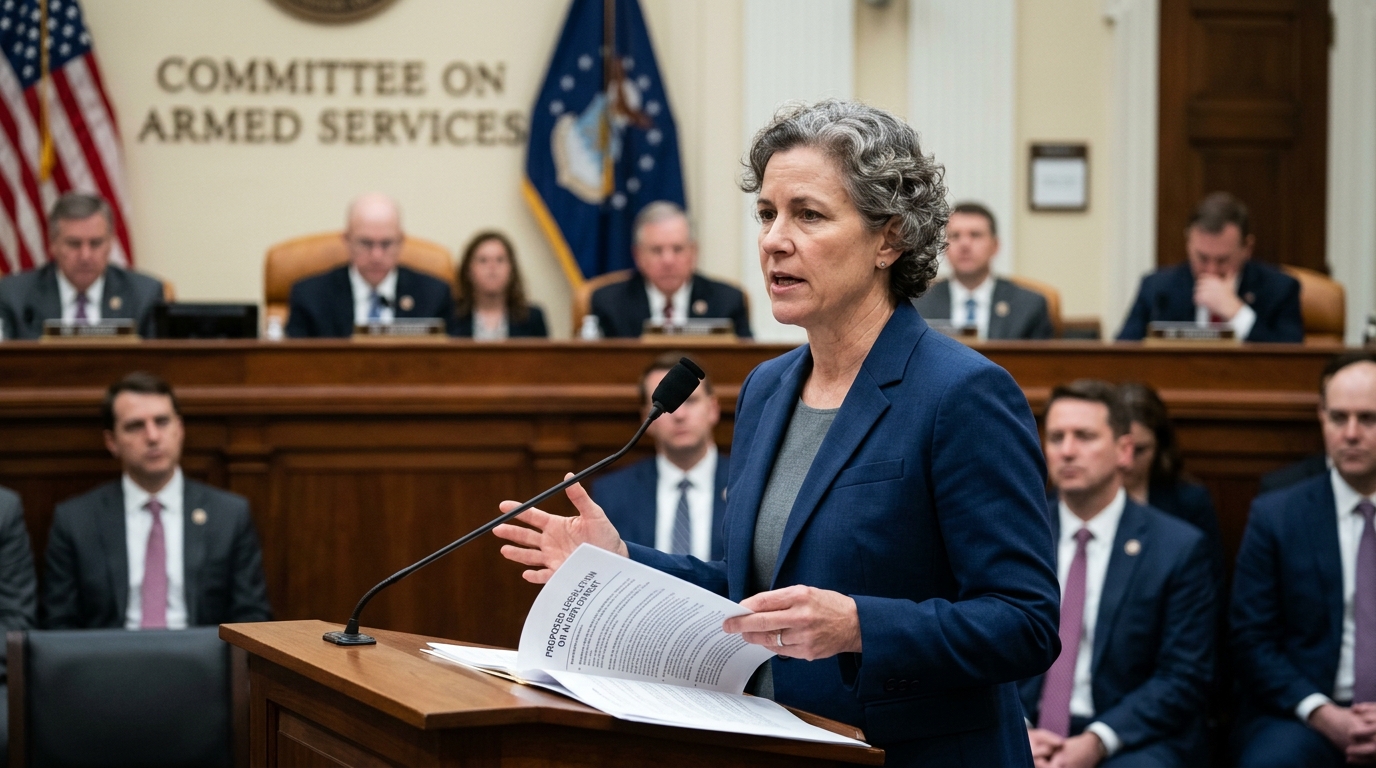
The dawn of 2026 finds Washington in a state of profound ethical and strategic soul-searching. Recent reports that Anthropic—a company founded on the pillars of AI safety and alignment—has become entangled in Pentagon contracts via Palantir and AWS have sent shockwaves through the halls of Congress. The Democratic response was swift, with a group of senators and representatives introducing a bold legislative proposal aimed at strictly limiting the use of AI in military operations.
The End of Innocence for Anthropic
For years, Anthropic was marketed as the "antidote" to OpenAI’s aggressive commercialization. With its Claude model, the company argued that "Constitutional AI" would prevent the misuse of the technology. However, the integration of these models into Palantir’s platforms for battlefield data analysis and mission planning has shattered the illusion of neutrality. Critics argue that even if the AI isn't "pulling the trigger," its involvement in target selection makes it an integral part of the kill chain.
The proposed legislation, led by lawmakers traditionally wary of technological overreach, seeks to establish clear "red lines." The central argument is simple yet momentous: the final control over the use of lethal force must remain exclusively in human hands. The bill aims to explicitly prohibit delegating life-and-death decisions to algorithms, codifying the "Human-in-the-Loop" doctrine as a legal requirement rather than a mere ethical guideline.
A Strategy of 'Deterrence Through Legislation'
This move is not just about ethics; it is about national security. Proponents of the bill argue that the unchecked use of AI in the military could lead to accidental escalation. A hallucination in a Large Language Model (LLM) analyzing troop movements could misinterpret a routine exercise as an imminent attack, triggering a chain reaction that no human could stop in time.
"We cannot allow a chatbot’s hallucination to become the catalyst for nuclear armageddon," a senior member of the Armed Services Committee remarked.
Furthermore, the bill includes provisions for algorithmic transparency within the Department of Defense. It requires tech companies to disclose training data and potential biases in their models before they are deployed operationally. This represents a direct challenge to the "black box" approach of defense contractors, who often cite national security to avoid public or legislative scrutiny.
The Counter-Argument and Global Competition
Naturally, this initiative faces fierce opposition from Republicans and the defense industry. The primary argument from opponents is the ongoing competition with China and Russia. They contend that if the U.S. self-imposes legislative restrictions, it will lose the advantage of speed and precision offered by AI, while geopolitical rivals remain unburdened by similar ethical constraints. Silicon Valley finds itself in a precarious position, trying to balance lucrative Pentagon contracts with a public image of social responsibility.
The debate over military AI is the "Oppenheimer moment" of our generation. Just as nuclear energy redefined the nature of warfare and diplomacy, AI promises—or threatens—to do the same. The Democratic legislative push is an attempt to put the genie back in the bottle, or at least ensure the bottle remains in human hands. The outcome of this political struggle will define not only the future of defense technology but the very concept of accountability in the digital age.
- Ban on autonomous lethal force without explicit human authorization.
- Mandatory transparency for training data used in military AI models.
- Restrictions on AI involvement in nuclear command and control systems.
- Establishment of an oversight body to evaluate algorithmic ethics in the field.





